Trump’s Iran War Claims: Diplomacy or Delusion?
President Trump's claims about winning the war with Iran and ongoing peace talks are met with denials from Iranian officials. His communication style blurs decision-making and public messaging, creating confusion. This raises concerns about strategic clarity and accountability in international crises.

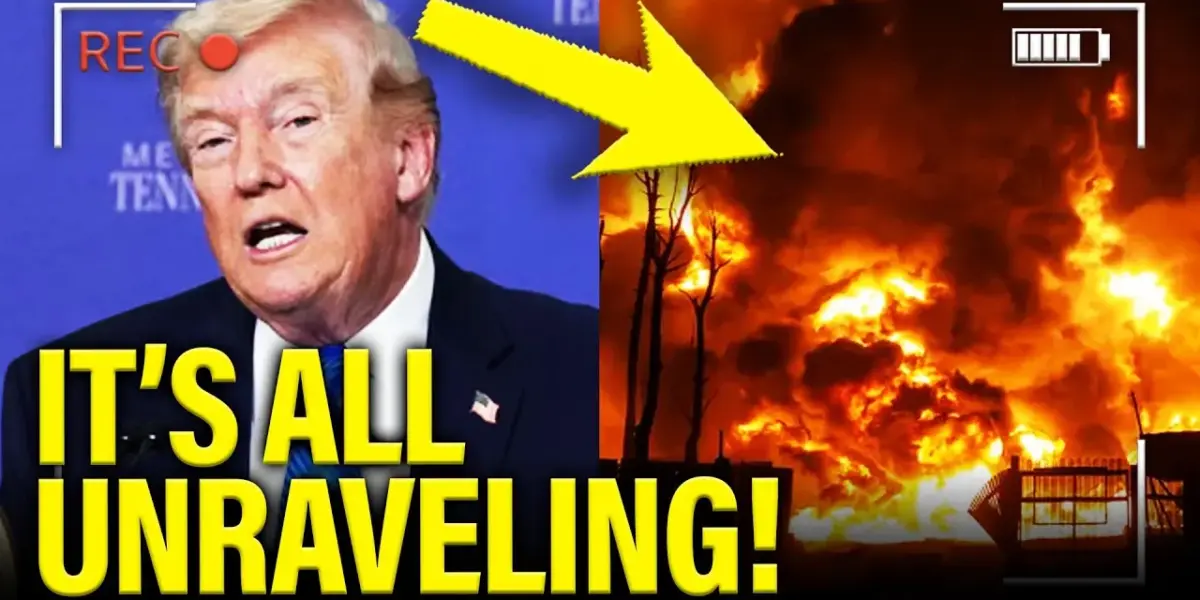
Trump’s Iran War Claims: Diplomacy or Delusion?
President Donald Trump recently made a striking statement about the conflict with Iran. When asked about the possibility of a peace deal, he declared, “The war has been won.” This comment, made at the White House, highlights a unique aspect of his leadership: the ability to both claim credit for starting a war and announce progress that the other side denies. It shows a tendency to let sensitive information slip out, making it hard to tell what’s real.
Trump also mentioned that his defense secretary, Pete Hegseth, was disappointed about negotiating a ceasefire with Iran. He said Hegseth and General Dan Kaine, the chairman of the Joint Chiefs of Staff, wanted to keep fighting. Trump called this a “good attitude,” which is confusing given his claims that talks with Iran were going well. He stated that Hegseth and Kaine were focused on “winning this thing,” not settling.
The Decision to Act
Earlier, Trump described the moment his administration decided to take military action against Iran. He spoke at a Tennessee Air National Guard base, trying to project control. However, his account sounded unplanned. He explained how he gathered advisors, including Hegseth and military leaders, to discuss options as tensions grew. The choice was presented as a fork in the road: either continue benefiting from a strong stock market or disrupt that for a military action in the Middle East.
Trump recalled, “We can keep going and get that 50,000 up to 55 and 60 as no end. or we can take a stop and make a little journey into the Middle East and eliminate a big problem. And uh Pete, I think you were the first one to speak up and you said, ‘Let’s do it because you can’t let them have a nuclear weapon.'”
What stood out was not just the usual reasons for confronting Iran, like its nuclear program or regional actions. It was how Trump focused on Hegseth as the one who pushed for military action. According to Trump, Hegseth urged a strike, saying the U.S. couldn’t let Iran get nuclear weapons. However, the transcript notes there was no intelligence or evidence presented to support this claim.
Conflicting Narratives on Diplomacy
In the same breath, Trump talked about having “really good discussions” with Iran that started the night before. He felt they were going well and that Iran wanted peace and agreed not to pursue nuclear weapons. He suggested a deal could be made within a few days. He also mentioned holding back on plans to strike Iranian power plants, hoping it wouldn’t be necessary.
This way of telling the story turns a major national security decision into a casual brainstorming session. It credits a single person for the decisive idea. This approach might work on a TV show like ‘The Apprentice,’ where strong personalities get credit. But in matters of war, it’s more complex. Military action usually comes from careful intelligence, debate among different government groups, and strategic needs, not just the first idea someone voices.
By highlighting Hegseth, who apparently has no experience in this area, Trump simplified the reasons for the conflict. This raises questions about how these decisions are actually made. It also fits a pattern where Trump treats private discussions as public entertainment. He seems to have no inner filter. Conversations that should be private, like who said what, become part of his real-time story.
This blurs the line between internal decision-making and public statements. It gives Trump an alibi but confuses allies and enemies. It makes it hard to know if his words are strategic signals or just stories. This confusion gets worse when his claims about diplomacy are also in doubt. While he spoke about the start of military action, he also insisted that the U.S. was having very good talks with Iran and that a resolution was near. He described a short window, just a few days, to reach a deal.
The problem is that Iranian officials have publicly denied that any negotiations were happening. Trump said, “Hopefully we can make a deal that’s good for all of us, including the Middle Eastern allies that have been very good to us, including Israel that’s been a great partner in this fight.” He added, “But we’ll see what happens. I think there’s a very good chance we’re going to end up in a deal. And so, we’re giving it five days and then we’re going to see where that takes us.” He even suggested a deal could be as good as completely destroying the place, which would be good if not necessary.
The Danger of Mixed Messages
This gap between what Trump says and what others report is more than just a communication error. In an active conflict, claims about negotiations are strategic messages. They affect markets, how allies work together, and what adversaries plan next. When a U.S. president suggests talks are happening and going well, it implies a way to avoid further conflict. When the other side says no talks are occurring, it creates a credibility gap that makes everything harder.
It’s widely known that Trump often makes false statements. But when it comes to an active war zone with American lives lost, this goes beyond simple falsehoods. This isn’t a political rally or a comedy show. His approach seems to mix everything into one continuous commentary. War plans, diplomatic efforts, and public relations are all narrated as they happen, often with little difference between what’s confirmed and what he hopes will happen.
The result is too much information. Instead of carefully chosen signals, there’s a constant stream of statements, some true, some hopeful, and some outright false. Even his description of what might happen next shows this conflict. On one hand, he hinted at a deal that could end the conflict without more destruction. On the other, he made it clear that more military action was possible if talks failed, using language that focused on persistence rather than caution.
The contrast is striking: a potential diplomatic breakthrough happening at the same time as a commitment to continue bombing if it doesn’t work out. This is where Trump’s communication style becomes more than just unusual. In international crises, clear messaging is crucial for strategy. Leaders usually share information carefully, knowing that every public statement can change how people think and act. Sharing too much, especially about internal matters or unproven claims, can hurt that strategy.
By publicly crediting Pete Hegseth as the reason for the war, Trump also makes his administration vulnerable. It leads to questions about the decision-making process and who is responsible. Was the decision based on agreement from many people? Was it the president’s idea, or did it depend on a strong suggestion from one advisor? Were there disagreements, and what happened to them? Most administrations avoid highlighting these questions, especially early in a conflict.
Glorifying Destruction?
What’s concerning is how figures like Pete Hegseth, who previously hosted a TV show, seem to view war as a test of strength rather than a tragic necessity. The language used by people around him doesn’t just emphasize power; it seems to celebrate destruction itself. Words like “lethality,” “war fighters,” and promises of “overwhelming force” are used so often they sound like goals in themselves, separate from any clear political aim. This isn’t strategy; it’s a show disguised as a policy.
There’s a sense of meaninglessness in this attitude. Killing becomes abstract, reduced to remote actions and numbers, while the real human cost of war disappears behind screens and slogans. Even more disturbing, this language is shared enthusiastically, as if violence is a form of clarity, not a last resort. By encouraging and rewarding this tone, Donald Trump supports a culture where destruction is not just accepted but celebrated – less a way to achieve something and more the point itself. There’s never any mention of civilian deaths.
At the same time, Trump’s insistence on ongoing talks, despite denials, suggests he believes saying something publicly can make it happen. This is a common tactic in business and media, and often used by people with narcissistic traits. Project momentum, and momentum might follow. But international politics is far less forgiving. You cannot negotiate with someone who publicly states there is nothing to negotiate.
Why This Matters
Taken together, Trump’s comments reveal a leadership style that prioritizes immediate public statements over careful consideration. Decisions, discussions, and diplomatic efforts are all presented as part of a continuous story told directly to the public. This is open in one way, but not necessarily clear. Instead, it creates a flood of information that is hard to sort through and even harder to trust. The real issue isn’t just what Trump says, but that he seems to say everything in a situation where careful restraint is often as important as action. This instinct could be as impactful as any mistaken policy decision.
Historical Context
Throughout history, communication in international relations has been a delicate dance. Leaders have often used carefully worded statements to signal intentions, de-escalate tensions, or rally support. The Cuban Missile Crisis, for example, involved intense back-channel communication alongside public pronouncements, carefully managing the flow of information to avoid accidental war. In contrast, Trump’s approach appears to bypass traditional diplomatic channels and established protocols, opting for a direct, often unfiltered, stream of consciousness that can create confusion and distrust on the global stage.
Trends and Future Outlook
This video highlights a growing trend in modern political communication: the blurring of lines between private deliberation and public performance. Social media and the 24/7 news cycle encourage leaders to be constantly visible and vocal. Trump’s style, while extreme, taps into this environment. The future may see more leaders adopting similar direct-to-public communication strategies, potentially leading to greater unpredictability in international affairs. The challenge will be maintaining strategic clarity and credibility when information is constantly being shared, sometimes without verification or a clear purpose. The implications for global stability are significant, as misinterpretations or false signals in times of crisis could have severe consequences.
Source: Trump LOSES CONTROL as IRAN WAR Claims UNRAVEL (YouTube)

Related Articles
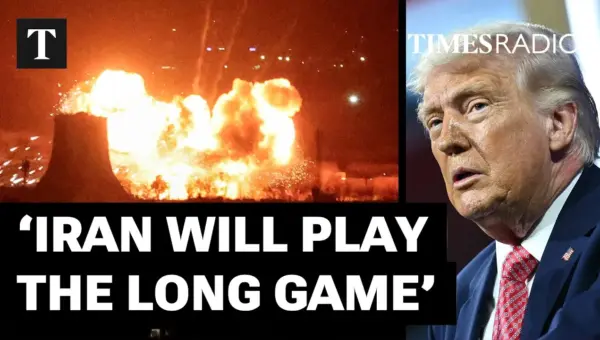
Iran’s ‘Enormous Patience’ Could Test Trump in Negotiations
Iran possesses 'enormous patience' and may prolong negotiations with President Trump, according to former British Ambassador Matthew Gold. He detailed Iran's unique negotiating tactics, emphasizing their high 'threshold for pain' and strategic use of proxies. Gold advised that successful talks require a long attention span, a quality that could challenge the U.S. president.

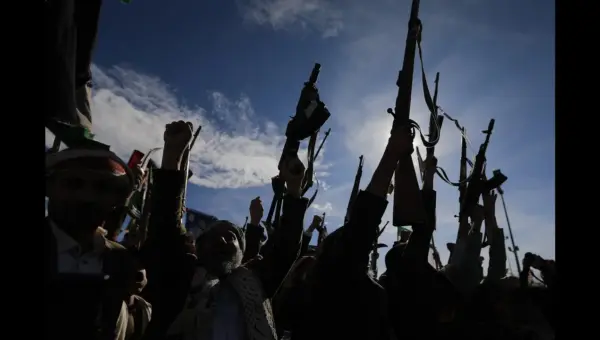
Yemen’s Houthis Escalate Middle East Conflict With Israel Strike
Yemen's Houthi rebels, backed by Iran, have directly attacked Israel with a missile, marking a significant escalation in Middle East tensions. While Israel intercepted the missile, the move signals a broader regional conflict drawing in more actors.

Iran Shuns China’s Peace Plan, Straining Global Trade
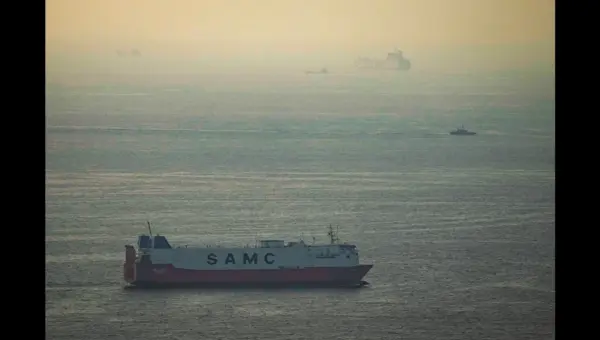
Iran has rejected China's attempt to mediate the ongoing war, a move that insiders say is hindering Beijing's global ambitions. The decision also impacts trade, as Iran restricts Chinese cargo ships in the Strait of Hormuz, driving up prices in China.