Artemis 2 Rockets Toward Moon: Humans Fly Furthest Ever
NASA's Artemis 2 mission has launched, sending four astronauts on a lunar flyby and marking humanity's return to deep space for the first time since 1972. This historic mission will see humans travel further from Earth than ever before, testing critical systems for future lunar exploration.

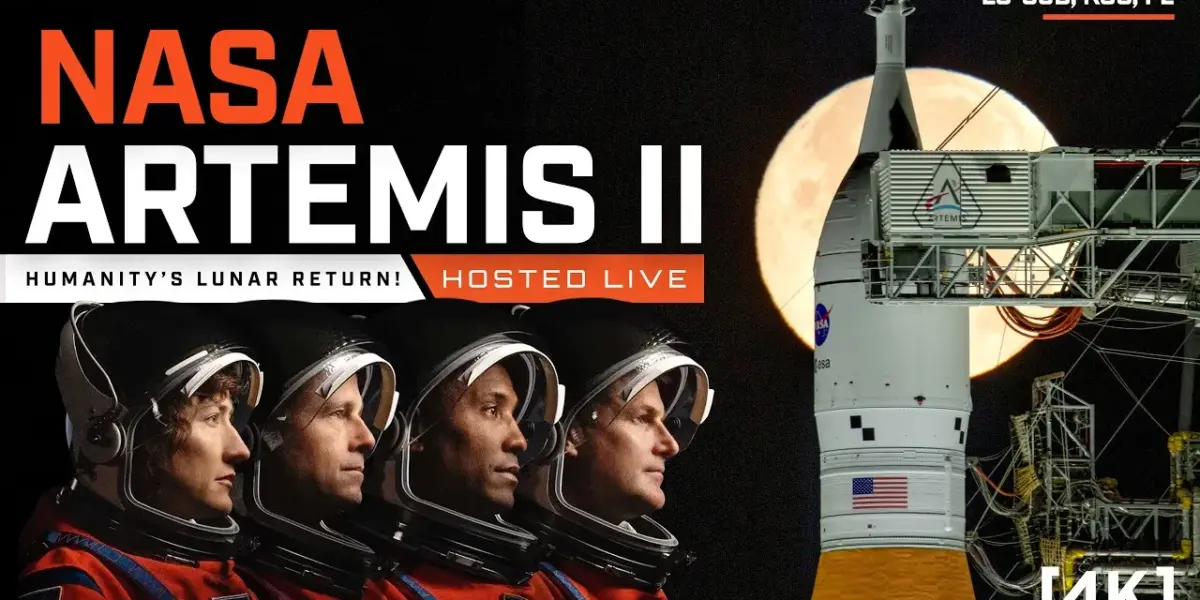
Artemis 2 Ignites: Humanity’s Bold Leap Back to the Moon
NASA’s Artemis 2 mission has officially launched, marking a monumental return of humans to the vicinity of the Moon for the first time since 1972. This historic flight will carry four astronauts on a daring lunar flyby, pushing the boundaries of human space exploration further than ever before. The crew will travel farther from Earth than any humans in history, venturing into the deeps of space.
A Journey Years in the Making
The Artemis program, named after the twin sister of Apollo in Greek mythology, aims to establish a long-term human presence on the Moon and eventually pave the way for missions to Mars. Artemis 2 is the crucial next step in this ambitious plan. It builds upon the success of Artemis 1, which sent an uncrewed Orion spacecraft around the Moon in late 2022. That mission tested critical systems, including the powerful Space Launch System (SLS) rocket and the Orion capsule’s life support and navigation capabilities.
This time, however, the stakes are higher. Four astronauts will be aboard the Orion spacecraft, experiencing firsthand the challenges and wonders of lunar space. Their journey will take them approximately 238,900 miles (384,400 kilometers) from Earth, the average distance to the Moon. During their roughly 10-day mission, they will loop around the far side of the Moon, a region rarely seen by human eyes.
The Power of the SLS Rocket
At the heart of the Artemis 2 launch is the colossal Space Launch System (SLS) rocket. Standing taller than the Statue of Liberty, this is the most powerful rocket NASA has ever built. Its five engines generate a staggering 8.8 million pounds of thrust at liftoff, enough to overcome Earth’s gravity and send the Orion spacecraft hurtling toward its lunar destination. For comparison, the Saturn V rocket that propelled the Apollo astronauts to the Moon produced about 7.6 million pounds of thrust.
The SLS rocket is designed to carry heavy payloads, essential for future lunar missions that will include landers and habitats. The success of its launch is a testament to decades of engineering and innovation, building on the lessons learned from previous heavy-lift rockets. The rocket’s journey is a fiery spectacle, pushing the boundaries of physics and engineering.
Orion: The Astronauts’ Home in Space
The Orion spacecraft is the vessel that will carry the Artemis 2 crew. This state-of-the-art capsule is designed for deep space missions, featuring advanced life support systems, radiation shielding, and powerful engines for maneuvering. It is built to withstand the harsh conditions of space, including extreme temperatures and the vacuum of the void.
On Artemis 2, Orion will not land on the Moon. Instead, it will perform a lunar flyby, similar to the Apollo 8 mission in 1968, which was the first time humans orbited the Moon. This allows NASA to test Orion’s systems and the crew’s ability to operate in lunar space before attempting a landing on a future mission. The astronauts will get a close-up view of lunar geography, observing craters and mountains from a unique vantage point.
What’s Next for Artemis?
Artemis 2 is more than just a flyby; it’s a critical stepping stone. The data gathered and the experience gained from this mission will be invaluable for future Artemis endeavors. The next planned mission, Artemis 3, aims to land astronauts back on the lunar surface, including the first woman and the first person of color. This will be a historic achievement, fulfilling a long-held goal of NASA’s.
Beyond lunar landings, the Artemis program envisions a sustainable human presence on the Moon. This could include lunar bases and the use of lunar resources. Such a presence would serve as a vital proving ground for technologies and strategies needed for even more ambitious journeys, like sending humans to Mars. The Moon becomes a testing ground for humanity’s future in space.
Why This Matters
The return of humans to the Moon signifies a renewed era of space exploration. It demonstrates humanity’s enduring curiosity and our drive to push beyond the known. These missions inspire future generations of scientists, engineers, and explorers. They also offer potential for scientific discoveries, from understanding the Moon’s geological history to searching for resources that could support future space travel.
The Artemis program represents a global effort, with international partners contributing to its success. This collaborative spirit is essential for tackling the grand challenges of space exploration. As the Artemis 2 crew embarks on their journey, they carry with them the hopes and dreams of billions, venturing into the cosmos once more.
Source: [4K] Watch NASA Send Humans To The Moon LIVE!!! #Artemis2 (YouTube)

Related Articles
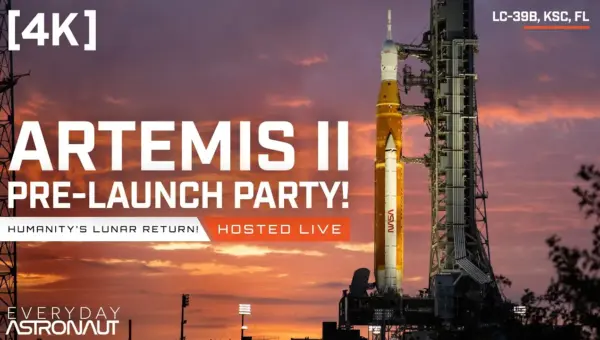
Artemis II Crew Blasts Off for Lunar Orbit
Humans are heading back to the Moon with the Artemis II mission, marking the first crewed lunar journey since 1972. The mission will test the Orion spacecraft and the powerful SLS rocket in deep space.
NASA Charts Bold Lunar Future, Ditches Space Station Plans
NASA is shifting its focus from the lunar Gateway to a permanent Moon base, outlining a phased approach for settlement. This strategy change impacts international partnerships and commercial LEO plans. Meanwhile, Artemis II crew prepares for launch amidst a busy launch schedule and new lunar impact discoveries.

Astronaut Recounts Space Medical Scare, Informs Future Missions
Astronaut Mike Fincke detailed a recent medical emergency aboard the ISS that led to his return to Earth. While doctors ruled out serious conditions like stroke, the exact cause is still being studied, with theories pointing to a space-related anomaly. The experience is providing crucial data for future long-duration missions, including NASA's Artemis program.