Melania Trump’s AI Summit: A Glimpse into Tech’s Future?
Former First Lady Melania Trump hosted an AI summit, discussing humanoid robots and instant access to information. Commentary highlighted that such information access has long been available via the internet, raising questions about technological communication.

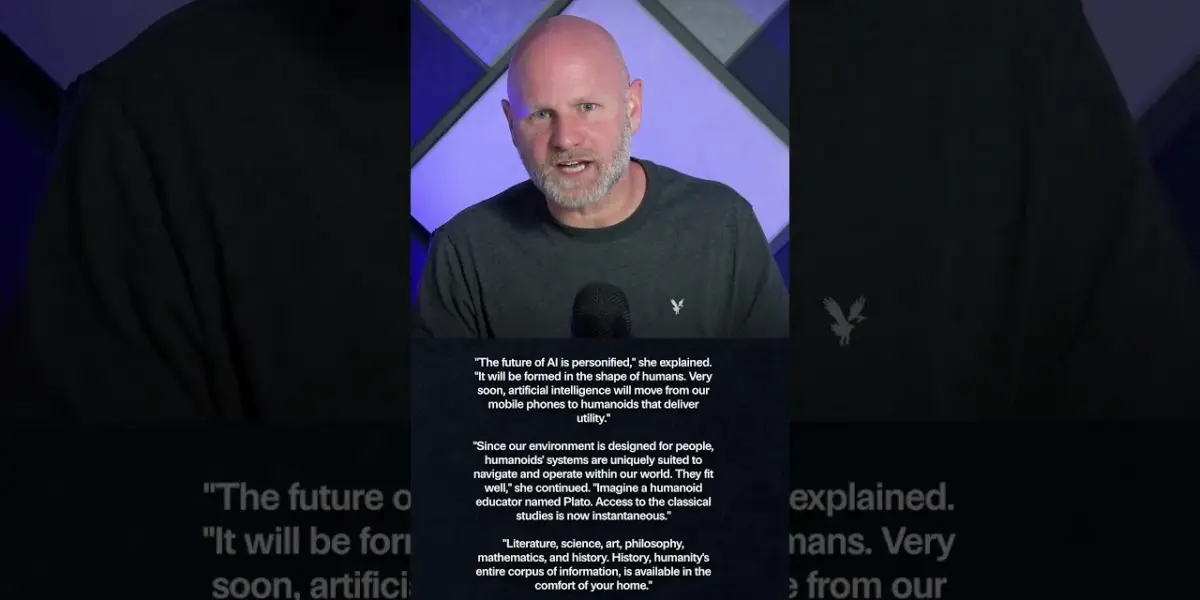
Melania Trump’s AI Summit: A Glimpse into Tech’s Future?
Former First Lady Melania Trump recently hosted an event at the White House focused on artificial intelligence and robotics. The summit, titled “Melania Trump’s Fostering the Future Together Global Coalition Summit,” brought together discussions about the evolving role of AI and its potential impact.
AI and the Human Form
During the event, Melania Trump spoke about her vision for the future of AI. She suggested that AI’s future is “personified” and will soon take on human-like forms, moving beyond mobile devices to become humanoid robots. She explained that since our world is built for people, these humanoid robots would be well-suited to operate within it.
“Imagine a humanoid educator named Plato,” she proposed. “Access to the classical studies is now instantaneous.” This vision painted a picture of robots assisting in education and other areas of life, seamlessly integrating into human environments.
The Internet: A Rediscovery?
The speaker offering commentary on the event noted that the idea of instant access to information, like Plato’s teachings or scientific news, has been a reality for decades thanks to the internet. The internet became widely accessible in the 1990s, offering a vast repository of knowledge. While today’s access is faster and more extensive, the fundamental ability to look up historical figures, scientific discoveries, and artistic works has long been available. The commentary highlighted that this aspect of information accessibility predates advanced AI.
Melania Trump’s statement that “History, humanity’s entire corpus of information is available in the comfort of your home” was presented as a recent discovery. The commentary suggested this was akin to discovering the internet itself, a tool that has provided such access for many years.
Why This Matters
The discussion around Melania Trump’s AI summit touches on several important points. Firstly, it highlights the ongoing public conversation about artificial intelligence and its potential. As AI technology advances rapidly, understanding its implications and how it might integrate into our daily lives becomes crucial for everyone.
Secondly, the commentary points to a potential disconnect between public figures and the widespread understanding of existing technologies. While the focus was on AI’s future, the example used for its potential impact – instant access to information – is already a well-established function of the internet. This raises questions about how effectively complex technological concepts are being communicated and understood at all levels.
Implications and Future Outlook
The vision of humanoid robots assisting in education and daily tasks is a common theme in discussions about AI’s future. Companies and researchers are actively developing robots with advanced capabilities, aiming to create machines that can interact with humans and their environments more naturally. The idea of robots as educators, companions, or helpers is not new, but the pace of development suggests these concepts could become reality sooner than many think.
However, the conversation also underscores the importance of clear communication about technology. As AI becomes more sophisticated, it’s vital that its capabilities and limitations are understood. The ability to access information instantly, whether through a smartphone, computer, or potentially a humanoid robot, is a testament to human innovation. Distinguishing between what AI enables and what existing technologies already provide is key to informed public discourse.
Historical Context
The internet’s rise in the 1990s marked a significant shift in how people access and share information. It democratized knowledge, making vast libraries of data available to anyone with a connection. This paved the way for many of the digital conveniences we now take for granted.
Artificial intelligence, while a more complex field, has also been developing for decades. Early AI research focused on creating machines that could perform tasks requiring human intelligence, such as problem-solving and learning. The current wave of AI, including machine learning and deep learning, has led to breakthroughs in areas like natural language processing and image recognition, making AI more visible and impactful in our lives.
The summit’s focus on AI and robotics reflects current trends in technological development and public interest. As these fields continue to evolve, understanding their potential and the technologies that underpin them will be increasingly important for navigating the future.
Source: The First Lady is a TOTAL MORON! (YouTube)

Related Articles


OpenAI Scraps Sora, Loses Billions, Eyes Robotics
OpenAI has shut down its Sora AI video app after incurring billions in losses and failing to generate significant revenue. The decision also terminates a planned $1 billion investment from Disney. The company is now pivoting its research focus to robotics.


Anthropic’s ‘Mythos’ AI Leaks, Sparking Security Fears
Anthropic's powerful new AI model, Claude Mythos, was accidentally leaked online, raising concerns about its advanced cybersecurity capabilities. While Anthropic emphasizes its role in helping defenders prepare for future AI threats, the leak has also sparked debate about its intentionality and impact on the cybersecurity market.

Ukraine War Experts Train British Army in Drone Warfare
Ukrainian soldiers, masters of drone warfare, are sharing their battlefield expertise with the British Army in a secret training program. This exchange offers invaluable insights into the realities of modern conflict, particularly the extensive use of drones. The initiative also includes innovative uses of 3D printing for drone production.