NASA Charts Bold Lunar Future, Ditches Space Station Plans
NASA is shifting its focus from the lunar Gateway to a permanent Moon base, outlining a phased approach for settlement. This strategy change impacts international partnerships and commercial LEO plans. Meanwhile, Artemis II crew prepares for launch amidst a busy launch schedule and new lunar impact discoveries.

NASA Charts Bold Lunar Future, Ditches Space Station Plans
NASA has unveiled a sweeping new strategy, pivoting its long-term space ambitions from a lunar orbiting station to a permanent base on the Moon’s surface. This significant shift, announced on March 24th, signals a new era for lunar exploration, prioritizing boots-on-the-ground presence over the previously planned Gateway outpost.
A New Lunar Strategy Takes Shape
The updated plan, revealed at a NASA event, outlines a phased approach to establishing a sustainable lunar settlement. Phase one, set to run from 2026 to 2028, will focus on developing reliable lunar landing capabilities and increasing the number of commercial payload deliveries to the Moon. This phase is expected to involve an investment of approximately $10 billion.
Phase two, spanning 2029 to 2031, will concentrate on the actual construction of the base. The final phase, beginning in 2032, aims to enhance long-range capabilities, allowing for greater exploration and operations on and around the Moon.
Gateway’s Legacy Repurposed
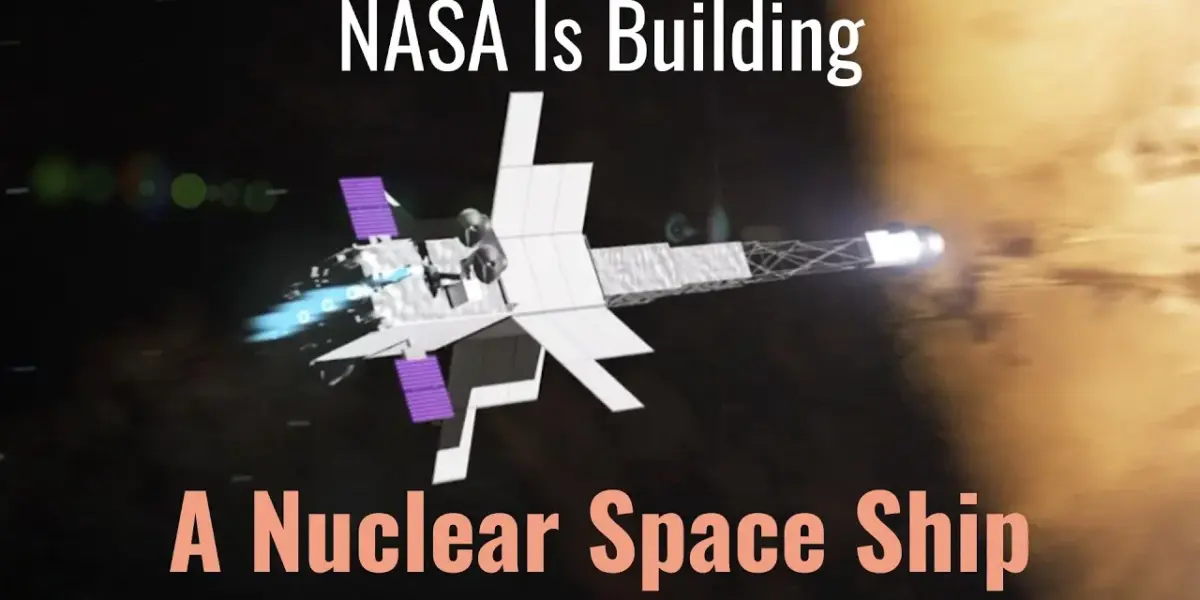
The decision to move away from the Gateway outpost means that much of the hardware and technology developed for it will be repurposed for the surface base. This includes critical components like the power and propulsion element, which will now form the core of a new spacecraft called Space Reactor 1 Freedom. This demonstrator mission will test nuclear electric propulsion and carry a payload designed to deploy Ingenuity-class helicopters on Mars.
However, not all Gateway-related technology is directly transferable. For instance, Canada’s robotic arm, while a marvel of engineering, is not deemed suitable for lunar surface operations due to strength limitations. NASA will need to develop new solutions for surface docking and other essential functions.
International Partnerships Evolve
The shift in strategy also impacts international collaborations. Partners like Canada, Japan, and Europe, who were integral to the Gateway plans, will now see their contributions adapted for the lunar surface. Canada’s role, for example, may shift from providing a robotic arm for the Gateway to other contributions for the surface base, ensuring their continued involvement.
The new strategy emphasizes that international partners will build sections of the lunar base, allowing them to invest in their own industries and deliver essential components. This collaborative approach aims to distribute costs and leverage global expertise.
Commercial LEO Destinations Face Uncertainty
In low Earth orbit (LEO), NASA’s plans for commercial space stations have also undergone significant revisions. Citing a lack of sufficient commercial interest to sustain multiple stations, NASA is re-evaluating its support for commercial LEO destinations. The agency may opt for a single commercial station or even a NASA-procured core module that could serve as a hub for other stations.
This uncertainty has led to dissatisfaction among industry partners who are seeking clearer targets and a more defined path forward. NASA has issued new requests for information to industry to gather feedback and explore alternative models.
Lunar Ice: A Setback for Moon Base Hopes?
Adding to the challenges, new research from NASA’s Shadow Cam instrument on the Korean Danuri spacecraft suggests that water ice concentrations in permanently shadowed craters on the Moon’s poles may be lower than previously estimated. The findings indicate that surface ice could be less than 20%, a figure that includes zero. This could pose a significant hurdle for NASA’s moon base plans, which rely on in-situ resource utilization, including water ice, for survival and operations.
Artemis II Crew Prepares for Historic Flight
Meanwhile, preparations for the Artemis II mission are well underway. The four-person crew, including the first Canadian astronaut to fly to the Moon, has completed their quarantine and is ready for launch. The mission, scheduled to begin its launch window on April 1st, will be the first crewed mission to travel beyond low Earth orbit since the Apollo era.
The crew recently participated in a press conference, expressing their excitement and readiness. A symbolic plush toy, representing the ‘Earthrise’ and serving as a zero-gravity indicator, was also revealed, continuing a tradition from the Russian space program.
A Busy Launch Month Continues
The past month has seen a flurry of launches worldwide. SpaceX has continued its rapid Starlink deployment, reaching significant milestones including the 100th anniversary of Robert Goddard’s first rocket launch and achieving 500 rocket landings. China launched spy satellites, while Russia successfully docked a Progress spacecraft with the ISS after a minor antenna deployment issue.
Rocket Lab launched an Earth observation satellite, and a Chinese Gilong 3 rocket deployed navigational satellites from a sea-based platform. Russia also conducted an unannounced launch of 15 communication satellites for a potential Starlink competitor.
Hypersonic Tests and Future Propulsion
The U.S. Department of Defense conducted a test of the Dark Eagle long-range hypersonic weapon, demonstrating its glide and turn capabilities. On the propulsion front, NASA’s Space Reactor 1 Freedom mission will test nuclear electric propulsion, a technology that could revolutionize deep space travel. Private companies like TransAstra are also exploring asteroid mining and resource utilization, aiming to bring asteroids into Earth’s vicinity for research and mineral extraction.
Space Data Centers and Semiconductor Ambitions
The race for space-based data centers is heating up, with Blue Origin and StarCloud filing FCC applications for large satellite constellations. Nvidia has introduced a new space AI chip designed for spacecraft environments. In a bold move, SpaceX, alongside Tesla and XAI, announced plans for a massive semiconductor factory, Terraab, aiming to produce chips for its own data center, Starship, and AI initiatives. This vertical integration could position SpaceX favorably for future space data center operations.
Rocket Lab Expands, ESA Eyes Falcon 9
Rocket Lab has secured a deal for 20 additional Haste launches with the Department of Defense, indicating continued success with their scramjet technology. The European Space Agency is planning to purchase a SpaceX Falcon 9 launch to send astronauts to the ISS, a more cost-effective solution than developing their own human-rated launch capabilities.
Lunar Impact and a Pioneer Lost
Recent analysis of Lunar Reconnaissance Orbiter data has revealed a new 225-meter crater on the Moon, likely formed in early 2024 by an impact estimated to be of nuclear scale. This is the largest lunar crater discovered to date. On a somber note, the space community mourns the loss of Mike Melvill, the pilot of SpaceShipOne, a pioneer in commercial spaceflight.
Source: NASA Brings The New Hotness, Kills the Old & Busted – Deep Space Updates March 28th (YouTube)

Related Articles


NASA Ditches Moon Gateway for Lunar Base
NASA is shifting its Artemis program focus from the Lunar Gateway to building a permanent lunar base, while SpaceX reveals ambitious plans for a massive lunar chip factory. Both initiatives signal a new era of deep space exploration and resource utilization.

Astronaut Recounts Space Medical Scare, Informs Future Missions
Astronaut Mike Fincke detailed a recent medical emergency aboard the ISS that led to his return to Earth. While doctors ruled out serious conditions like stroke, the exact cause is still being studied, with theories pointing to a space-related anomaly. The experience is providing crucial data for future long-duration missions, including NASA's Artemis program.


Astronaut Recovers From Mystery Space Illness, Inspires Future Missions
Astronaut Mike Fincke has shared details about a mysterious medical emergency he experienced aboard the International Space Station, which led to his early return to Earth. While the exact cause is still under investigation, doctors believe it was space-related, providing crucial data for future deep space missions.