Ford Defends Nixon, Addresses Watergate and Energy Crisis
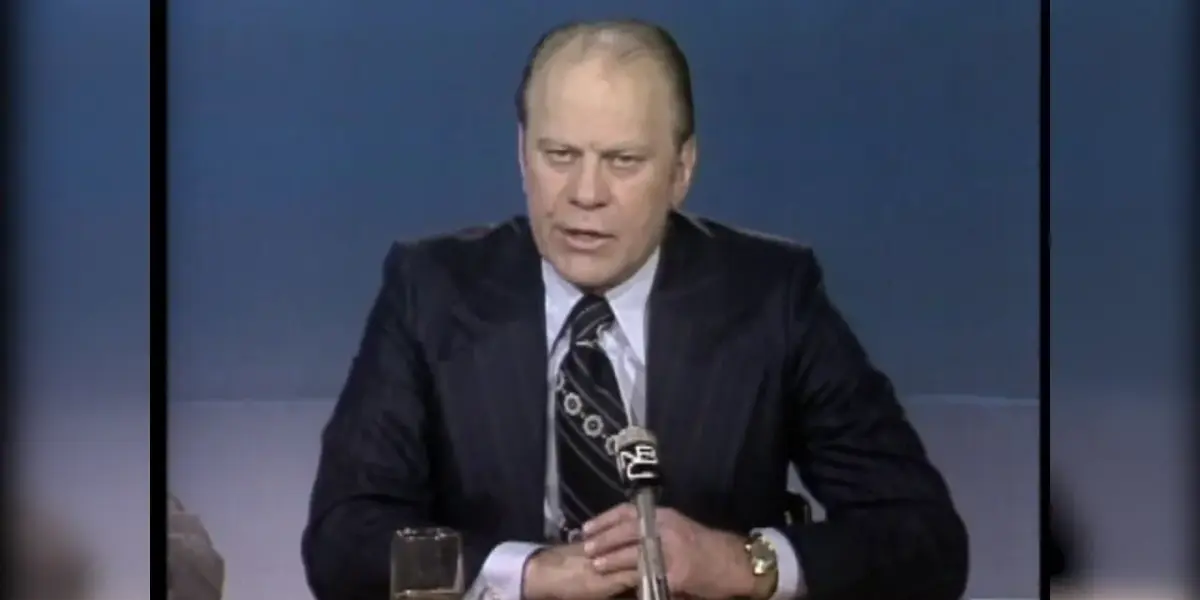
In a 1973 "Meet the Press" appearance, Vice President Gerald R. Ford defended President Nixon's stance on Watergate document requests, calling them a "fishing expedition." He also discussed the energy crisis, government transparency, and expressed confidence that impeachment proceedings against Nixon would not succeed based on current evidence. Ford also addressed his own political aspirations, stating he had no intention of running for president in 1976.

Ford Defends Nixon, Addresses Watergate and Energy Crisis
In a 1973 interview on NBC’s “Meet the Press,” then-Vice President Gerald R. Ford defended President Richard Nixon’s handling of the Watergate scandal and discussed the ongoing energy crisis. Ford, the first vice president to be nominated by a president and confirmed by Congress, shared his views on document requests, government transparency, and the nation’s economic challenges.
Watergate Document Dispute
When asked about President Nixon’s decision to reject a subpoena for presidential documents from the Senate Watergate Committee, Vice President Ford expressed his agreement. He described the committee’s demand for 500 documents as a “scattergun approach” and a “fishing expedition.” Ford stated that he believed the President had cooperated with investigators like Judge Sirica and Special Prosecutor Archibald Cox. He suggested that a compromise might be possible if the committee refined its demands to focus on documents more relevant to their legislative goals.
“It seems to me that this final decision by the committee to demand some 500 documents is a scattergun approach… a fishing expedition.”
Ford reiterated his belief that any evidence of criminal action should be made available. However, he questioned whether all 500 requested documents would pertain to alleged criminal activity. He also noted that while he had not personally reviewed all the documents, a compromise could be possible if the demands were narrowed to relevant issues.
Operation Candor and Public Trust
The interviewer, Clifton Daniel of The New York Times, brought up Ford’s past advocacy for government openness and asked if he shared public concerns about government secrecy. Ford confirmed his concern and expressed his desire for the White House to continue and expand “Operation Candor.” This initiative aimed to increase public trust through transparency. Ford supported President Nixon’s disclosure of income tax returns and financial information. He hoped for full disclosure on matters like the ITT dealings and milk fund contributions.
When asked why Operation Candor, which began when Nixon’s approval rating was below 30%, had not yet raised his numbers, Ford argued that the operation was not yet concluded. He believed releasing white papers on ITT and milk fund allegations would help. He was convinced the President was innocent of wrongdoing concerning ITT and acted properly regarding milk price increases. Ford felt making these documents public would improve public support.
Airbag Technology and Safety
The program included a segment on airbag technology, sponsored by Allstate Insurance. The report highlighted Allstate’s fleet of airbag-equipped cars used for testing. The system, utilizing space program technology, was designed to inflate in serious frontal crashes to prevent injury and deflate quickly. A demonstration showed an airbag inflating in a 17 mph crash but not in a 5 mph bump. The segment concluded with a real-life account from a driver whose airbag prevented injury in a freeway accident.
The Energy Crisis and Economic Outlook
The conversation shifted to the energy crisis, a significant issue at the time. Secretary of State Kissinger had announced President Nixon’s personal effort to bring oil-producing and consuming nations together. Ford imagined a summit meeting might occur if both sides cooperated. He stressed that it was in everyone’s best interest to find solutions to prevent a global economic depression. He also acknowledged that a resolution might involve addressing Middle East problems.
Regarding the economy, Ford stated that the administration did not view a recession as the main problem, even with the energy crisis. He predicted continued economic growth with only a slight potential increase in unemployment. The administration had standby programs, including plans for increased public service employment in hard-hit areas, to address any economic contingencies. Ford anticipated a decent year in 1974, with the administration prepared for various outcomes.
When asked about the contribution of past government decisions, like price controls, to current inflation, Ford hesitated to give a definitive answer. He acknowledged that budgetary problems and other federal policies had contributed to inflation and shortages. He expressed hope for better collaboration between Congress and the White House to find solutions.
Impeachment Prospects and 1976 Aspirations
Drawing on his 25 years in the House of Representatives, Ford was asked about the likelihood of impeachment proceedings against President Nixon. He believed the House Judiciary Committee would not vote to impeach based on the evidence available. He cited the Constitution’s definition of impeachment for a president—treason, bribery, and other high crimes and misdemeanors—and stated he was not aware of evidence meeting this standard. He distinguished this from the impeachment of federal judges, where “good behavior” is a more flexible standard.
Ford also addressed his own political future, reacting to a poll suggesting he could beat leading Democratic candidates in 1976. While pleased, he reiterated his current intention not to be a candidate. He pledged to continue his responsibilities as Vice President, including campaigning for Republican candidates in 1974, but maintained his focus on his current role rather than a presidential bid.
Source: VP Gerald Ford on Watergate and the 1973 oil crisis: Meet the Press Archive (YouTube)

Related Articles
Middle East War Sparks Farmer Crisis in US
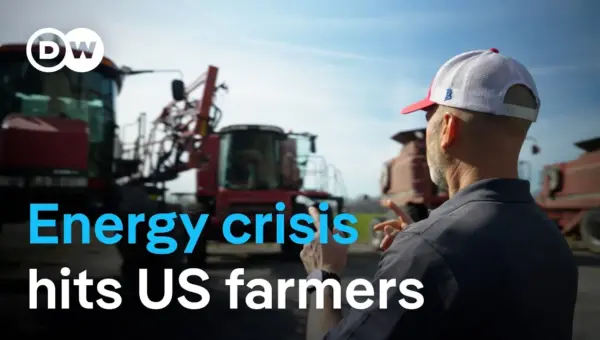
American farmers are facing a severe cost crisis as the war in the Middle East drives up prices for essential supplies like fertilizer and fuel. The conflict's disruption to global shipping routes is creating economic hardship, adding to existing challenges from trade wars and market fluctuations. Farmers are calling for stability and open markets rather than bailouts.


Farmers Face Soaring Costs Amid Middle East Energy Crisis
American farmers are grappling with sharply rising costs for fuel and fertilizer, driven by the ongoing conflict in the Middle East. This energy crisis adds to existing economic pressures, including low crop prices and trade disputes, creating significant financial uncertainty for the agricultural sector.
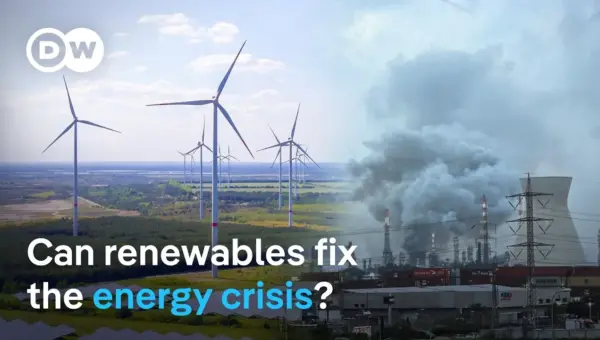
Iran War Exposes Energy Fragility, Spurs Green Shift
The war involving Iran has triggered a global energy crisis, exposing the fragility of fossil fuel dependence. Analysts suggest that the conflict makes a strong case for accelerating the transition to cheaper and more secure renewable energy sources, with Europe leading the way in adoption.