Middle East Conflict Fuels Global Market Plunge
A month-long conflict in the Middle East has sent global stock markets tumbling and gas prices soaring. The disruption of oil supplies, particularly through the Strait of Hormuz, is impacting economies worldwide, with airlines and consumers feeling the immediate effects. Experts warn that prices may continue to rise, exacerbating pre-existing economic weaknesses.

Middle East Conflict Fuels Global Market Plunge
Stocks are tumbling. The Dow, S&P, and Nasdaq have fallen to their lowest points in over seven months. This sharp decline began exactly one month ago, coinciding with the start of ‘Operation Epic Fury’ in the Middle East. The main driver behind this market drop is the unstable energy trading, which directly impacts gas prices for consumers worldwide.
Gas Prices Surge, Hitting Consumers Hard
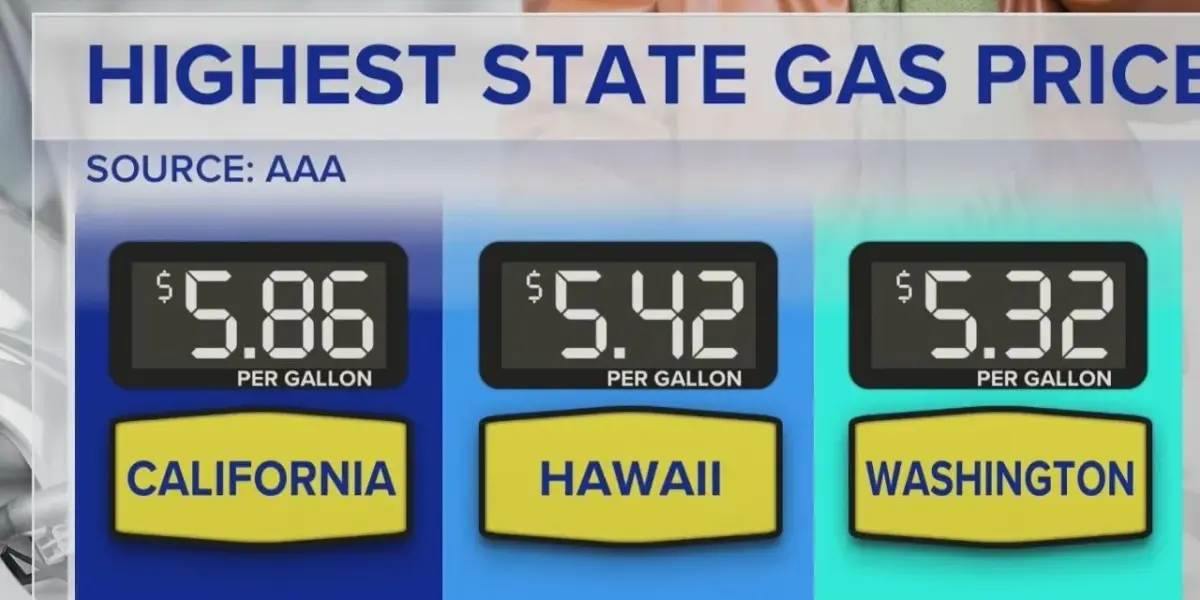
Across the United States, drivers are facing sticker shock at the pump. The national average gas price has climbed to around $3.98 per gallon. This is nearly a dollar higher than before the conflict began. In some states like California, Hawaii, and Washington, prices have soared even higher, reaching $5.85 per gallon. That’s an increase of over $1.20 in just the last month.
Experts warn that these prices may not be at their peak yet. The situation is worsened by ongoing concerns about the Strait of Hormuz, a critical oil shipping route. The White House has extended a deadline for Iran to reopen the strait, but millions of barrels of oil are still not reaching global markets. This reduced supply naturally pushes prices higher.
Limited Relief from Rerouted Oil
The U.S. administration is exploring options to ease these price pressures. One idea is rerouting oil from Venezuela. However, analysts suggest that the amount of oil Venezuela can supply is small compared to what is being held up by the Strait of Hormuz closure. Therefore, any impact on global prices from this change would likely be very small.
Economic Ripple Effects Beyond the Gas Pump
The rising cost of fuel affects more than just car owners. Industries that rely on transportation for their supply chains are feeling the pinch. The airline industry is also taking a significant hit. International airlines have already added surcharges to tickets due to higher jet fuel costs. Domestic airlines are warning that airfare prices could jump by as much as 20% in the coming weeks if the conflict and price pressures continue.
Pre-existing Economic Weakness Exacerbated
This new economic strain comes at a difficult time. Even before the conflict, the U.S. economy was showing signs of slowing down. Last quarter’s GDP growth was less than 1%, a significant drop from the previous quarter’s 4.4% growth. Inflation, measured by the PCE index, was also rising faster than expected.
The stock market, while not the economy itself, reflects the confidence people have in it. Major stock market averages have entered correction territory, meaning they have fallen 10% to 20% from their highest points in the last four weeks. This shows a real-time reaction to the economic uncertainty.
Government Promises Long-Term Gain, Faces Short-Term Pain
The White House has stated that the current economic difficulties are short-term pain for long-term safety and gain. The President has expressed optimism that the economy will rebound strongly after the conflict ends. However, for many Americans, the immediate reality is one of rising costs and economic uncertainty, directly linked to the ongoing events in the Middle East.
Global Impact
The conflict in the Middle East has demonstrated how interconnected the global economy is. A disruption in a key oil-producing region, especially involving a vital shipping lane like the Strait of Hormuz, can quickly send shockwaves around the world. This affects everything from the price of gasoline at the pump to the cost of airline tickets and the prices of everyday goods. It highlights the vulnerability of global supply chains to geopolitical instability. Nations heavily reliant on imported energy or with significant trade links are particularly exposed to these kinds of shocks. The situation also puts pressure on governments to find solutions, balancing national security interests with the need to maintain economic stability for their citizens.
Historical Context
The Strait of Hormuz has long been a point of strategic importance and potential conflict. It’s a narrow waterway through which a significant portion of the world’s oil supply travels. Throughout history, control or disruption of this strait has had major implications for global energy markets and international relations. Past tensions and incidents in the region have often led to temporary spikes in oil prices and increased geopolitical uncertainty. This current situation echoes those historical patterns, showing how a regional conflict can quickly escalate to have global economic consequences.
Economic Leverage and Future Scenarios
The conflict’s impact on oil prices gives certain nations economic leverage. Countries that are major oil producers and are not directly involved in the conflict might see increased demand for their products. Conversely, nations heavily dependent on imported oil face significant economic challenges. Sanctions on countries like Iran also play a role, affecting their ability to export oil and influencing global supply. The White House’s attempts to reroute oil from Venezuela show an effort to mitigate these economic pressures, but the limited impact suggests reliance on traditional energy routes remains high.
Looking ahead, several scenarios are possible. If the conflict is resolved quickly and the Strait of Hormuz reopens, energy prices might stabilize and even fall. However, if the conflict escalates or continues for a prolonged period, prices could remain high or rise further, leading to deeper economic slowdowns globally. Another scenario involves further disruptions to energy infrastructure, which would intensify price volatility. The long-term effect will depend on diplomatic outcomes, the resilience of global supply chains, and the ability of nations to diversify their energy sources.
Source: Market tumbles as gas prices continue to climb | Morning in America (YouTube)

Related Articles


Mexico Navigates US-China Rivalry
Mexico is caught in a geopolitical tug-of-war between the United States and China. The nation must carefully balance its economic needs and strategic interests with both superpowers. This situation highlights Mexico's growing importance in global affairs.
Iran-Backed Houthis Strike Israel, Escalating Regional Tensions
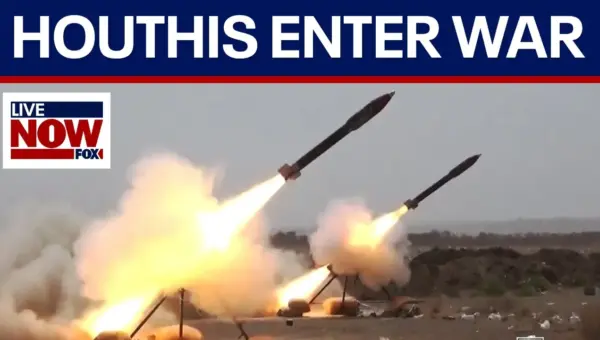
Iran-backed Houthi rebels have launched a missile attack targeting Israel, marking their first such strike since the current Middle East conflict began. The Israeli military confirmed the interception of the projectile. Analysts view this action as part of Iran's broader regional strategy, highlighting the regime's reliance on proxy forces amid internal weaknesses.

Europe Strikes New Trade Deals, Eyes Global Influence
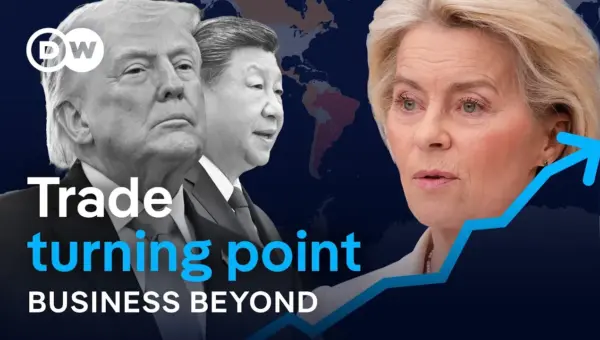
The European Union is actively forging new trade alliances, notably with South American nations like Brazil, to reduce reliance on China and the US. Driven by the need for critical resources like rare earth metals and the desire to boost its own industries, Europe is making strategic concessions and seeking new markets, despite facing internal criticism and a changing global economic landscape.