Trump’s ‘Loser’ Comments Reveal Deep Insecurity, Risky Foreign Policy
Donald Trump's controversial "loser" comment reveals a deep insecurity driving his foreign policy, leading to poorly planned actions like the escalating Iran crisis. This pattern of surrounding himself with less capable individuals, rather than challenging experts, poses significant risks for international stability and suggests a dangerous approach to critical global decisions.

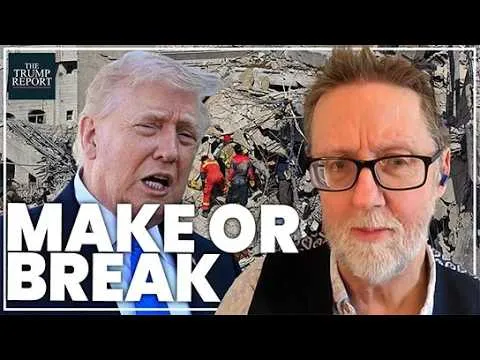
Trump’s ‘Loser’ Comments Reveal Deep Insecurity, Risky Foreign Policy
Donald Trump recently made waves with a comment at a summit in Miami, stating he likes to be around “losers” because it makes him feel better about his own success. This remark, while seemingly flippant, offers a troubling glimpse into his mindset and has significant implications for how he conducts foreign policy and surrounds himself with advisors. It suggests a pattern of surrounding himself with those who don’t challenge him, potentially leading to poorly planned and executed decisions, especially in high-stakes international affairs.
The ‘Loser’ Remark and What It Means
Trump’s statement, “I always like to hang around with losers, actually, because it makes me feel better. I hate guys that are very very successful and you have to listen to their success stories. I like people that listen to my success,” has drawn sharp criticism. Online reactions ranged from amusement to serious concern, with many pointing out that this explains his tendency to fire successful people or surround himself with inexperienced advisors in critical roles. Professor Scott Lucas of University College, Dublin, noted that this behavior stems from insecurity. “Beneath all that aggression and bravado of Trump… sometimes the most aggressive abrasive person is doing it not just because they might want to be a bully but because they’re really insecure,” Lucas explained.
This insecurity, Lucas suggests, drives Trump to surround himself with people who won’t outshine him. He pointed to the firing of Steve Bannon, a sharp but potentially overshadowing figure, and the departure of experienced military leaders like H.R. McMaster, John Kelly, and James Mattis. Even Rex Tillerson, as Secretary of State, was dismissed because he grew tired of Trump’s actions, leading Trump to boast he could outperform Tillerson on an IQ test. This preference for subservient figures is evident in Trump’s current circle, with long-time associates like Steve Witkoff and his son-in-law Jared Kushner taking on significant roles. Even Senator Marco Rubio, Lucas observed, maintains his position by constantly deferring to Trump, sometimes to the point of wearing ill-fitting shoes to obey a command. This dynamic raises serious questions about the quality of advice and planning within Trump’s administration, especially when dealing with complex international crises.
Iran Crisis: A Case of Poor Planning and Conflicting Narratives
The ongoing situation with Iran serves as a prime example of this flawed approach. Trump has issued ultimatums, giving Iran a short timeframe to make a deal or face escalation, while simultaneously sending military assets like the USS Tripoli with thousands of Marines. However, statements from experts and even allies like Senator Rubio have added confusion. Rubio suggested the conflict with Iran might last another two to four weeks, contradicting Trump’s tighter deadlines. Lucas expressed deep skepticism about any timelines Trump provides, calling them unreliable. “Everybody knows that two weeks is his default position to say, ‘Oh yeah, it’ll get done. It’ll get done,'” he stated.
Lucas outlined two main tracks: one of potential negotiation and mediation, and another of escalation. He noted that military preparations, such as the arrival of the USS Tripoli and the mobilization of the 82nd Airborne, were not fully in place when Trump issued his ultimatums. This suggests that Trump might be covering for a lack of readiness or is simply reacting to political pressure. “Is it possible that Trump actually is just trying to cover the fact that we’re not in position to attack?” Lucas questioned. The situation is further complicated by the lack of genuine negotiations. While there have been contacts, primarily through Steve Witkoff, they have amounted to little more than “talks about talks.” Trump’s administration has pushed for a “Venezuela model,” seeking a capitulation from within the Iranian regime, which has not materialized.
The Demands and the Reality
The demands presented to Iran—permanently ending its civilian nuclear program, limiting ballistic missiles, and breaking alliances like Hezbollah—are extreme and unlikely to be met unless Iran is in a state of utter desperation. Iran’s response has been equally firm: no concessions on the Strait of Hormuz, demands for security guarantees for its allies, and a refusal to abandon its nuclear program entirely. They have also made counter-demands for reparations and the withdrawal of US troops from the Middle East. Lucas described this as two sides presenting maximum demands with no apparent willingness to budge.
Adding to the complexity, Iran has not shown signs of desperation, despite facing internal challenges and external pressure from Israeli assassinations. They have survived for weeks, and the longer they endure, the more confident they become. Furthermore, the U.S. objective appears to be regime surrender rather than outright regime change, which is the Israeli aim. Iran has also managed to retaliate, hitting targets in Saudi Arabia, the UAE, and even Jerusalem, demonstrating their continued military capability. Intelligence suggests Iran still possesses over a thousand ballistic missiles and a significant drone program, making a swift capitulation unlikely.
Shifting Responsibility and Strategic Confusion
The discussion also touched upon the strategic confusion surrounding the Strait of Hormuz. Trump has vacillated on its importance, at times downplaying its relevance to the U.S. due to domestic oil production, and at other times criticizing NATO allies for not helping to secure it. Lucas believes Trump is trying to shift responsibility onto other nations, particularly China and India, which rely more heavily on the strait. This strategy, however, is questionable, as allowing other nations to control a vital global waterway raises concerns about U.S. influence and economic stability.
Even if U.S. oil imports don’t directly pass through the strait, its closure impacts global markets and alliances. The idea of Iran collecting tolls for passage, as suggested by Rubio, or even jointly controlling it with the U.S., as Trump has hinted, represents a significant departure from traditional U.S. foreign policy and suggests a lack of a clear, decisive strategy. Lucas found this particularly confusing, questioning who is determining which ships can pass if Iran is allowed to collect tolls. The administration’s approach seems to be one of reactive maneuvering rather than proactive, well-planned strategy.
The Danger of ‘Reckless’ Deployments
The possibility of deploying ground troops in Iran brings the risks into sharp focus. Bill Kristol, a prominent figure, described such a move as potentially “one of the most reckless deployments in American military history” due to a lack of planning. This echoes the broader criticism of the Trump administration’s approach to the Iran crisis, where planning for potential outcomes like the closure of the Strait of Hormuz or Iranian retaliation appears to have been inadequate. The question remains whether Trump would cross a point of no return by deploying troops without proper preparation, potentially leading to a prolonged and costly conflict.
Lucas emphasized the immense difficulty of any military operation in Iran. Taking key islands like Kar would involve navigating the Strait of Hormuz under fire, overcoming Iranian defenses, and facing potential attacks from the mainland. Beyond the military challenges, there’s the economic cost. Seizing Iranian oil infrastructure would cut off 90% of Iran’s oil exports, but it would also likely trigger severe retaliation and destabilize global energy markets. The lack of clear planning and the tendency to prioritize personal insecurity over strategic foresight make the situation incredibly dangerous. Trump’s focus on personal validation, as seen in his interaction with Dana Perino, rather than on the suffering of the Iranian people, highlights the deeply personal and potentially disastrous nature of his decision-making in critical foreign policy matters.
Why This Matters
Donald Trump’s preference for surrounding himself with “losers” and his pattern of firing capable advisors reveal a deep-seated insecurity that directly impacts his foreign policy decisions. This approach, as seen in the Iran crisis, leads to a lack of proper planning, conflicting narratives, and a dangerous escalation of tensions. The potential for a “reckless” military deployment without adequate preparation poses a significant threat to regional stability and international security. Understanding this dynamic is crucial for assessing the risks associated with Trump’s leadership, particularly in volatile geopolitical situations where clear-headed, strategic decision-making is paramount.
Implications and Future Outlook
The current situation with Iran, characterized by extreme demands and a lack of genuine negotiation, suggests a continued path of high tension. The Trump administration’s strategy appears to be one of brinkmanship, hoping for capitulation without a clear plan for escalation. This could lead to unintended consequences, including a wider regional conflict or a prolonged stalemate. The future outlook depends heavily on whether Trump prioritizes strategic planning and diplomatic engagement over personal insecurity and bravado. If the current trajectory continues, the world could face a more unstable Middle East, with the U.S. potentially entangled in a conflict born from poor judgment and a lack of foresight.
Historical Context
The current tensions with Iran are rooted in decades of complex history, including the 1953 coup, the 1979 revolution, the Iran hostage crisis, and the ongoing nuclear program dispute. U.S. policy towards Iran has often oscillated between confrontation and attempts at diplomacy. The Trump administration’s “maximum pressure” campaign, withdrawing from the Joint Comprehensive Plan of Action (JCPOA) in 2018, significantly escalated these tensions. The current rhetoric and military posturing echo past periods of heightened conflict, but the underlying dynamic of Trump’s personal approach to leadership adds a unique and potentially more volatile dimension.
Source: Trump inches from ‘most reckless’ move in US history | Scott Lucas (YouTube)

Related Articles

US Cardinal’s Papal Upset Redraws Vatican Influence
Pope Francis's election defied expectations, including his own, as an American cardinal believed an "American" Pope was unthinkable. The swift conclave surprised many, highlighting the unpredictable nature of papal selections and signaling a potential shift in the Church's global direction.

MN AG Blasts Trump’s ‘Wicked’ Insults Amid ‘No Kings’ Protests
Thousands protested President Trump's policies nationwide, with Minnesota AG Keith Ellison condemning his "wicked" and "corrupt" nature. Ellison also discussed a state lawsuit against the federal government over withheld evidence in officer-involved shootings.

Trump’s War Strategy Faces Skepticism Amidst Shifting Goals
President Trump's strategy in the ongoing Middle East conflict is facing increasing skepticism, even from his own base. While military actions have seen success, strategic goals are unclear and diverging from allies like Israel. The prolonged war and shifting public perception are creating a sense of uncertainty and doubt.