Trump’s Iran Claims: Shocked or Deluded by War Games?
Donald Trump claimed surprise over Iran's actions in the Strait of Hormuz, but experts suggest retaliation was inevitable. Military war games likely predicted such a scenario, raising questions about the advice given to the President.


Trump Claims Surprise Over Iran’s Strait of Hormuz Actions
Donald Trump recently stated that no one on his team predicted Iran’s actions in the Strait of Hormuz. This claim raises serious questions about the reliability of U.S. military intelligence and war-gaming simulations. The Strait of Hormuz is a vital waterway for global oil transport, making any disruption there a major concern.
The Inevitability of Retaliation
Many experts believe that Iran’s response was not a surprise but rather an inevitable outcome of long-standing tensions. Since the late 1970s, Iran has been seen as a strategic threat in the region. Disrupting shipping in the Strait of Hormuz has been a consistent part of Iran’s strategic thinking.
“It has been inevitable since the late ’70s when Iran became a great strategic threat to the Straits of Hormuz.”
This suggests that any serious military planning would have accounted for the possibility of Iran disrupting this crucial passage. The idea that U.S. military leaders would not have foreseen such a possibility seems highly unlikely.
War Games and Military Preparedness
War-gaming is a critical tool used by military strategists to prepare for various conflict scenarios. These simulations help leaders understand potential threats and develop effective responses. It is widely accepted among military professionals that completely preventing disruptions in the Strait of Hormuz is extremely difficult, if not impossible.
Therefore, the notion that U.S. Central Command would conduct war games predicting a guaranteed safe passage through the strait, especially while pursuing aggressive policies towards Iran, appears far-fetched. Such a prediction would contradict decades of military analysis and regional expertise.
Advice to the President
A leader receives advice from multiple sources, including political and military advisors. The transcript strongly suggests that military advisors would have informed President Trump about the high likelihood of Iran retaliating by disrupting the Strait of Hormuz. To believe otherwise would mean that either the military advisors failed to provide accurate assessments or that their warnings were ignored.
It is difficult to accept that the military leadership would have assured the President that the Strait of Hormuz could be kept open under all circumstances. This suggests that the administration was likely aware of the risks, even if the President chose to publicly express surprise.
Why This Matters
The discrepancy between President Trump’s stated surprise and the presumed military assessments highlights critical issues in national security decision-making. It raises questions about how intelligence is processed, how advice is given, and how leaders respond to it. If military predictions are dismissed or downplayed, it can lead to poorly informed policy choices and potentially dangerous escalations.
Understanding the true nature of the advice given to President Trump is crucial. It affects how we view the effectiveness of U.S. military intelligence and the President’s grasp of complex geopolitical situations. The ability to accurately predict and prepare for adversary actions is fundamental to maintaining stability and preventing conflict.
Historical Context
The Strait of Hormuz has been a focal point of geopolitical tension for decades. Iran, controlling much of its coastline, has historically viewed it as a strategic asset. Various incidents over the years have demonstrated Iran’s capability and willingness to threaten or disrupt shipping in the strait as a form of leverage or retaliation against perceived threats.
This history suggests that any U.S. administration engaging with Iran, particularly through sanctions or military posturing, would have been thoroughly briefed on the potential for a response involving the Strait of Hormuz. The current situation is not an isolated event but part of a long and complex history of regional power dynamics.
Implications and Future Outlook
The implications of this situation extend beyond the immediate geopolitical tensions. It calls into question the transparency and accuracy of information provided to top leadership. If presidents are not receiving or acting upon realistic threat assessments, U.S. foreign policy could become increasingly reactive and less strategic.
Looking ahead, it is essential for U.S. foreign policy to be grounded in realistic intelligence and analysis. War games and simulations must accurately reflect potential adversary capabilities and intentions. Leaders need to be prepared to confront difficult truths about regional dynamics, even when those truths are uncomfortable. The future security of vital waterways like the Strait of Hormuz depends on such clarity and preparedness.
Source: Was Trump really ‘shocked’ — or was Iran’s retaliation inevitable? (YouTube)

Related Articles


Mexico Navigates US-China Rivalry
Mexico is caught in a geopolitical tug-of-war between the United States and China. The nation must carefully balance its economic needs and strategic interests with both superpowers. This situation highlights Mexico's growing importance in global affairs.
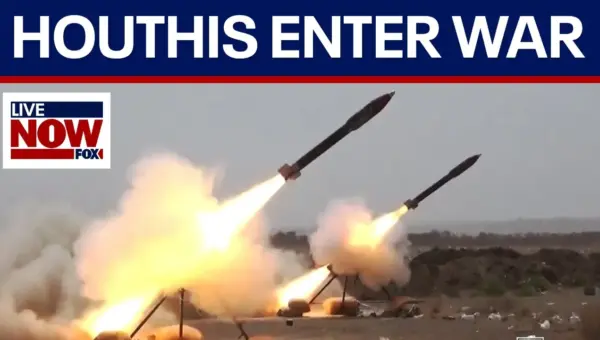
Iran-Backed Houthis Strike Israel, Escalating Regional Tensions
Iran-backed Houthi rebels have launched a missile attack targeting Israel, marking their first such strike since the current Middle East conflict began. The Israeli military confirmed the interception of the projectile. Analysts view this action as part of Iran's broader regional strategy, highlighting the regime's reliance on proxy forces amid internal weaknesses.

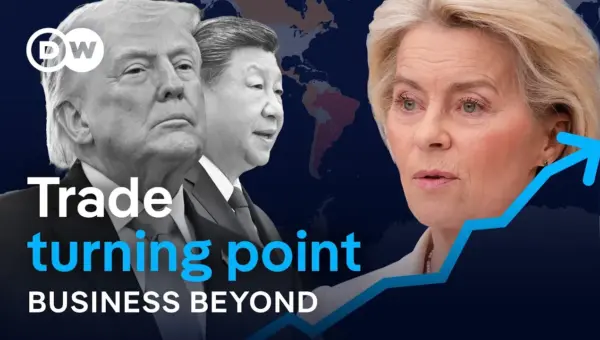
Europe Strikes New Trade Deals, Eyes Global Influence
The European Union is actively forging new trade alliances, notably with South American nations like Brazil, to reduce reliance on China and the US. Driven by the need for critical resources like rare earth metals and the desire to boost its own industries, Europe is making strategic concessions and seeking new markets, despite facing internal criticism and a changing global economic landscape.