Houthis Fire Missile at Israel, Iran’s Guard Takes Center Stage
Yemen's Houthi group has fired a missile at Israel, signaling a potential escalation of the regional conflict. Meanwhile, Iran's powerful Islamic Revolutionary Guard Corps (IRGC) appears to be consolidating its control over the country's leadership following reported strikes. This shift places hardline figures at the forefront of decision-making.

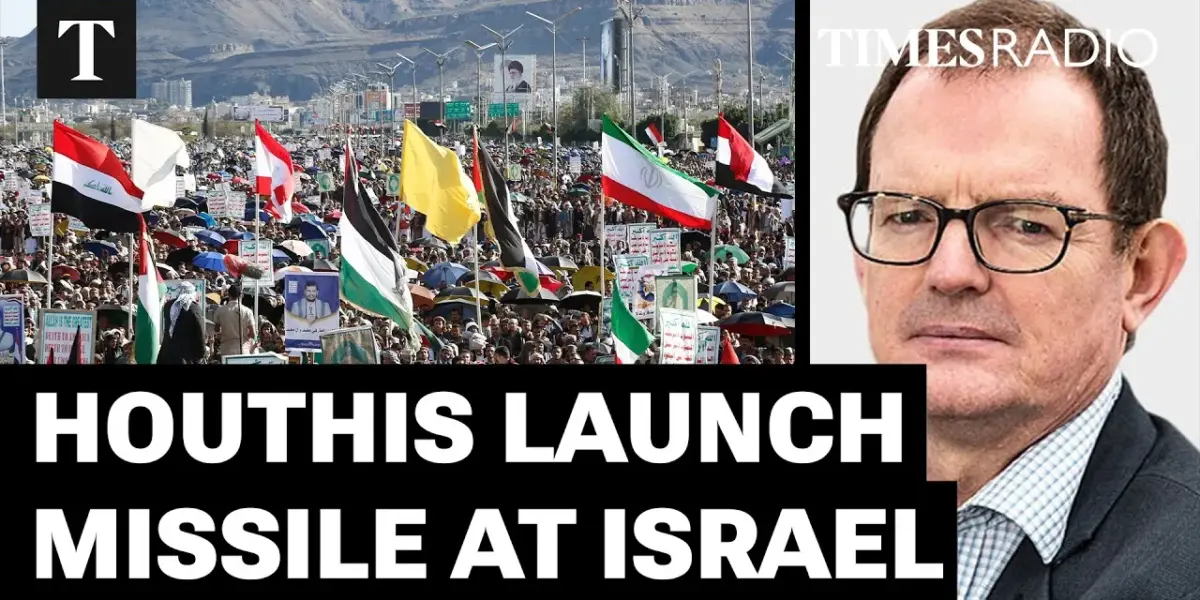
Houthi Missile Strike Signals Escalation
The Israel Defense Forces (IDF) reported identifying a missile launched from Yemen, a move that follows a statement from Yemen’s Houthi group. A Houthi spokesperson indicated they would enter the ongoing conflict if attacks on Iran continued. This development raises concerns about a wider regional war.
The Houthis, who currently control the northwestern part of Yemen due to the country’s civil war, are backed by Iran. Many observers had wondered why they hadn’t joined the conflict earlier, given their close ties to Hezbollah, another Iranian-backed group already involved. The IDF claims this has now happened, though the Houthis have not yet attempted to block shipping lanes like the Bab-el-Mandeb strait, which leads to the Suez Canal. This is a significant concern, especially with ongoing tensions in the Strait of Hormuz.
Iran’s Power Structure Shifts to Revolutionary Guard
Questions are also emerging about who truly leads Iran, particularly after Supreme Leader Ayatollah Khamenei was reportedly killed in early Israeli-US attacks. The Islamic Revolutionary Guard Corps (IRGC), a hardline group, appears to have moved from behind the scenes to a more prominent role. Richard Spencer, The Times’ correspondent in Tel Aviv, has been analyzing this shift.
Spencer explained that Iran’s system, while controlled, is not completely closed off like North Korea. It has formal processes and allows for some public statements and questions from reporters. However, the press is heavily managed and loyal to the regime, though subtle shades of opinion can be discerned. By observing who says what, where, and when, one can gauge internal power dynamics to some extent.
The Rise of the IRGC
A key focus of Spencer’s reporting is the potential succession of Ayatollah Khamenei’s son, Mosha, who is not seen as a natural fit for the role of Supreme Leader. Unlike his father or grandfather, he is not a senior cleric with widespread religious authority, nor did he rise through the regime’s political ranks. Many analysts believe he was placed in a powerful position primarily due to his close ties to the Revolutionary Guard.
The IRGC functions as both a military force and an ideological training ground. It places ideologically committed veterans throughout the system, not just in politics but also in business and state-owned enterprises. Many of these individuals are now in their 60s and 70s and gained significant public respect during the brutal Iran-Iraq War in the 1980s. They volunteered and fought bravely against Saddam Hussein’s invasion, earning a level of legitimacy that has helped them advance.
Hardliners Consolidate Control
As a result of this deep influence and control over power centers, the hardline faction within Iran seems to have taken over. Key positions previously held by individuals killed in early strikes are now filled by hardline figures. Examples include Musavi, who went from vice president to a senior advisor to the Supreme Leader, and Ahmed Vahidi, a former defense minister now leading the IRGC. These individuals are effectively making critical decisions about the regime’s future actions.
The IRGC’s Deep Roots and Motivation
Spencer compared Iran’s situation to countries like Egypt and Pakistan. In those nations, while there are civilian government structures like presidents and parliaments, the military forms the bedrock of the regime. The military often has significant financial interests, motivating them to maintain power. They also benefit from the general public’s respect for the armed forces.
In Iran’s case, the IRGC’s legitimacy is further enhanced by their direct combat experience in the Iran-Iraq War. These are ideologues who fought in the trenches, making them determined and unlikely to give up power easily. Their deep reach into institutions and control over finances make them extremely difficult to dislodge through conventional means.
An Entrenched System
Spencer noted that simply bombing the IRGC or their financial interests might not be effective. Instead, it could incentivize them to negotiate to preserve their income streams. Dislodging them is very challenging because they are deeply embedded throughout the system. Unlike regimes centered on a single leader, like those of Assad or Saddam Hussein, Iran’s structure is an ideological and institutional platform for rule.
He drew a parallel to China’s Communist Party, which also has pervasive influence across the state and business sectors. Spencer suggested that significant change in Iran, if it comes, might resemble the shift seen in China in the 1970s. At that time, a new generation of apparatchiks took over and steered the country in a different direction. This, he believes, is the most likely path to improving the lives of the Iranian people and their relations with the rest of the world.
Source: No Surprise At Houthis Joining The War | Richard Spencer (YouTube)

Related Articles

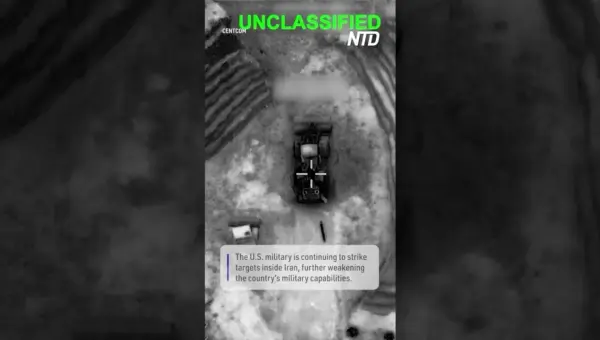
US Strikes Cripple Iran’s Military Might, CENTCOM Reports
U.S. Central Command reports ongoing strikes inside Iran are significantly weakening its military power. This direct action aims to reshape regional security dynamics, but carries risks of escalation. The long-term impact depends on Iran's response and ability to adapt.


Iran Targets US With Cyberattacks, Escalating Digital Warfare
Iran is increasingly using cyberattacks to challenge the U.S., as seen in a recent hack of the FBI director's account. Experts say this is a strategic shift due to Iran's limitations in conventional warfare. The U.S. needs to strengthen its digital defenses, focusing on encryption and cloud computing, rather than solely relying on traditional security measures.

Iran Hacks FBI Chief, Exposing U.S. Cyber Vulnerabilities
A recent hack of FBI Director Kash Patel's personal email by an Iran-linked group highlights Iran's growing cyber threat to the U.S. Experts explain how simple security oversights are exploited, emphasizing the need for basic defenses like two-factor authentication to protect against propaganda and potential infrastructure attacks.