Stocks Ignore War Risks, Focus on “Taco Moments”
Stock markets appear to be overlooking the severe supply chain risks stemming from the Iran conflict, focusing instead on potential diplomatic de-escalations. While the S&P 500 shows resilience, bond and commodity markets signal deep concern over disruptions to critical resources like LNG, helium, and fertilizers.

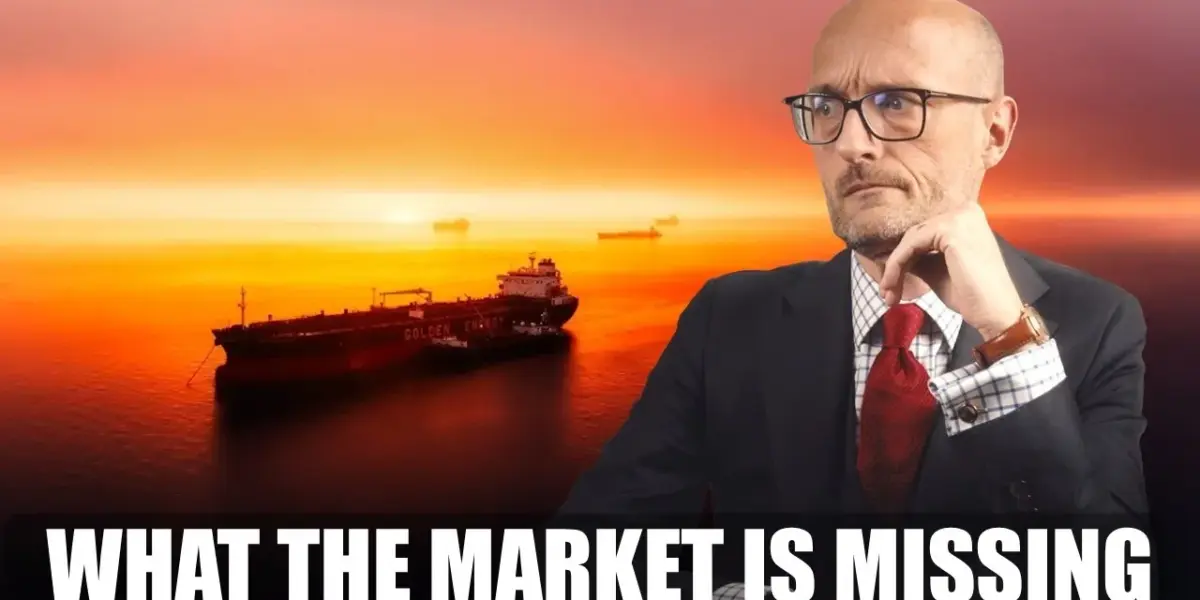
Stocks Ignore War Risks, Focus on “Taco Moments”
The stock market has shown a surprising optimism regarding the ongoing conflict in Iran. While tensions rise and crucial supply routes are threatened, equity investors seem to be betting on quick resolutions. This disconnect between market sentiment and geopolitical realities is raising eyebrows among analysts.
Market’s Calm Contrasts With Grim Bond and Commodity Outlook
The S&P 500, a key stock market index, had been largely unfazed by the escalating war in Iran, leading some to believe the conflict was a minor issue. However, this calm was shattered on Thursday, which saw the worst stock market decline since the war began. The S&P 500 dropped to a six-month low. Meanwhile, the tech-heavy Nasdaq officially entered a technical correction, meaning it fell more than 10% from its recent peak. In stark contrast, sentiment in the bond and commodity markets remains grim. Analysts there are experiencing what one observer called “alarming cognitive dissonance,” a state of confusion due to conflicting information.
“Term Premium” Surge Signals Deeper Worries
In the bond market, a key indicator known as the “term premium” has surged. This premium is essentially the extra return investors demand for holding long-term debt, acting like an insurance payment. While 10-year interest rates have climbed, inflation expectations have remained relatively flat. This suggests investors are not just worried about rising prices but also about the future. They fear that in a world facing supply disruptions, bonds may no longer offer protection against stock market downturns. Instead, both asset classes might fall together.
UK Faces “Banker’s Nightmare”
The United Kingdom is grappling with a difficult economic situation. Yields on 30-year government bonds have reached 5.5%. The Bank of England is facing a scenario that central bankers dread: an energy shock that fuels inflation while simultaneously slowing economic growth. This challenging environment is partly being watched through a new lens on Wall Street: the “Trump Pressure Index.” Developed by Deutsche Bank, this index tracks changes in approval ratings, inflation expectations, stock market performance, and U.S. Treasury yields. The idea is to gauge how much pressure President Trump is under to adjust his strategy in Iran.
The “Taco Moment” Strategy
Traders are using this index to predict when the administration might experience a “Taco Moment.” This acronym, coined about a year ago, stands for “Trump Always Chickens Out.” This prediction seemed to play out on Thursday. Just minutes after the stock market closed, the President announced a 10-day extension to his peace deadline, postponing threats to attack Iranian energy facilities. This move paused the immediate escalation of hostilities.
Do Traders Believe the Peace Talk?
The question remains whether stock traders truly believe these announcements. In the past, the President has declared conflicts “very complete” or announced “very good and productive conversations” with Iran. These statements have often led to temporary stock market gains and falling oil prices. However, these market moves have sometimes reversed as events in the Middle East continued to unfold. Even when Iranian leaders denied holding talks, the market reacted positively to the possibility of de-escalation.
Buying Capitulation, Not Peace
Some analysts suggest that traders aren’t necessarily buying peace but rather signaling that the President’s resolve might be weakening. They are buying what they perceive as capitulation, or giving in. However, there’s a significant concern that a real-world conflict cannot be resolved as easily as a trade dispute. Unlike trade disagreements, which can be settled with administrative actions, the current conflict involves physical infrastructure, mines, and complex supply chains.
Supply Chain Bottlenecks Beyond Oil
While much of the news coverage has focused on oil prices, which hit $110 per barrel, the real crisis may lie in commodities that are much harder to replace. Liquefied Natural Gas (LNG) is a prime example. Qatar, a major LNG producer, has seen nearly all its exports halted due to the closure of the Strait of Hormuz. The Razan facility in Qatar has suffered significant damage, with warnings that 17% of its capacity will be out of service for three to five years. This creates a substantial gap in the global energy supply.
Helium, Fertilizers, and Aluminum at Risk
Another critical commodity is helium. About 33% of global helium supply passes through the Strait of Hormuz. Helium is essential for cooling the powerful magnets used in semiconductor chip manufacturing, and there is no synthetic substitute. Furthermore, a third of the world’s seaborn fertilizer trade and a quarter of its seaborn aluminum also pass through the strait. The disruption to fertilizer supplies poses a significant threat to global food security, potentially leading to record levels of acute hunger by 2027, according to the World Food Program.
The “Shutin Wells” Problem
Even if a ceasefire is declared, restarting oil production faces major hurdles. When oil wells are shut down for extended periods, the oil inside can thicken and clog the rock formations. Groundwater can also seep in, permanently damaging productivity. Many wells have been sealed with mud or cement plugs, which must be carefully drilled out. Rushing the process could damage the entire oil field. Experts estimate this restart process could take months.
Naval Operations and Logistical Jams
Reopening the Strait of Hormuz safely is a complex naval operation. It involves hunting down threats like drones and speedboats, followed by a painstaking process of clearing mines. Only then can commercial tankers receive continuous naval escorts. The logistical challenges are immense. Shipping traffic through the strait has plummeted by 97%. Many ships are using a “dark fleet” or paying hefty fees for passage. Insurance premiums have skyrocketed, and many policies have been canceled. Ship captains and crews are unlikely to return to a recently cleared war zone until naval authorities give a sustained all-clear and insurance markets stabilize.
Energy Vulnerability in the AI Era
While the global economy is less reliant on oil for direct energy needs than in the 1970s, energy vulnerability has shifted to the power grid. Electricity prices are often set by natural gas-fired power plants. When LNG supplies are disrupted, the shock impacts not just gasoline prices but also electricity costs. The modern U.S. economy faces a new weakness: the AI revolution. The buildout of massive data centers, which are huge energy consumers, is expected to significantly increase global electricity demand. By 2030, data centers could add 50 gigawatts to global demand, equivalent to the total power consumption of Germany and France combined. This reliance on stable energy supplies could be severely tested by geopolitical instability.
Geopolitical Winners and Losers
In geopolitical conflicts, victory is not always about military might but about endurance. While Iran may be a survivor, demonstrating its ability to disrupt global trade, the long-term consequences of damaged infrastructure and supply chain disruptions are significant. The conflict highlights critical single points of failure in the modern global economy, suggesting that the fallout will be felt long after the shooting stops.
Source: The War Is Going Great (According to the S&P 500) (YouTube)

Related Articles

U.S. Iran Tensions Rise Amid Shifting Alliances
Rising tensions between the U.S. and Iran are creating a volatile geopolitical situation. With conflicting signals on de-escalation and potential shifts in alliances like NATO and U.S.-Israel relations, the path forward remains uncertain. The global economy and regional stability hang in the balance.


Iran Targets US With Cyberattacks, Escalating Digital Warfare
Iran is increasingly using cyberattacks to challenge the U.S., as seen in a recent hack of the FBI director's account. Experts say this is a strategic shift due to Iran's limitations in conventional warfare. The U.S. needs to strengthen its digital defenses, focusing on encryption and cloud computing, rather than solely relying on traditional security measures.
Ukraine Strikes Russian Oil Refinery, Eyes Iran Threat
Ukrainian forces struck a key Russian oil refinery, disrupting Moscow's war capabilities. Meanwhile, Finland's president urged continued U.S. support for Ukraine, as Kyiv shares its air defense expertise globally amid growing geopolitical complexities involving Iran and potential sanctions against Hungary.