Germany’s Anti-AfD Firewall Crumbles Amidst Shifting Politics
Germany's political 'firewall' against the far-right AfD party is showing significant cracks due to rising AfD popularity and recent instances of cooperation. Historically rooted in Germany's experience with Nazism, the firewall aimed to prevent extremist parties from gaining power. However, shifts in the AfD's rhetoric and increased AfD strength, especially in eastern Germany, are challenging this long-standing political norm.

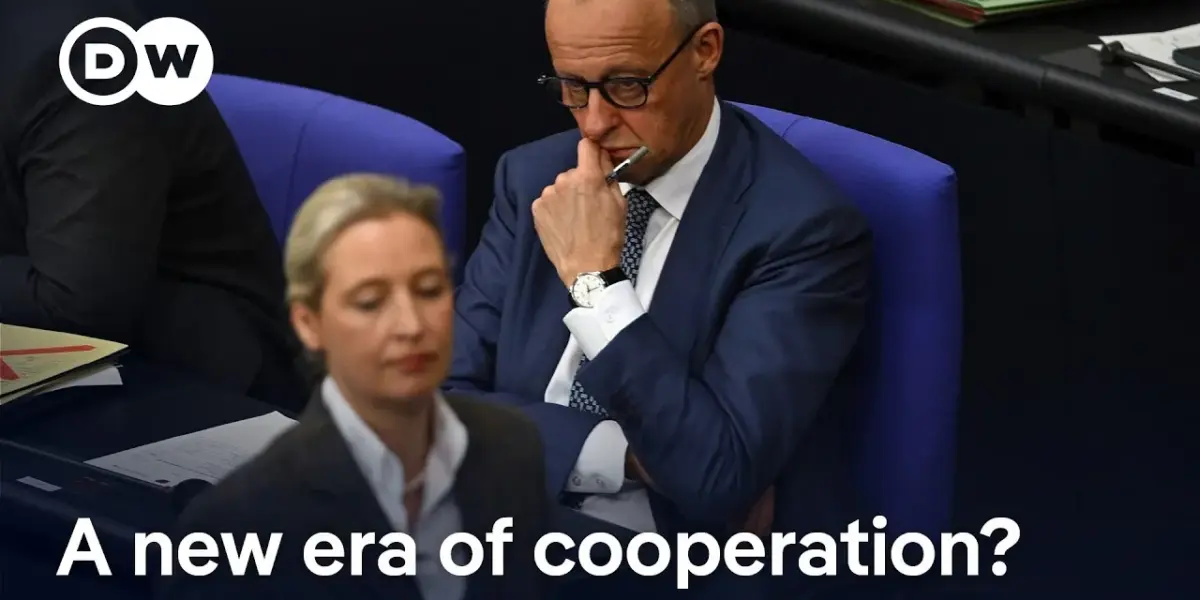
Germany’s Political Firewall Against Far-Right AfD Shows Cracks
Germany’s long-standing political agreement, known as the ‘Brandmauer’ or firewall, which aimed to isolate the far-right Alternative for Germany (AfD) party, is facing unprecedented pressure and shows significant signs of crumbling. This unwritten rule prevented mainstream political parties from cooperating with the AfD, which was deemed too extreme for mainstream politics. However, as the AfD’s popularity has surged, particularly in eastern Germany, this firewall is being challenged from both outside and within Germany’s political establishment.
Historical Roots of the Firewall
The concept of the firewall is deeply rooted in Germany’s painful history, specifically its experience with Adolf Hitler’s Nazi Party in the 1930s. At that time, conservative politicians mistakenly believed they could control Hitler after he rose to power. This miscalculation led to devastating consequences. Following the Allied victory, Germany’s post-war leaders learned a crucial lesson: anti-fascist forces needed to unite to prevent such a catastrophic regime from ever returning or repeating its horrors. This historical trauma forged a strong consensus to keep extremist parties, like the AfD, out of power at all costs.
AfD’s Transformation and Security Concerns
The AfD emerged in 2013 as an economically liberal party focused on opposing the Euro. However, around 2015, the party underwent a significant ideological shift. It adopted a more nationalist stance, employing rhetoric that warned against Islam and used coded, sometimes racist, stereotypes. Prominent figures within the AfD also began to downplay Germany’s historical responsibility for confronting Nazi crimes. These changes led Germany’s domestic security service to label the AfD a far-right extremist threat, citing its anti-democratic and nationalist views. A high-ranking conservative official recently described the AfD as having members who are pro-Putin, anti-Semitic, and racist, stating that the party’s ethos is fundamentally at odds with liberal democracy.
How the Firewall Works in Practice
In Germany’s coalition-based government system, the firewall meant that other parties would rule out forming any governing partnerships with the AfD. This policy applied across all levels of government, including the European Parliament. Even though the AfD is the second-largest party in the German Parliament, holding about 20% of the seats, mainstream parties have consistently refused to vote for AfD nominees for key positions like vice presidents or committee chairs. The AfD feels this exclusion is unfair, with one member lamenting that even nominating figures like Jesus Christ and Mahatma Gandhi wouldn’t secure their votes. Consequently, other parties also reject AfD-proposed motions and amendments, refusing to rely on their votes.
Breaching the Firewall: A Historic Moment
While the firewall has largely held, it has been breached, causing significant controversy. In January 2025, a shocking incident saw the AfD and the conservative CDU party vote together on a sweeping migration motion. This vote occurred just a week after a rejected asylum seeker attacked kindergarten children, killing one child and a man who intervened. The timing coincided with a highly charged election campaign. The CDU’s candidate for chancellor, Friedrich Merz, pushed the motion forward, and it passed with the AfD’s support. Merz insisted this was not cooperation, but other parties and the public strongly disagreed. Tens of thousands protested, viewing the vote as a clear violation of a political taboo. The incident led to widespread criticism and was seen as a major blow to the firewall.
Cooperation at the European Level
More recently, the firewall’s integrity was questioned again when members of a conservative group in the European Parliament were found to be part of a WhatsApp group with far-right politicians, including an AfD lawmaker. Within this group, they reportedly collaborated on legislation to tighten asylum rules. The AfD celebrated this as a historic success. Chancellor Olaf Scholz expressed disapproval of the staff-level cooperation. However, center-left and left-wing parties seized on the news, accusing the conservatives of betrayal. The AfD views this cross-party collaboration as a crucial step toward normalizing cooperation, believing it will eventually weaken the firewall within Germany and lead to broader partnerships.
Challenges in Eastern Germany and Local Politics
The AfD’s growing strength, especially in eastern Germany where it won most constituencies outside Berlin in recent elections, makes it increasingly difficult to ignore. At the local level, particularly in eastern states, governing without the AfD’s involvement is becoming nearly impossible. Rejecting proposals simply because the AfD supports them can inadvertently strengthen the party’s narrative. This situation has led to internal debate within Germany’s established parties. Some, like a former CDU leader, have called for a re-evaluation of the firewall, suggesting the possibility of working with the AfD on specific common issues. Chancellor Merz, however, remains firm, warning that the AfD aims to dismantle Germany as we know it and that their offers of cooperation are a threat.
Local Innovations and the Path Forward
Despite the high-level political debates, some local politicians are forging different paths. Luca Paunovic, the mayor of Gartz, a town near the Polish border, started his own movement to bypass traditional party politics and the firewall. He believes that keeping party politics out of local government allows for more efficient work and avoids lengthy debates. Paunovic, who sits on the city council alongside AfD members, argues that the best way to counter the AfD is not by isolating them but by genuinely addressing voters’ concerns. He suggests that if mainstream parties like the SPD and CDU were more present and responsive in rural areas, many problems could be solved, leading to weaker AfD support.
The Future of the Firewall
With symbolic votes in the German Parliament, cooperation at the European and local levels, and societal pressures mounting, the firewall is undeniably weakening. The AfD’s strategy of gradually chipping away at established norms appears to be working, creating divisions between the conservative CDU and other parties. The CDU faces a difficult choice: maintain its stance against the AfD and risk losing more support, or dismantle the firewall, potentially splitting the party and alienating voters. This existential dilemma for Chancellor Merz and his party could have profound consequences for Germany’s political future and its democratic identity.
Source: Why Germany's anti-AfD firewall is crumbling | DW News (YouTube)

Related Articles


CPAC Crowd’s Boos Reveal GOP’s Deep Divide
A moment at CPAC where the crowd booed impeachment hearings reveals deep divisions within the Republican party. Younger supporters are concerned the GOP base is crumbling due to issues like the Iran war, gas prices, and other controversies.


Trump Derails Bipartisan Deal, Halts Government Funding
Senate Republicans united on a funding bill for the Department of Homeland Security, but Donald Trump's opposition led House Speaker Mike Johnson to kill the deal. This political maneuver left TSA workers unpaid and highlighted the influence of personal directives over legislative progress.


Fox News Hosts Spark Outrage With Shocking Remarks
From commentary on candy mascots to serious accusations about election fraud, several Fox News hosts have made controversial statements that sparked outrage and consequences. This list details the most provocative remarks, including advertiser boycotts, public backlash, and a massive defamation lawsuit.