U.S. Iran Tensions Rise Amid Shifting Alliances
Rising tensions between the U.S. and Iran are creating a volatile geopolitical situation. With conflicting signals on de-escalation and potential shifts in alliances like NATO and U.S.-Israel relations, the path forward remains uncertain. The global economy and regional stability hang in the balance.

U.S. Iran Tensions Rise Amid Shifting Alliances
The United States and Iran are locked in a tense standoff, with actions and statements suggesting a potential for escalation despite some U.S. signals to de-escalate. This complex situation involves shifting alliances and competing interests among global powers, creating a volatile environment in the Middle East.
Trump’s Strategy: Strength or Brinkmanship?
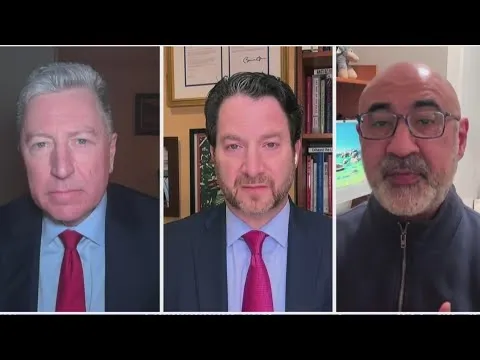
Former NATO Ambassador Kurt Volker suggests that President Trump’s approach aims to project overwhelming strength, believing he can force Iran’s regime to surrender. This strategy might even involve the potential use of ground troops. However, Volker doubts Iran’s leadership will capitulate easily. He points out that Iran has the ability to inflict significant economic pain on the global economy with relatively low cost to itself. This suggests Iran may choose a path of sustained economic pressure rather than direct confrontation.
President Trump has repeatedly spoken about regime change in Iran. Yet, as Dr. Keon Taj Bhatia notes, the ideology of the Islamic Republic and many of its core supporters remain in place. Even when leaders are removed, replacements are often ready to step in. This indicates that simply targeting leadership might not achieve the desired regime change. Bhatia also suggests that Iranians may view Trump’s actions as a strategic ploy, creating internal divisions and uncertainty about who the U.S. is actually negotiating with.
Iran’s Readiness for Democracy?
Dr. Bhatia, drawing on her experience living and working in Iran, argues that the country is more prepared for democracy than many assume. Unlike nations where democratic institutions must be built from scratch, Iran already possesses them. However, these institutions have been taken over and controlled by the current authoritarian regime. She believes there is a culture of participation and enough skilled individuals to govern effectively, preventing the country from becoming a failed state. The main obstacle to this potential, she explains, is the repressive government that shows no signs of relinquishing power soon.
U.S.-Israel Coordination Under Scrutiny
Tensions between the U.S. and Israel, though often downplayed, were highlighted when Iran’s Foreign Minister accused Israel of coordinating attacks with the U.S. on Iranian sites, including steel factories and nuclear facilities. Iran vowed retaliation. Joel Rubin, former Deputy Assistant Secretary of State, views this as an attempt to divide U.S. and Israeli forces. He acknowledges that natural tensions exist between allies with different immediate priorities. Israel, focused on its own existence and regional needs, acts differently than the U.S. Rubin believes these are minor disagreements and that current operations are largely coordinated between the two nations.
NATO’s Role and U.S. Expectations
President Trump has also voiced criticism of NATO, calling its lack of involvement a “tremendous mistake.” He feels the U.S. spends too much protecting allies who do not reciprocate. Ambassador Volker suggests Trump’s strong words about NATO might be posturing, not a firm policy shift. He points out that Trump launched recent military actions without warning, leaving allies unprepared and unable to generate support. When NATO allies offered to help, particularly with securing energy routes from the Persian Gulf, Trump reportedly dismissed the offers as too late. Volker sees this as Trump shifting blame rather than engaging allies constructively.
Rubin agrees that the U.S. lacked a strong diplomatic strategy to support recent actions. However, he believes NATO countries have a vested interest in a stable outcome in the region. This includes ensuring energy security, preventing Iran from acquiring nuclear weapons, and maintaining regional stability after the conflict. While NATO publics may be hesitant, Rubin notes that most countries are either condemning Iran’s actions or remaining silent, rather than actively opposing the U.S. stance. This quiet support is an interesting development in itself.
The Strait of Hormuz and Future Scenarios
Looking ahead, the situation in the Strait of Hormuz remains a critical point of concern. Dr. Bhatia remains skeptical about the possibility of negotiations or diplomatic openings. She believes the Iranian regime is committed to fighting and will continue its resistance until significantly weakened or until its allies collapse. However, she does not foresee this happening in the immediate future, perhaps within the next three to four months. The Iranian society, she notes, is currently holding together, with people waiting to see how the military operations unfold.
Global Impact
This ongoing U.S.-Iran tension has significant global implications. The threat to the Strait of Hormuz, a vital artery for global oil transport, could disrupt energy markets worldwide. Any escalation could lead to widespread economic instability, impacting countries far beyond the Middle East. The differing approaches between the U.S. and its traditional allies, like Israel and NATO members, also reveal potential cracks in long-standing alliances. This could reshape geopolitical alignments and create new power dynamics on the international stage.
Historical Context
The current situation is rooted in decades of complex U.S.-Iran relations, including the 1953 coup, the 1979 revolution, and subsequent periods of tension and sanctions. The debate over regime change and Iran’s nuclear program are recurring themes. The strategic importance of the Strait of Hormuz has been a focal point in regional security discussions for decades, with various U.S. administrations seeking to ensure freedom of navigation.
Economic Leverage
Economic tools, such as sanctions, are a primary means of pressure in this conflict. Iran’s ability to threaten global energy supplies highlights its own form of economic leverage. The stability of oil prices and the security of energy routes are crucial economic interests for many nations, giving Iran significant influence despite its economic challenges.
Future Scenarios
Several future scenarios are possible. One is a continued stalemate with ongoing low-level conflict and economic pressure. Another is a de-escalation through renewed diplomatic efforts, though this seems unlikely in the short term. A more concerning scenario involves a significant escalation, potentially impacting global energy markets and regional stability. The possibility of internal change within Iran also remains, though its timing and nature are uncertain.
Source: US war in Iran: Panel gauges whether end or escalation is at hand | On Balance (YouTube)

Related Articles


US Cardinal’s Papal Upset Redraws Vatican Influence
Pope Francis's election defied expectations, including his own, as an American cardinal believed an "American" Pope was unthinkable. The swift conclave surprised many, highlighting the unpredictable nature of papal selections and signaling a potential shift in the Church's global direction.


Mexico Navigates US-China Rivalry
Mexico is caught in a geopolitical tug-of-war between the United States and China. The nation must carefully balance its economic needs and strategic interests with both superpowers. This situation highlights Mexico's growing importance in global affairs.
Europe Strikes New Trade Deals, Eyes Global Influence
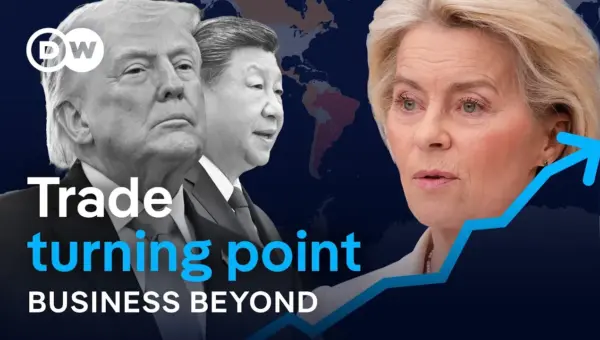
The European Union is actively forging new trade alliances, notably with South American nations like Brazil, to reduce reliance on China and the US. Driven by the need for critical resources like rare earth metals and the desire to boost its own industries, Europe is making strategic concessions and seeking new markets, despite facing internal criticism and a changing global economic landscape.