Iran’s Missile Threat Reduced by 90%, Analyst Says
An analyst reports that Operation Epic Fury has degraded Iran's missile launchers by 90%, despite challenges in targeting hidden sites. The conflict's duration and media coverage are also discussed, with implications for global energy markets and investor confidence.

Iran’s Missile Threat Reduced by 90%, Analyst Says Amidst ‘Operation Epic Fury’
Efforts by the United States and Israel in the conflict with Iran, dubbed ‘Operation Epic Fury,’ have significantly degraded Iran’s missile capabilities. According to a senior research fellow at the Hudson Institute, Rebecca Heinrichs, these combined actions have resulted in a 90% decrease in Iran’s missile launchers early in the conflict. This assessment comes as official reports suggest only about a third of Iran’s missile arsenal has been destroyed, highlighting the complexity of assessing battlefield success.
Heinrichs advises caution regarding anonymous sources in media reports. Instead, she points to statements from Admiral Cooper, head of Central Command, for more reliable insights into the operation’s impact. The focus, she explained, is not just on the total number of missiles but also on destroying their launch platforms. This includes challenging missions to locate and eliminate hidden sites, often in mountainous terrain.
The longer U.S. forces operate within Iran, the better their intelligence becomes, leading to more effective elimination of threats. This ongoing process aims to dismantle Iran’s military infrastructure and reduce its capacity to project power and terrorize the region.
Challenges in Targeting Hidden Missile Sites
The difficulty in locating and destroying Iran’s missile assets was underscored by recent events. When Iran launched missiles toward Diego Garcia, it revealed the sophisticated nature of their hidden infrastructure. Some sites are reportedly located within mountains, creating a ‘subway system’ that is hard to penetrate with traditional weapons.
Traditional ‘bunker buster’ bombs may not be deep enough to destroy these hardened targets. This has led to discussions about the potential need for ground forces to complete the mission, as airpower alone may not be sufficient. The 82nd Airborne Division’s potential deployment suggests a shift towards more direct action.
Operation Epic Fury has been ongoing for just over three weeks. As U.S. forces remain engaged, Iran is revealing more about its hidden missile sites. Once these locations are identified, specialized weapons and tactics can be employed to strike them effectively. While troop deployments are increasing, the use of ground forces will be strategic, with specific units trained for specialized missions like dismantling missile sites along the coast.
Media Coverage and Information Warfare
Media coverage of the conflict has been a point of concern for analysts like Heinrichs. She noted that some media outlets, including The Economist, have portrayed Iran as winning or gaining control, which she disputes. Heinrichs highlighted a significant bias in reporting, citing that a large percentage of war crime accusations in media coverage are directed at the U.S. or Israel, while Iran’s actions receive less scrutiny.
This disparity, she argues, reflects an information warfare environment where even domestic news channels may not provide a clear understanding of the situation. Heinrichs emphasized that the U.S. and Israel prioritize intentional targeting of military assets, avoiding civilian casualties. When civilian deaths do occur, they are regrettable accidents, unlike Iran’s documented practice of directly targeting civilian areas.
“We are trying to lift this regime off the backs of the Iranian people so they can take back their own country,” Heinrichs stated, contrasting the strategic goals of the U.S. and Israel with Iran’s alleged aim to sow terror.
Market Implications and Timeline
The ongoing conflict and its potential duration are creating uncertainty in financial markets. Investors are looking for clarity on the timeline, as a quicker resolution is generally seen as beneficial for market stability. The removal of Iran, described as the largest state sponsor of terrorism, from the Middle East is viewed as a positive development for global markets.
President Trump remains committed to completing the mission in Iran. Analysts suggest the operation is likely several weeks away from a full resolution. A successful conclusion could lead to international efforts to secure the Strait of Hormuz, through which about 20% of the world’s energy supply passes. This would help stabilize energy markets and ensure the free flow of oil.
Finishing the job is crucial to prevent a weakened but still capable Iranian regime from continuing its destabilizing activities, particularly in the Strait of Hormuz. The eventual stability of energy flows is a key factor for global economic health.
Market Impact
The conflict in the Middle East, particularly concerning Iran’s missile program and its role as a major oil transit route, has direct implications for global energy markets. A prolonged conflict or escalation could lead to disruptions in oil supply, causing price volatility. Conversely, a swift and successful resolution, as suggested by the 90% reduction in Iranian missile launchers, could ease these concerns and lead to market stabilization.
Investors should monitor developments related to the Strait of Hormuz and global energy prices. The successful dismantling of Iran’s missile threat and the stabilization of regional energy flows would likely be viewed positively by financial markets, potentially boosting investor confidence and economic activity.
What Investors Should Know
- The U.S. and Israel’s operation has significantly reduced Iran’s missile launcher capacity by 90%.
- Locating and destroying Iran’s hidden missile sites presents a major challenge, requiring advanced tactics.
- Media coverage may not always reflect the reality of the conflict, with a focus on information warfare.
- The U.S. and Israel aim to target military assets, while Iran allegedly targets civilians.
- A resolution to the conflict is expected within several weeks and could stabilize global energy markets.
- Securing the Strait of Hormuz is critical for global energy supply and economic stability.
Source: WATCH: Analyst breaks down media coverage of Operation Epic Fury (YouTube)

Related Articles
Iran Missile Strikes Injure US Troops, Raise War Concerns
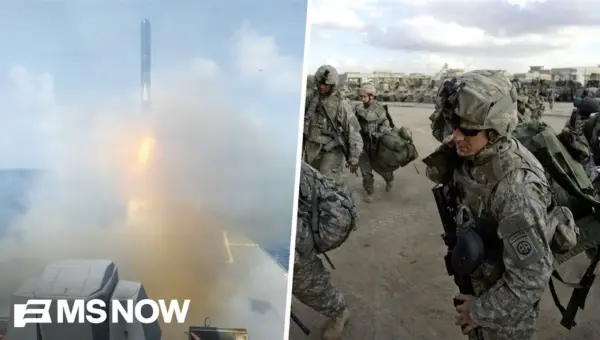
Iranian missile strikes have injured U.S. service members, escalating tensions as the conflict nears one month. The attacks are raising concerns about the effectiveness of U.S. military strategy and the depletion of crucial missile stockpiles. Global oil prices have surged, impacting economies worldwide.

Trump Delays Iran Strike Deadline Amidst Shifting Diplomacy
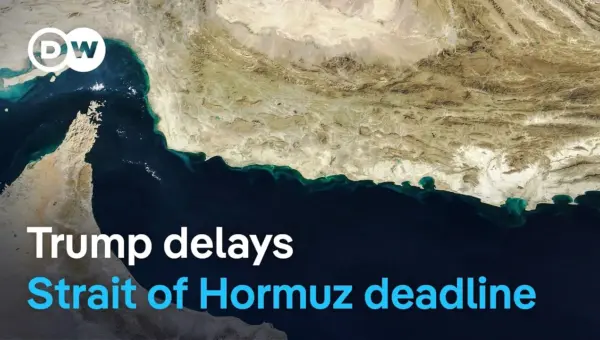
President Donald Trump has extended his deadline for potential strikes on Iranian energy plants to April 6th, amid reports of U.S.-Iran diplomatic talks mediated by Pakistan. This move comes as Israel continues its strikes on Iran and the U.S. deploys additional military assets to the region. Analysts point to mixed signals, economic pressures, and strategic miscalculations as key factors shaping the evolving situation.


Trump Ignored Iran War Warnings, Aides Feared Retaliation
President Trump allegedly ignored repeated warnings from his own intelligence agencies regarding the dangers of escalating conflict with Iran. Reports suggest his administration was unprepared for predictable responses like the closure of the Strait of Hormuz and significant depletion of munitions. Many within the White House reportedly suppressed their concerns for fear of repercussions.