Trump’s ‘Board of Peace’ Crumbles Amidst Global Conflict
Donald Trump's 'Board of Peace,' launched with grand ambitions from Davos, faced immediate scrutiny over its $1 billion permanent membership fee. Despite attempts to secure ceasefires, the initiative appeared to falter as global conflicts, including strikes on Iran, escalated, leaving its intended purpose overshadowed.


Trump’s ‘Board of Peace’ Crumbles Amidst Global Conflict
In early 2026, former President Donald Trump launched an ambitious initiative called the ‘Board of Peace’ from the World Economic Forum in Davos, Switzerland. This organization was intended to help secure a ceasefire in Gaza and was even backed by a United Nations Security Council resolution as part of Trump’s broader peace plan for the region. Trump himself was set to chair the board, with hopes that it would eventually address conflicts worldwide. Key figures like US Gaza negotiators Jared Kushner and Steve Witkoff, along with former British Prime Minister Tony Blair, were also slated to be board members. Many countries showed interest, including Turkey and Saudi Arabia, although traditional Western allies seemed more hesitant.
A Price Tag on Peace?
A significant point of contention arose when reports surfaced, notably from Bloomberg, about the potential cost of joining the Board of Peace. A draft charter suggested that member states might face three-year terms unless they paid $1 billion to secure permanent membership. Trump, as chairman, would reportedly control these funds. The White House responded to these reports, calling them misleading. They stated there was no minimum membership fee and that permanent membership was offered to countries showing a deep commitment to peace, security, and prosperity. However, the idea of a billion-dollar entry fee struck many as unusual, even drawing comparisons to something out of a spy movie.
Global Unrest and a Fading Hope
The launch of the Board of Peace came at a time when global conflicts were escalating. From the Middle East to Ukraine, and skirmishes across Africa and Asia, the world seemed to be on fire. The Board of Peace was presented as a potential diplomatic solution, a place where nations could resolve issues peacefully, unlike perhaps the United Nations, which some felt was underutilized. The board’s proposed leadership, including Trump, Kushner, and Witkoff, raised eyebrows, especially with the billion-dollar admission price. Over 60 countries were invited, and an interesting mix of nations, including Saudi Arabia, UAE, Turkey, and Hungary, agreed to join. These countries gained direct access to the US President and his inner circle.
Traditional Allies Decline
Notably, many of America’s staunchest allies, such as the United Kingdom, France, Germany, Canada, and Japan, declined to join. Even China, a major global power and often seen as a rival to the US, did not sign up. The reasons for their hesitation were not explicitly stated but likely stemmed from concerns about the board’s structure, funding model, and Trump’s leadership. This divergence highlighted a potential split in how different nations viewed the path to global peace and security.
Empty Promises and Unforeseen Consequences
Despite the fanfare, the Board of Peace faced immediate challenges. While nine countries pledged $7 billion for Gaza relief and Trump himself pledged $10 billion from the US, this pledge ran into constitutional hurdles. The US Constitution gives Congress the power of the purse, meaning the President cannot unilaterally commit such funds without congressional approval. Furthermore, shortly after the board’s formation, the United States and Israel conducted military strikes against Iran, not once, but twice. This action occurred even as the Board of Peace was reportedly in session, raising questions about its effectiveness and purpose. Countries that had joined the board found themselves caught in the crossfire of escalating tensions, while those who had opted out likely felt their reservations were justified.
The Board’s Legacy: A Missed Opportunity?
The Board of Peace, intended to be a beacon of diplomatic resolution, seemed to fade from public consciousness as major conflicts continued. The countries that did not join, like the UK and France, began to form their own coalitions, suggesting a lack of faith in the Trump-led initiative. China, meanwhile, reaffirmed its commitment to the United Nations system. Ukrainian President Zelenskyy, facing ongoing conflict with Russia, expressed skepticism about joining any council that included Russia and was meant for peace. Ultimately, the Board of Peace, launched with grand promises by a leader known for bold statements, appeared to collapse under the weight of its own controversial structure and the harsh realities of ongoing global warfare. It stands as a stark reminder that diplomatic solutions require more than just pronouncements; they demand trust, consistent action, and broad international cooperation.
Why This Matters
The creation and swift apparent dissolution of the Board of Peace offer a critical case study in international diplomacy and leadership. It highlights the challenges of building consensus among diverse nations, especially when financial commitments and leadership structures are unconventional. The situation underscores the importance of established international bodies like the United Nations and the role of traditional alliances. It also raises questions about the effectiveness of top-down, personality-driven peace initiatives versus more inclusive, institutionally supported efforts. The events surrounding the board serve as a cautionary tale about the gap between ambitious rhetoric and practical implementation in resolving complex global conflicts.
Implications and Future Outlook
The failure of the Board of Peace suggests that global security challenges require more than just a new organizational structure. They demand sustained diplomatic engagement, respect for international law, and the genuine commitment of major global powers. The reliance on financial contributions as a primary entry barrier may have alienated key players and undermined the board’s legitimacy from the start. In the future, any successful global peace initiative will likely need to build upon existing frameworks, foster trust among allies and adversaries alike, and operate with transparency and accountability. The current geopolitical climate, marked by ongoing conflicts and shifting alliances, will continue to test the efficacy of all diplomatic tools, making the lessons learned from the Board of Peace all the more relevant.
Source: Trump 'Board of Peace' COLLAPSES INSTANTLY as WAR RAGES (YouTube)

Related Articles

Trump Ignored Iran War Warnings, Aides Feared Retaliation
President Trump allegedly ignored repeated warnings from his own intelligence agencies regarding the dangers of escalating conflict with Iran. Reports suggest his administration was unprepared for predictable responses like the closure of the Strait of Hormuz and significant depletion of munitions. Many within the White House reportedly suppressed their concerns for fear of repercussions.
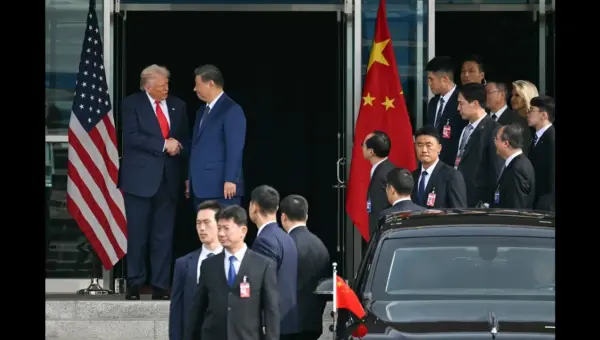
Trump’s “Walk Away” Tactic Signals Tougher Stance on China
Retired Air Force Brigadier General David Stillwell believes President Trump's strategy of being willing to walk away from negotiations puts pressure on China. This tactic, combined with US global actions and strengthened alliances, signals a more assertive American foreign policy.

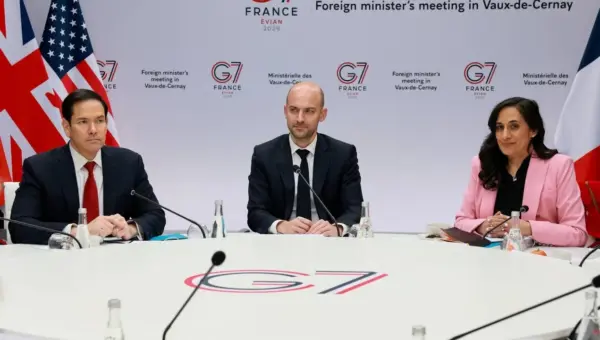
Rubio Puts US First at G7 Summit, Sparks Debate
Secretary of State Marco Rubio attended the G7 summit in France, emphasizing his commitment to serving the American people above all else. The meeting addressed the war in Iran and Russia's role, revealing differing approaches among allies on regional security and the Strait of Hormuz.