Xi Jinping Stays Home, Fuels Military ‘Blood Feud’ Fears
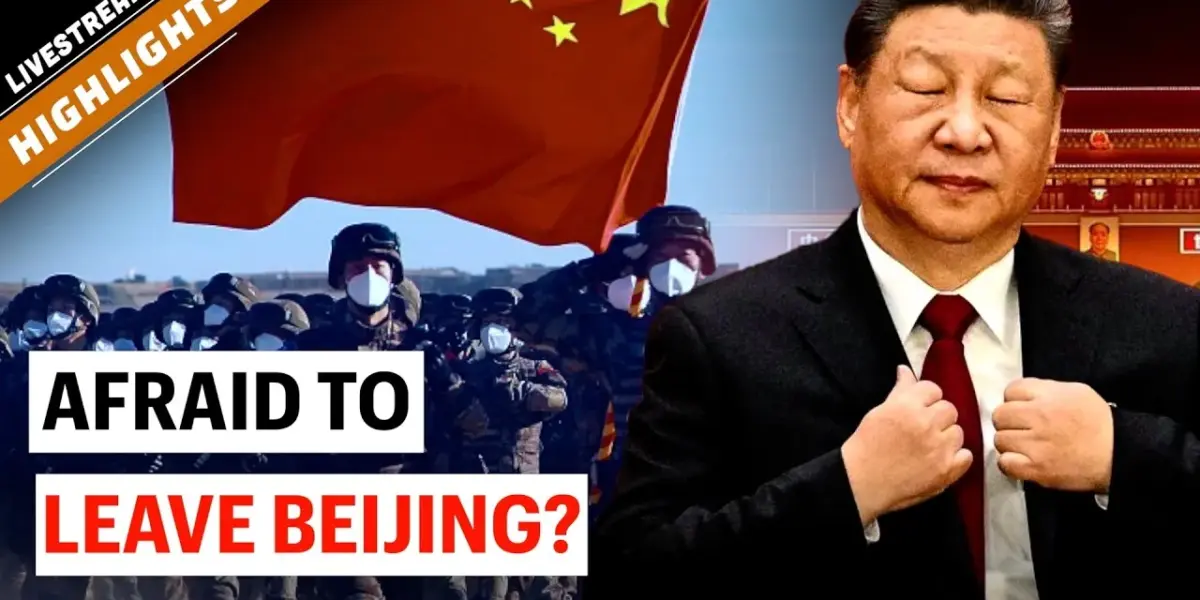
Xi Jinping's unusual 133-day stay in Beijing and his cautious visit to Xiongan highlight deep-seated security fears and potential military discontent. A past flood disaster involving the 82nd Group Army may fuel a "blood feud" against the leader.

Xi Jinping Stays Home, Fuels Military ‘Blood Feud’ Fears
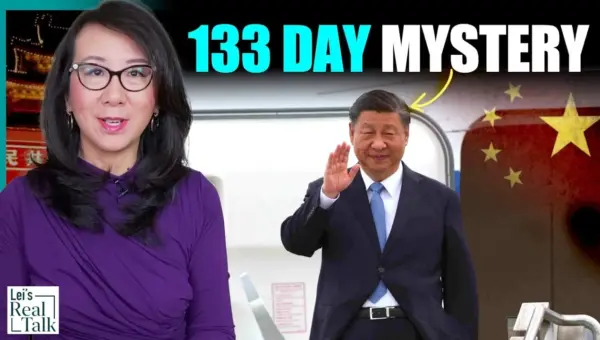
For over four months, Chinese leader Xi Jinping remained in Beijing, a stark break from his usual post-meeting travel schedule. This unusual absence from public tours, lasting 133 days from November 9th to March 21st, has sparked whispers and speculation. Typically, after the annual political meetings, known as the ‘two sessions,’ Xi would embark on inspection tours. However, this year, the pattern was broken, raising questions about the leader’s confidence in his own security and control.
The tradition of leaders traveling after the ‘two sessions’ is well-established. In previous years, Xi left Beijing within a week of the meetings concluding. For instance, in 2025, he traveled to Guizhou and Yunnan shortly after March 11th. In 2024, he visited Hunan after the sessions ended on March 11th. The year before, 2023, saw him undertake a state visit to Russia just a week after the meetings concluded on March 13th. This consistent pattern highlights how unusual his prolonged stay in Beijing was this year.
A Leader’s Uncharacteristic Stillness
The extended period without travel is significant. It’s not just a matter of a few extra days; it represents a substantial deviation from established political routines. This stillness became even more noticeable during the Chinese New Year, a time when leaders traditionally visit military units. Instead of an in-person visit, Xi addressed the military via video, remaining behind a screen. This suggests a reluctance to leave his controlled environment, especially after the sudden removal of two top military leaders, Zhang Youxia and Liu Jianli, in late January.
The aftermath of these arrests has been peculiar. For two months following their removal, there was no public show of support for these actions from any military theater command or service branch. There was also no formal endorsement or political backing from the National People’s Congress or the CPPCC. In a system that relies on public displays of loyalty, this silence is considered highly unusual and points to potential unease within the military ranks.
Rumors of Discontent and Security Risks
Adding to the unease, videos circulated in late January and early February showing unusual military movements and troop activities. These were accompanied by rumors of mutiny. While the accuracy of specific details is hard to confirm, the broader implication is clear: if key military units are not fully under Xi’s control, leaving the capital becomes a security risk. While Beijing offers protection through his inner security apparatus, traveling outside makes him more vulnerable to potential opposition.
Some sources suggest that certain People’s Liberation Army (PLA) units may be influenced by anti-Xi factions. The 82nd Group Army, stationed near Beijing, is frequently mentioned in this context. The idea is that these units might see Xi’s departure from Beijing as an opportunity to act. This potential threat likely explains his decision to stay put for so long.
A Cautious Re-emergence: Xiongan
On March 23rd, Xi finally left Beijing, but not for a distant or bustling city. He traveled to Xiongan, a new area about 100 kilometers south of the capital. Xiongan, often called China’s ‘new capital,’ is a massive project with nearly a trillion dollars invested over nine years. However, it’s also known as a largely empty ‘ghost city,’ with very few residents.
Choosing Xiongan appears to be a calculated security move. Its proximity to Beijing means he wasn’t venturing too far. More importantly, its sparse population offers a controlled environment, minimizing the risk of unpredictable crowds. It’s a filtered space, far safer than visiting a major urban center. Furthermore, Xiongan is Xi’s own legacy project, making a visit there a way to project authority and reinforce his image after months out of sight.
High-Speed Rail: A Safer Ride?
Xi’s mode of transport to Xiongan also revealed his security concerns. Instead of his usual motorcade, he traveled by high-speed rail. While using public transport might seem risky, high-speed rail offers a more controlled environment. Unlike a motorcade, which has many potential points of vulnerability like intersections and roadside buildings, a high-speed rail line is a closed corridor. The tracks are secured, and stations can be sealed off. The journey is shorter, reducing exposure time.
The Xiongan Visit’s Unintended Consequence
However, the visit to Xiongan might have backfired, potentially angering the very military unit most likely to oppose him: the 82nd Group Army. This resentment stems from the devastating floods that hit Hebei province in July 2023. A massive typhoon, Doksuri, caused severe flooding around Beijing.
Xiongan, built near Baiyang Lake, a natural flood basin, presented a problem. To protect the new city, officials reportedly rerouted floodwaters towards Zhuozhou, a city located between Beijing and Xiongan. This decision, allegedly made by two of Xi’s loyal officials without his direct immediate input, led to catastrophic flooding in Zhuozhou.
Zhuozhou hosts significant state-owned enterprise warehouses and elite military units, including the 82nd Group Army’s armored unit. Reports suggest that the floodwaters, which reached up to 12 meters in some areas, destroyed tanks and ammunition depots. Other military facilities, like flight academies and a drone unit, also suffered heavy damage. Crucially, many soldiers were caught off guard, as the water was released at night with no warning.
Estimates suggest thousands of troops were trapped or drowned, with the 82nd Group Army suffering the most casualties. While Xi was reportedly furious upon learning of the disaster and the losses, the event remains a deeply sensitive issue. The fact that Beijing leaders did not visit the affected area or openly discuss the disaster further fueled resentment.
Lingering Resentment and Future Outlook
The 2023 flood in Zhuozhou is believed to be a major reason for the 82nd Group Army’s deep-seated anger towards Xi Jinping and his administration. They reportedly view the disaster as a direct consequence of protecting Xi’s Xiongan project at the expense of their lives and equipment. Xi’s recent visit to Xiongan may have served as a painful reminder of their suffering and loss.
This situation highlights the complex internal dynamics within China’s military and political elite. Xi’s prolonged stay in Beijing and his cautious re-emergence suggest a leader deeply concerned about his grip on power. The unresolved anger of a key military unit, fueled by a past disaster, creates a volatile undercurrent. The ‘blood feud’ narrative, while dramatic, points to genuine tensions that could shape future political stability in China.
Why This Matters
Xi Jinping’s unusual behavior and the underlying military tensions are crucial indicators of the stability within China’s top leadership. A leader who feels compelled to remain in the capital due to security fears, and who subsequently risks further alienating a powerful military unit with a public appearance, signals potential cracks in his authority. This isn’t just about one leader’s comfort; it speaks to the broader challenges of maintaining control in a vast and complex nation, especially when dealing with internal dissent and the loyalty of its armed forces.
Implications and Future Outlook
The situation suggests that Xi faces significant challenges in consolidating his power and ensuring the absolute loyalty of the PLA. The lingering resentment from the 2023 floods could continue to be a source of instability. Future actions by the 82nd Group Army or other disgruntled elements could pose a threat to Xi’s leadership. The government’s handling of information and public perception surrounding such events will also be critical. If dissent grows, the lack of transparency could further exacerbate tensions.
Historical Context
China’s political system has historically relied on projecting an image of strong, unified leadership. Deviations from established routines, especially those related to the military and the leader’s public appearances, are often interpreted as signs of weakness or internal struggle. The PLA has played a central role in Chinese politics since the revolution, and any perceived disloyalty or internal conflict within its ranks can have significant political repercussions.
Source: The PLA “Blood Feud” Behind Xi’s 133 Days in Beijing (YouTube)

Related Articles


Taiwan’s Defense Plan Stalls Amidst Political Division
Taiwan's crucial defense upgrade plan is stalled by internal political divisions, despite escalating military pressure from China. The proposed $40 billion budget faces opposition over spending details, potentially weakening Taiwan's security and its standing with allies.
China Courts Vietnam: Is a Secret Southern Stronghold Brewing?
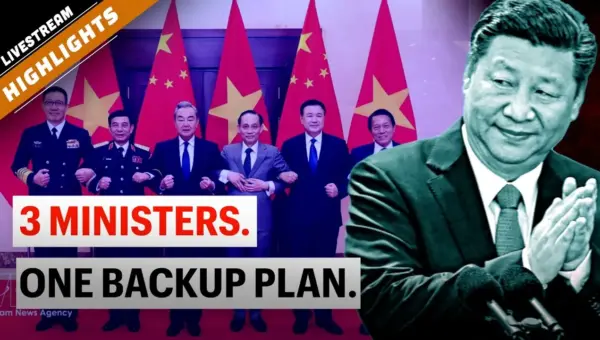
Three top Chinese ministers recently visited Vietnam, a move far beyond routine diplomacy. The inclusion of the Public Security Minister in a '3+3' strategic dialogue suggests China's focus is on security and internal stability, not just economics. This visit may signal Beijing's efforts to secure a strategic fallback position in southern China, bordering Vietnam, amid growing international pressure.

Xi Jinping’s Risky Gamble: A Secret Message in Xiong’an
Xi Jinping's recent trip to Xiong'an, his envisioned "future capital," breaks with tradition and signals deeper political currents. The visit attempts to project strength amidst rising questions about military loyalty and public perception, highlighting the risks of his carefully staged public appearances.