Democrat: Speaker Johnson Holds TSA Hostage for Immigration Reform
House Democrats accuse Speaker Mike Johnson of holding the TSA 'hostage' by refusing to bring a bipartisan Senate funding bill to the floor. Congressman Adam Smith argues this tactic is used to force concessions on immigration reform, putting essential services at risk. A Senate-passed bill could fund the TSA immediately, but Johnson's approach creates a legislative stalemate.

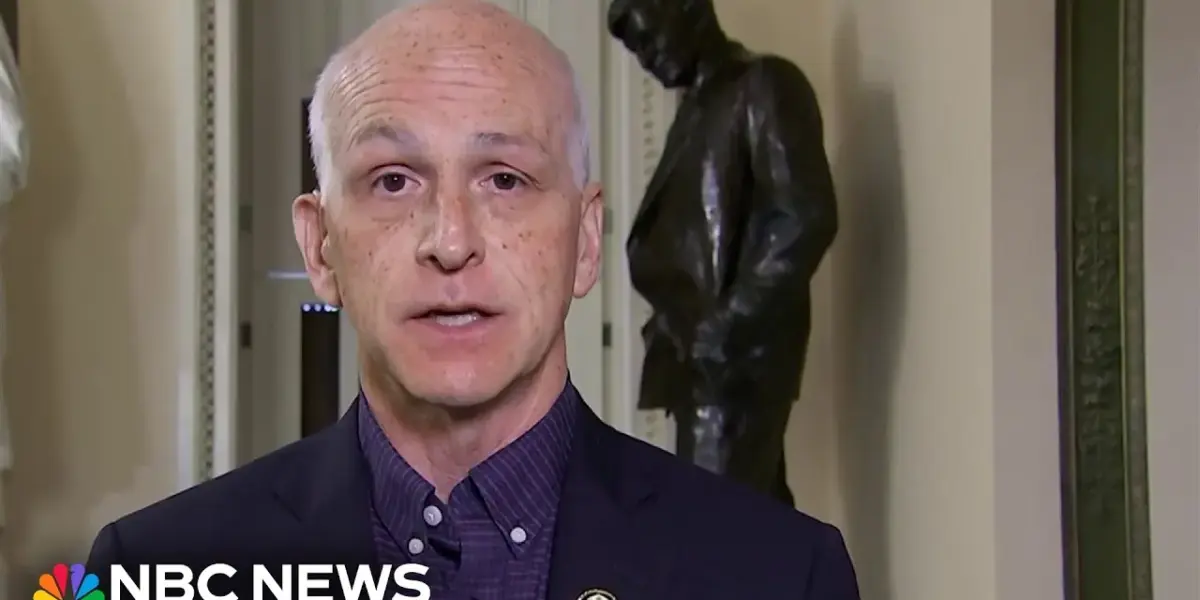
House Democrats Accuse Speaker Johnson of Holding TSA Hostage
Washington D.C. – A significant dispute is unfolding in Congress over the funding of the Department of Homeland Security (DHS), with House Democrats accusing Speaker Mike Johnson of using the Transportation Security Administration (TSA) as a bargaining chip. The conflict centers on how to fund critical government agencies, particularly in light of potential government shutdowns and ongoing immigration debates.
The DHS Funding Stalemate
The core of the issue lies in a proposed 60-day continuing resolution (CR) that Speaker Johnson plans to bring to the House floor. This measure would fund most of DHS but notably excludes funding for Immigration and Customs Enforcement (ICE) and Customs and Border Protection (CBP). Democrats, led by figures like Congressman Adam Smith, the Ranking Member of the House Armed Services Committee, have voiced strong opposition to this approach.
Congressman Smith stated unequivocally that he would not vote for the House measure, preferring instead to support a deal passed by the Senate. “We have a disagreement over how to do immigration enforcement in this country,” Smith explained. “That’s the debate that we’re having. That’s why we don’t want to simply blindly fund ICE and the Border Patrol without any kind of changes to that.”
Senate’s Bipartisan Solution
Democrats have consistently pushed for a strategy that avoids harming essential services like the TSA, Coast Guard, and FEMA. They proposed funding these agencies separately from the more contentious immigration enforcement aspects of DHS. This approach gained bipartisan traction in the Senate, which passed its own measure to fund these critical services. The Senate’s vote was reportedly unanimous.
“Sitting on Mike Johnson’s desk right now is an opportunity to fund TSA and get back to work. He’s choosing not to do that because he wants to hold TSA hostage to blocking any reforms to the way we do immigration enforcement in this country.” – Congressman Adam Smith
Smith characterized Speaker Johnson’s decision as “astounding” and predicted it would “do great harm to the country.” He argued that Johnson is prioritizing his political agenda over the operational needs of vital security agencies.
Debate Over House Votes and Process
When questioned about whether voting for the 60-day CR would be a pragmatic step to reopen the government and address the immediate concerns of TSA officers missing paychecks, Smith pushed back on the premise. He asserted that there are sufficient votes in the House of Representatives to pass the Senate’s proposal, including support from Democrats and likely most Republicans.
“Johnson is choosing not to put it up for a vote,” Smith claimed. He further pointed out that even if the House passed the Republican CR, the Senate has not acted on it for weeks. “The Senate has had that over there for all 47 days and they haven’t passed it. So you’re just wrong in the framing here,” he stated.
Smith emphasized that the Senate’s already-passed bill is ready for immediate action. “If we want TSA funded, vote for the bill that’s already passed the Senate and is ready to go,” he urged. He countered the idea of a 60-day extension as a mere delay tactic that would not solve the underlying problem, especially given the Senate’s lack of support for the House Republican proposal.
Immigration Reform Remains a Sticking Point
The disagreement highlights a fundamental divide in Congress regarding immigration policy. While Democrats want to address border enforcement and humanitarian concerns simultaneously, many Republicans are focused on stricter enforcement measures. Speaker Johnson’s strategy appears to be using the funding needs of agencies like the TSA to force concessions on immigration reform.
Smith rejected the notion that his stance was about process rather than results. “I’m talking about results,” he insisted. “The result of what you’re talking about would be a continued stalemate. The result of voting on what the Senate has already passed would be for TSA to be funded.”
Circumventing Congress: Trump’s Past Actions
The conversation also touched upon the possibility of President Trump unilaterally funding the TSA, bypassing Congress. Smith deemed this illegal, citing the constitutional requirement for appropriations to go through Congress. He noted that past attempts by President Trump to redirect funds have often been challenged and blocked in court.
“It’s illegal for him to do that now,” Smith stated. “A president is not supposed to be able to just spend money wherever he wants to spend it. It’s supposed to go through the appropriations process.” He also questioned the practicality and reliability of such an action, even if it were legal, particularly in ensuring TSA employees would return to work. Smith reiterated that a straightforward legislative solution is readily available.
Looking Ahead
With the TSA facing potential funding gaps and employees missing paychecks, the pressure is mounting on Speaker Johnson to bring the Senate’s bipartisan funding bill to the House floor. The coming days will reveal whether political deadlock over immigration reform will continue to jeopardize the operations of critical national security and transportation agencies, or if a resolution can be found to ensure essential services remain uninterrupted.
Source: Speaker Johnson holding TSA ‘hostage’ to block immigration reforms: House Democrat (YouTube)

Related Articles

House Republicans Reject Senate Deal, Sparking Government Funding Clash
House Republicans have rejected a Senate bill to end the government shutdown, citing insufficient border security measures. Congressman Randy Fine called the Senate deal a "disgrace" and highlighted the ongoing fight for full government funding. President Trump's executive order to pay TSA agents offers temporary relief, but the core disagreement over border security continues to paralyze Washington.

TSA Funding Fight Sparks Airport Chaos, Worker Exodus
TSA officers will soon receive back pay after President Trump signed an emergency order, but the ongoing congressional funding fight continues to cause airport chaos. Long security lines and a significant number of TSA officer resignations highlight the deep divisions over border security measures, leaving travelers frustrated.

GOP Leaders Clash Over DHS Funding, Exposing Deep Divisions
Republican leaders are struggling to find common ground on Department of Homeland Security funding, exposing deep divisions within the party. A proposed House resolution faces an uphill battle due to Senate recess and internal GOP dissent. Speaker Mike Johnson appears to be prioritizing appeasing a conservative faction over seeking broader bipartisan support.