Movie Mysteries Solved: What Fans Got Wrong
Movie fans love to theorize, but sometimes the biggest mysteries aren't what they seem. From Batman's sidekick to the contents of a briefcase, we uncover the real meanings behind iconic movie details that had everyone guessing.

Movie Mysteries Solved: What Fans Got Wrong
Ever felt like you cracked a movie’s biggest secret, only to find out you were way off? Many films leave us guessing with confusing clues or hidden meanings. Sometimes, what seems like a major plot point is actually just a clever trick or a happy accident. Let’s break down some famous movie moments that had fans buzzing with theories, and reveal what the filmmakers *actually* intended.
The ‘Robin’ Reveal in The Dark Knight Rises
In the final moments of Christopher Nolan’s The Dark Knight Rises, Joseph Gordon-Levitt’s character, John Blake, is revealed to have the legal name Robin. This moment had fans convinced a new Robin was about to join the Batman universe. They expected a spin-off movie where Blake would become Batman’s famous sidekick. However, Nolan’s intention was different. He wanted to show that Batman is a symbol that anyone can carry on. The name ‘Robin’ was a way to signal to fans that the legacy of the sidekick was safe, even within the police force.
The Lost Words in Lost in Translation
At the end of Sofia Coppola’s Lost in Translation, Bill Murray whispers something to Scarlett Johansson on a busy Tokyo street. The audio is unclear, making this line the most debated part of the movie. Fans wondered for years what he said. But Coppola has shared that the line was made up on the spot. It was never meant to be heard by the audience. The importance wasn’t in the words themselves, but in the privacy of the moment. By keeping the words a secret, the film showed that their connection was just for them, and outside of what viewers could know. The mystery itself was the point, not what was actually said.
Magneto and Quicksilver’s Father-Son Link
In X-Men: Days of Future Past and X-Men: Apocalypse, Quicksilver (Peter Maximoff) drops hints that Magneto might be his father. In Apocalypse, he even travels to confront Magneto. He tells him, ‘He’s my father.’ Fans hoped this would be a big moment that would change Magneto’s character. But when the chance comes, Peter chooses not to say anything. By the time Dark Phoenix came out, this storyline was completely dropped. This famous comic book relationship ended up being a small detail in the movie series.
The Rabbit’s Foot in Mission: Impossible III
Director J.J. Abrams is known for his ‘mystery box’ style, and the Rabbit’s Foot in Mission: Impossible III is a prime example. The whole movie is about Ethan Hunt trying to get this dangerous item back. Audiences expected a big reveal at the end explaining what the Rabbit’s Foot was. Was it a virus? A nuclear weapon? Instead, the movie ends without ever opening the container or explaining its contents. The detail of its purpose was totally unimportant to the story. It was a ‘macguffin’ – an object that exists only to give characters a reason to act. While later movies eventually revealed its true nature as the ‘anti-god,’ Abrams seemed to use it purely as a plot device to keep the action moving.
The Blue Box in Mulholland Drive
David Lynch, the master of surrealism, created the infamous blue box in Mulholland Drive. When Rita and Betty find the box and a key, viewers expect a big mystery reveal. But when Rita opens the box, it doesn’t reveal a plot point. Instead, the camera goes inside, and the whole reality of the movie resets. Fans have spent years trying to figure out what the box means. Is it a diary? A signal? In reality, the box is a symbol of the mind. It represents the breakdown of a fantasy and the return to a harsh truth. It’s not a puzzle to be solved, but a key to understanding the character’s state of mind.
The Breath Test in The Thing
In John Carpenter’s The Thing, viewers noticed that MacReady’s breath was visible in the cold, but Childs’s breath was not. This led to a popular theory: Childs must be the alien, because a monster wouldn’t have warm human breath. This idea became a widely accepted explanation for the movie’s ending. However, it’s since been shown that both men’s breath is actually visible. The original evidence was just a technical issue with the lighting on the very cold set. Our eyes can easily be tricked by what we see, especially in a tense movie.
The Joker’s Scars in The Dark Knight
Heath Ledger’s performance as the Joker in The Dark Knight is legendary. Throughout the movie, the Joker tells several different stories about how he got his scars. Audiences waited for the real story, the one flashback that would explain his past. We thought his origin was a mystery to be solved. But Christopher Nolan used these conflicting stories to show that the Joker has no real origin. He is a force of chaos with no identity. The search for his backstory was a trap he set. It showed how much we want order and logic, even when faced with pure madness.
The Spinning Top in Inception
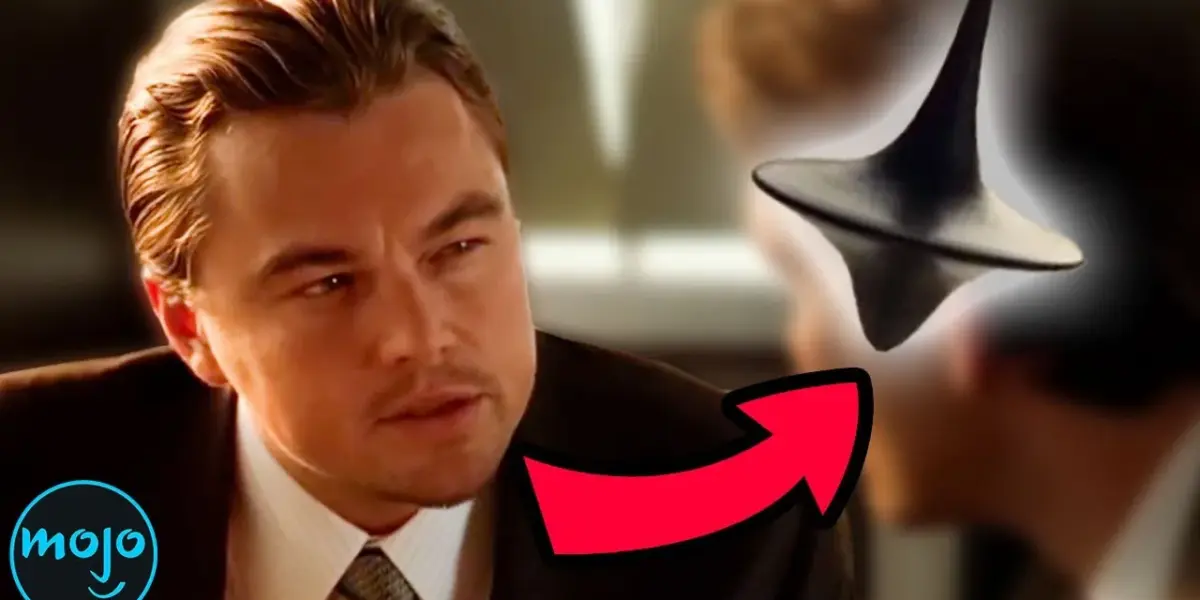
The spinning top in Inception is perhaps the most debated movie detail ever. Does it wobble? Does it fall? Does it stay upright? Fans thought the way the top spun was the only way to know if Cobb was in the real world or a dream. But Christopher Nolan later pointed out the most important detail isn’t the top itself. It’s the fact that Cobb walks away from it. He doesn’t wait to see if it falls because he no longer cares if he’s dreaming. His reality is wherever his children are, whether it’s the real world or a dream.
The Contents of the Briefcase in Pulp Fiction
What was inside the briefcase in Quentin Tarantino’s Pulp Fiction? The orange glow reflecting on Vincent Vega’s face sparked one of the biggest pop culture debates of the ’90s. Was it Marsellus Wallace’s soul? Diamonds? An Elvis suit? Fans treated the glow as a riddle needing a supernatural answer. However, Tarantino has always said there’s no official answer. The glow came from a light bulb placed inside the case. The contents are whatever the viewer imagines. What matters is how much the characters are willing to fight and die for it.
Oranges in The Godfather
In Francis Ford Coppola’s The Godfather, oranges often appear right before a character is killed or something tragic happens. Vito Corleone buys oranges before he’s shot. Oranges are on the table during a meeting of crime families, and Vito dies with an orange peel in his mouth. Fans saw this as a brilliant symbol of approaching doom. But the reality is more practical. The production designer used oranges simply to add a bright splash of color to the dark sets. The fact that they coincided with deaths became a happy accident, turning into one of cinema’s most famous unintentional symbols.
Source: 10 Movie Details You Thought Were Important But Weren't (YouTube)

Related Articles

90s Movies: Iconic Scenes That Defined a Decade
From the gut-wrenching twist of 'Se7en' to the triumphant cry of 'Titanic,' these iconic '90s movie scenes defined a generation and continue to captivate audiences.

Justice Denied: 10 Cases Where Cops Got It Wrong
From flawed eyewitness accounts to biased technology, these 10 cases reveal devastating failures in law enforcement that led to wrongful convictions and immense suffering. Discover the shocking details of justice gone wrong.


Noah Centineo’s ‘The Recruit’ Character Offers Wild Advice
Noah Centineo's character in Netflix's 'The Recruit' offers hilariously bad life advice, hinting at the show's dark comedic tone. Centineo himself admits he's not qualified to give life advice, unlike his character, Owen Hendricks, a CIA lawyer caught in a web of international espionage. The series blends action, humor, and intrigue, with early reactions praising its fresh take on the spy genre.