Trump Derails Bipartisan Deal, Halts Government Funding
Senate Republicans united on a funding bill for the Department of Homeland Security, but Donald Trump's opposition led House Speaker Mike Johnson to kill the deal. This political maneuver left TSA workers unpaid and highlighted the influence of personal directives over legislative progress.

Trump Derails Bipartisan Deal, Halts Government Funding
For 45 days, a government shutdown had stalled critical services. Then, Senate Republicans took a decisive step. They united to pass a funding bill for key government operations, particularly the Department of Homeland Security. This measure would have kept essential functions running, including the Transportation Security Administration (TSA), which is vital for airport security and daily travel. The plan was to address Immigration and Customs Enforcement (ICE) funding separately later. This bipartisan agreement passed the Senate with a unanimous vote, showing broad support. It was a rare moment of unity after weeks of deadlock. The bill then moved to the House of Representatives for approval.
House Speaker Faces Pressure, Caves to Trump
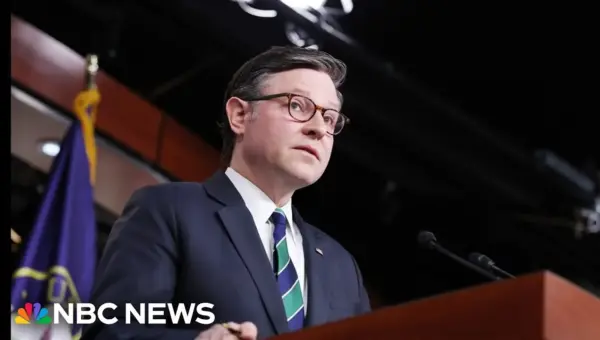
In the House, Speaker Mike Johnson found himself in a difficult situation. He realized that former President Donald Trump opposed the Senate’s funding deal. This put Johnson in a bind, caught between a bipartisan agreement and the wishes of a powerful political figure. Ultimately, Johnson blocked the bill, effectively killing the deal. Afterward, Johnson faced reporters who asked tough questions about his decision. They pointed out the disagreement between him and Senate Republican leader John Thune, who had engineered the Senate’s proposal. Reporters pressed Johnson on why he wouldn’t accept a deal that could end the shutdown and ease TSA lines immediately.
Johnson claimed that Senate Democrats, led by Chuck Schumer, had forced the issue. He stated his priority was to protect the House. However, the transcript clearly indicates that John Thune, the Republican leader in the Senate, was the one who brought the proposal forward and presented it to Trump. Trump was the one who ultimately rejected it.
Political Maneuvering Over Public Service
The events highlight a stark contrast between legislative action and political influence. While Senate Republicans demonstrated a willingness to compromise and move forward, the House leadership, under pressure from Trump, chose to halt progress. This decision suggests that political considerations, specifically pleasing Donald Trump, took precedence over addressing immediate national needs. Speaker Johnson’s attempt to shift blame to Democrats ignored the fact that the Senate’s proposal had significant Republican backing and was a direct response to a bipartisan effort. The situation shows how one individual’s opposition can derail widely supported legislation. It raises questions about leadership and priorities when government functions are at stake.
Why This Matters
This incident matters because it directly impacts the daily lives of citizens and the functioning of essential government services. The TSA is responsible for the safety of air travel, and its workers are crucial for keeping airports running smoothly. When these workers are unpaid due to a shutdown, it can lead to staffing shortages, longer lines, and increased stress for travelers. Beyond the immediate inconvenience, such political standoffs erode public trust in government. They demonstrate that partisan interests or the demands of a single political figure can override the need for stable governance. This can create uncertainty and instability, affecting everything from national security to economic activity.
Historical Context and Future Outlook
Government shutdowns are not new in American politics. They have occurred periodically when Congress and the President cannot agree on spending bills. However, the way this particular deal was struck down, based on the opposition of a former president rather than a substantive policy disagreement, is noteworthy. It signals a trend where political loyalty and personal directives can override traditional legislative processes. Looking ahead, this event suggests that future funding negotiations may become even more complex. The influence of figures like Donald Trump on Republican legislative strategy remains significant. This could lead to more frequent impasses, especially as the country approaches future elections. The ability of Congress to find common ground on critical issues may depend on navigating these powerful political currents. The long-term implication is a potential for continued disruption of government services and a weakening of established political norms.
Source: Trump Kills DHS Deal as TSA Workers Go Unpaid #politics #fyp #new (YouTube)

Related Articles
Saudi Prince Pushes Trump Toward Iran War Escalation
Saudi Crown Prince Mohammed bin Salman is reportedly urging President Trump to escalate attacks on Iran, pushing for strikes on its energy infrastructure. This strategy would likely harm ordinary Iranians while benefiting Saudi economic interests and the U.S. military-industrial complex. The situation highlights concerns over foreign influence on U.S. foreign policy and the human cost of conflict.
DHS Shutdown Deepens as Speaker Johnson Rejects Senate Deal
The partial government shutdown continues as House Speaker Mike Johnson rejected a bipartisan Senate deal to fund the Department of Homeland Security. Instead, the House will vote on a separate measure, a move Democrats call "dead on arrival." President Trump has used an executive order to unilaterally fund TSA workers, offering some relief amid widespread airport disruptions and financial hardship for federal employees.
GOP Senate Stuns House, Exposing Deep Party Rift
Republican infighting erupted as the Senate passed a bill funding only the TSA, sparking panic in the House. "MAGA Republicans" demand more for ICE and Border Patrol, highlighting deep party divisions and a standoff with the Senate, which has already adjourned.