Immigrant Status Fuels Deportation Fight in Chicago Murder Case
A murder suspect from Venezuela, Jose Medina-Medina, accused of killing a Loyola student, is at the center of a legal battle. The U.S. government wants him deported, while Illinois wants him to face murder charges. This case highlights the complex intersection of immigration law and criminal justice.


Immigrant Status Fuels Deportation Fight in Chicago Murder Case
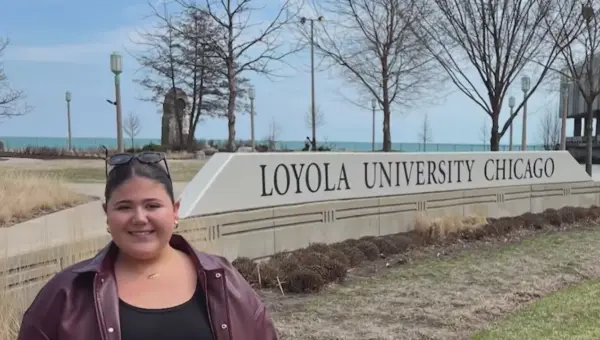
A shocking murder case in Chicago has ignited a major conflict between federal and state authorities. The suspect, Jose Medina-Medina, an immigrant from Venezuela, is accused of killing 18-year-old Sheridan Gorman. The incident happened on March 19th as Gorman walked with friends near the Loyola University campus. Now, the U.S. Department of Homeland Security (DHS) wants Medina-Medina deported, while Illinois officials want him to face trial for murder in Chicago.
Details of the Alleged Crime
Court documents filed recently reveal disturbing details about the shooting. Police say Medina-Medina, who is 25, wore black clothing and a mask. He allegedly pointed a gun at Gorman and fired a single shot. The report states she was shot in the back as she tried to run away. Video cameras near the scene captured the suspect walking away. His unusual walk, or gait, helped police track him down.
Officers found Medina-Medina later inside the lobby of his apartment building. He was reportedly waiting for an elevator with a mask in his hand. Police used facial recognition technology to identify him as the suspect. Authorities say Medina-Medina has been diagnosed with tuberculosis and has been hospitalized since his arrest. He appeared in court via Zoom for a recent hearing because of his hospitalization.
Federal vs. State Interests Clash
The core of the dispute lies in Medina-Medina’s immigration status. DHS has officially asked that he be held in U.S. Immigration and Customs Enforcement (ICE) custody. The goal is to deport him back to Venezuela. This request comes as federal agencies often seek to remove individuals accused of serious crimes, especially if they are in the country without legal permission.
However, if Medina-Medina is convicted of murder in Chicago, he would likely serve any prison sentence in Illinois. This creates a direct conflict. Illinois officials want to prosecute him for the alleged crime committed within their state. The legal process will determine whether he faces charges as a murder suspect in Chicago first, or if deportation proceedings take precedence.
Historical Context and Immigration Policy
This case highlights ongoing debates about immigration enforcement and public safety. For years, federal and state governments have had different approaches to handling immigrants accused of crimes. Federal law often prioritizes deportation for those who have committed offenses. State and local authorities, meanwhile, focus on prosecuting crimes within their jurisdictions.
The situation also touches on the complexities of international relations. Venezuela, like many other nations, has faced significant political and economic challenges. This can affect a country’s ability or willingness to accept deported citizens. The case of Jose Medina-Medina is one example of how immigration status can become a central issue in serious criminal cases.
Economic and Social Factors
While specific economic figures are not detailed in the arrest reports, the case touches on broader economic themes. Immigration policies can impact labor markets and economies in both the home country and the host country. The cost of incarceration and prosecution versus the cost of deportation is also a factor governments consider.
The tragic death of Sheridan Gorman has deeply affected the Loyola University community and Chicago. It brings to the forefront concerns about safety on and around college campuses. The public’s attention is now focused on how the justice system will handle this sensitive case, balancing immigration laws with state criminal charges.
Potential Future Scenarios
Several outcomes are possible in the coming weeks and months. Medina-Medina could be transferred to ICE custody for deportation proceedings if federal authorities win the immediate legal battle. Alternatively, he could remain in Illinois custody to face murder charges. If convicted of murder, he would serve his sentence in the U.S., making deportation unlikely until his sentence is complete, if at all.
The legal fight between DHS and Illinois officials will likely involve complex court arguments. These arguments will center on which jurisdiction has the primary claim over the suspect. The outcome could set a precedent for how similar cases are handled in the future, especially concerning immigrants accused of violent crimes.
Global Impact
This case is more than just a local crime story. It shows how immigration status can become a major point of contention in the U.S. justice system. It highlights the ongoing tension between federal immigration enforcement priorities and state-level criminal prosecution. The outcome will be closely watched by immigrant advocacy groups, law enforcement agencies, and policymakers across the country.
The situation also underscores the challenges faced by countries like Venezuela, which are dealing with significant internal issues. These issues can affect their ability to manage their citizens abroad. Ultimately, the Medina-Medina case is a stark reminder of the intricate connections between crime, justice, and international relations in our globalized world.
Source: Loyola student shooting suspect in court | NewsNation Live (YouTube)

Related Articles


House Faces DHS Funding Vote Amidst Border Chaos Fears
The House is set to vote on critical funding for the Department of Homeland Security, facing procedural challenges and intense debate. Republicans are exploring budget reconciliation for immigration enforcement, while a tragic incident involving an Air Force veteran allegedly killed by an undocumented immigrant fuels the controversy. Concerns linger over airport chaos and broader economic impacts.

Illegal Immigrant Charged in Student’s Murder
A man accused of killing Loyola University freshman Sheridan Gorman is due in court today. Authorities state the suspect is in the U.S. illegally and had an active warrant. The case is drawing national attention, focusing on immigration laws and public safety.


Iran Sends Oil Gift; Trump Pauses Energy Strikes
President Trump has paused energy strikes against Iran for ten days, a move linked to the passage of Iranian tankers and ongoing "substantial" talks. Meanwhile, the Senate passed a bill funding the Department of Homeland Security, but without immigration reform.