Iran War: No Clear Path Forward After Costly Escalation
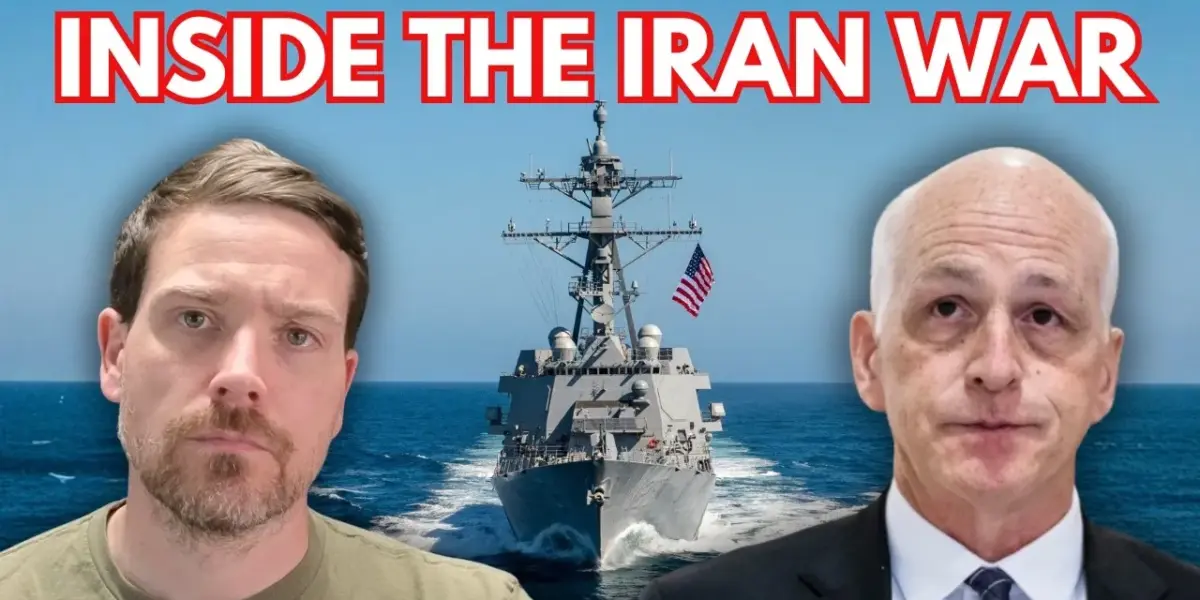
Representative Adam Smith argues that the war in Iran, launched without a clear endgame, has incurred high costs with questionable strategic gains. He criticizes the lack of transparency and the potential for prolonged, costly engagement, questioning the effectiveness of military action against a deeply entrenched regime.

Iran War: No Clear Path Forward After Costly Escalation
A month into the conflict with Iran, dubbed ‘Operation Epic Fury,’ the United States has significantly weakened Iran’s military. However, Iran continues to launch missiles, the Strait of Hormuz remains closed, and more U.S. troops are heading to the region, signaling a potential ground invasion. Representative Adam Smith, a key figure on the House Armed Services Committee, offers a stark assessment: the war was a mistake, and the path forward is fraught with difficult choices.
A War of Choice With No Clear Goal
From the outset, Rep. Smith viewed this as a ‘war of choice’ with no defined endgame. His perspective hasn’t changed. He points to two potential objectives for the war: degrading Iran’s military or forcing a fundamental change in its behavior. While the U.S. has succeeded in degrading Iran’s military, Smith questions the strategic advantage gained. Drones and missiles are easier to produce than ever, as seen with the Houthi rebels in Yemen. Therefore, degrading Iran’s capabilities doesn’t necessarily eliminate its ability to threaten global stability, oil supplies, or allies like Israel.
The second objective – forcing Iran to change its behavior regarding its nuclear program, ballistic missiles, support for proxies like Hezbollah and Hamas, and internal repression – seems even more out of reach. Smith notes that for 15 years, across multiple administrations, military leaders have consistently concluded that there’s no viable military option to force such a fundamental change in Iran’s deeply entrenched regime. Bombing for a few weeks or months, he argues, won’t break the Islamic Republic’s grip, especially its powerful Revolutionary Guard Corps (IRGC).
The Unacceptable Cost of Conflict
Beyond the questionable objectives, Smith highlights the immense cost of the war. U.S. service members are at risk, with 13 already killed and hundreds wounded. The conflict has also led to civilian casualties, including a tragic incident at a girls’ school. Furthermore, Iran’s ability to disrupt global oil markets and close the Strait of Hormuz has had a significant impact on the world economy. Smith’s answer to whether degrading Iran is worth it, if there’s a plan to change its behavior, and if we’re prepared for the cost, is a resounding ‘no’ to all three.
Navigating the ‘Bad Options’
With the war having started, Smith acknowledges that all available options are difficult. He warns against the ‘sunk cost fallacy,’ where continuing a flawed course of action is justified simply because resources have already been invested. He believes the U.S. stayed in Afghanistan far too long for this very reason.
A potential ‘off-ramp’ might involve declaring victory in degrading Iran’s military and warning of future consequences. However, this approach is flawed. Iran could rebuild its capabilities, and the threat to global shipping persists. Smith draws a parallel to the situation in the Red Sea, where commercial ships avoid the area due to the Houthi threat, even after U.S. airstrikes. Similarly, even if Iran officially stops targeting ships in the Strait of Hormuz, the lingering threat, amplified by the ongoing war, is enough to deter commercial traffic. This creates a trap, particularly for former President Trump, who has threatened severe action if the Strait isn’t reopened.
“The commercial ships are like, ‘Okay, these are the Houthis. They’re a little bit unstable. We know they have the missiles and the capability. Apparently, they’ve decided to stop, you know, trying to blow us up when we go by, but we really don’t want to find out.”
Limited Allied Support and Troubled Diplomacy
The involvement of allies in the conflict has been minimal, with the exception of Israel. While some Gulf States are considering joining a multinational task force, many partners were not consulted and did not want this war. Smith criticizes Trump’s tendency to insult and belittle those who disagree, which undermines the ability to build a strong coalition. Even if allies were fully on board, their ability to significantly alter the situation is limited, facing the same challenges as the U.S. in truly eliminating Iran’s threat capabilities.
Lack of Transparency and Accountability
Smith expresses frustration with the current administration’s lack of transparency, contrasting it with previous administrations that provided detailed briefings to Congress. He views this opacity as part of a broader trend of challenging democratic checks and balances. While efforts are being made to improve communication with the Pentagon, leadership, he argues, seems to believe they are not accountable to Congress.
He also addresses the common argument that opposing a war means opposing the troops. Smith firmly rejects this, stating that supporting the troops means preventing them from being sent into unnecessary conflicts. He invokes the words of John Kerry, asking, “How do you ask a man to be the last man to die for a mistake?” This question, he believes, should guide decisions about prolonged military engagements.
Escalation and Uncertainty
The constant deployment of additional U.S. troops to the region suggests the original plan is not succeeding. With thousands of troops being sent, Smith questions the purpose, noting that they would be insufficient to take Tehran. He worries about troops being put in harm’s way without a clear plan for their use. The lack of clear answers from military briefings on these crucial questions is deeply alarming.
Navigating the Information Fog
For the average American trying to understand the conflict, Smith advises caution regarding President Trump’s statements, describing him as disconnected from the truth and prone to contradictory ideas. He likens the approach to a ‘chaos theory’ of governance and warfare, where knowing where you’re going is not as important as simply moving. However, he notes that when Trump moves military assets, they are typically used. The key is to watch for the deployment of forces and understand that their presence often signals an intent to use them, but the specific objectives and plans remain unclear.
Why This Matters
Rep. Adam Smith’s analysis reveals a critical disconnect between military action and strategic objectives in the Iran conflict. The war, initiated without a clear endgame, has incurred significant human and economic costs with questionable strategic gains. The lack of transparency from the administration and the limited effectiveness of allied support further complicate the situation. This situation underscores the profound challenges of modern warfare, where traditional military objectives may not translate into lasting strategic advantages, and where political rhetoric can obscure a lack of concrete planning. The ongoing escalation, coupled with uncertainty about the mission and the troops’ purpose, highlights the urgent need for clear communication, congressional oversight, and a re-evaluation of U.S. foreign policy goals to avoid repeating costly mistakes of the past.
Implications and Future Outlook
The current trajectory suggests a prolonged and costly engagement with no guaranteed positive outcome. The risk of further escalation, including a ground invasion, remains high. The international community’s trust in U.S. leadership is strained by diplomatic missteps and a perceived unilateral approach. For the global economy, the continued threat to oil supplies and shipping lanes poses a persistent risk. The future outlook depends heavily on whether the U.S. can shift from a strategy of military degradation to one focused on de-escalation and diplomacy, despite the current political climate.
Historical Context
The discussion echoes debates surrounding previous U.S. military interventions, particularly in Iraq and Afghanistan. The pattern of entering conflicts with unclear objectives, underestimating the complexities of entrenched regimes, and facing difficulties in building broad international coalitions is a recurring theme. The frustration with a lack of transparency and accountability to Congress also mirrors past challenges. Understanding these historical parallels is crucial for evaluating the current situation and avoiding similar pitfalls.
Source: Rep. Adam Smith Breaks Down the Iran War: Rapid Escalation, High Costs & Lack of Endgame (YouTube)

Related Articles
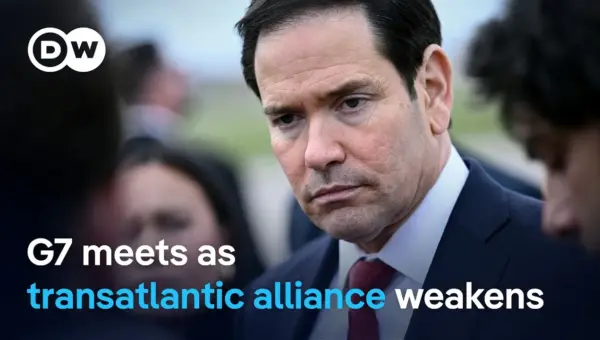
G7 Allies Clash Over Iran War Strategy, Urge Focus on Russia
G7 foreign ministers met in Paris, revealing deep divisions over the U.S. war with Iran. European allies urged the U.S. to pressure Russia, linking its actions to the conflict and fearing support for Ukraine will wane.

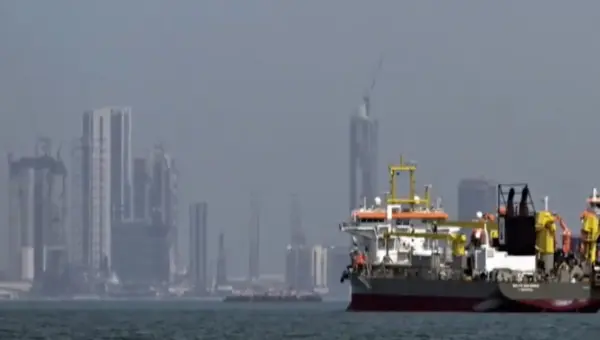
Iran Blocks China Ships, Exposing Beijing’s Weak Grip
Iran's recent decision to block Chinese ships at the Strait of Hormuz is exposing the limits of Beijing's influence in the Middle East. This action is causing delays and cancellations for Chinese manufacturers, turning a perceived geopolitical win into an economic strain.
Trump’s “Walk Away” Tactic Signals Tougher Stance on China
Retired Air Force Brigadier General David Stillwell believes President Trump's strategy of being willing to walk away from negotiations puts pressure on China. This tactic, combined with US global actions and strengthened alliances, signals a more assertive American foreign policy.