House Faces Funding Vote After Senate Passes DHS Bill
The House is set to vote on a Department of Homeland Security (DHS) funding bill after the Senate passed it. The deal focuses on less controversial agencies like FEMA and the Coast Guard, excluding ICE and Border Patrol funding. Procedural hurdles in the House are the main obstacle, with lawmakers hoping to pass the bill before a recess.

House Faces Funding Vote After Senate Passes DHS Bill
Capitol Hill is buzzing this morning with the possibility of a breakthrough on funding for the Department of Homeland Security (DHS). The Senate has advanced a deal, and the House is expected to vote on it soon, possibly before a two-week break. This comes after weeks of uncertainty that left many government workers unpaid and travelers facing long airport lines.
What’s in the Deal?
The Senate’s deal focuses on funding for less controversial agencies like FEMA and the Coast Guard. Notably, it does not include funding for Immigration and Customs Enforcement (ICE) or Border Patrol. Lawmakers decided to focus on areas where they could find agreement, rather than getting stuck in debates over immigration enforcement policies.
The House Procedure Hurdle
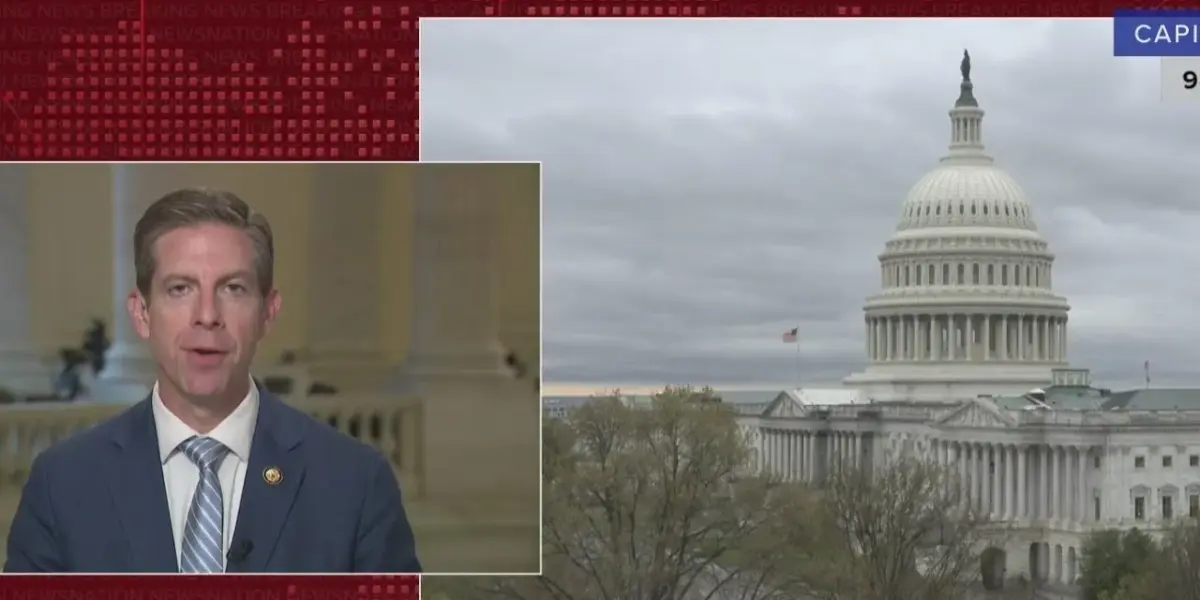
California Democratic Congressman Mike Levin explained the situation in the House. He noted that House Republicans have rules that make it difficult to pass bills quickly on Thursdays, Fridays, Saturdays, and Sundays. A faster process, called a “suspension,” usually requires a two-thirds vote. To pass this bill quickly, Republican leaders would need to get enough votes to waive their own rules. If they cannot, they will need to work with Democrats to get the required two-thirds majority through the normal process.
Congressman Levin stressed that the main challenge right now is procedural, not disagreement over the bill’s contents. He believes most lawmakers want to see the bill pass. Many members, both Republican and Democrat, have international travel planned, adding urgency to the situation.
Democratic Concerns and Compromises
While the deal moves forward, it’s not exactly what Democrats hoped for. Congressman Levin expressed a desire for more protections, or “guardrails,” concerning ICE operations. He mentioned standard protections like requiring judicial warrants before entering homes and avoiding sensitive locations, which he feels should be a “no-brainer” for any law enforcement agency.
However, he acknowledged that this version of the bill is designed to get the necessary two-thirds of votes. He sees it as progress from a week ago when former President Trump reportedly opposed any deal. The current approach aims to fund the parts of DHS that are less contentious, like FEMA and the Coast Guard, to resolve issues like airport delays and unpaid TSA workers.
Why Has This Taken So Long?
The delay has been significant, with TSA workers facing missed paychecks for weeks. Congressman Levin suggested that the problems start “from the top.” He pointed to rhetoric that labels Democrats as “the enemy,” making it harder for rank-and-file Republicans to compromise. He believes a more common-sense approach, focusing on areas of agreement and then working through disagreements, is needed.
He stated that on the Appropriations Committee, the goal is often to find common ground and fund what can be agreed upon. For issues with significant policy disagreements, like those surrounding immigration enforcement practices, those will require continued advocacy and debate. But, he emphasized, getting TSA workers paid is a priority.
Global Impact
This situation highlights the challenges in passing essential government funding, especially when intertwined with contentious policy debates. The inability to quickly fund critical agencies like DHS can have ripple effects. It impacts the daily lives of government employees and the services they provide, such as air travel security. For international travelers, delays and disruptions at airports can affect global connectivity and trade. Furthermore, the political divisions exposed in these funding battles can weaken a nation’s ability to respond to international challenges, as internal disagreements consume legislative energy.
Historical Context
Government shutdowns and funding standoffs have become more common in recent decades. These often occur when appropriations bills, which fund government operations, become vehicles for broader political battles. Historically, appropriations were more routine. However, increasing partisan polarization has led to situations where even funding for essential departments like Homeland Security, created after 9/11, becomes a point of intense negotiation and political leverage. The current situation echoes past struggles over immigration policy and border security funding, demonstrating a persistent divide in how these issues are approached.
Economic Leverage and Future Scenarios
The funding debate touches on economic stability. When government agencies are underfunded or workers are unpaid, it can affect morale and productivity. For TSA workers, the uncertainty about their paychecks can lead to financial hardship, impacting their ability to work effectively. The ability of Congress to pass funding bills also signals stability to international markets and partners. A prolonged funding crisis could suggest political instability, potentially affecting foreign investment and trade relationships. Looking ahead, if Congress cannot find a way to pass funding bills more efficiently, future government shutdowns or partial funding gaps remain a possibility. This could continue to disrupt services and create economic uncertainty. Alternatively, lawmakers could find a more consistent bipartisan approach to appropriations, which would provide greater predictability for government operations and the public.
Source: What will it take to get DHS funding through the House? | NewsNation Live (YouTube)

Related Articles

House Republicans Reject Senate Deal, Sparking Government Funding Clash
House Republicans have rejected a Senate bill to end the government shutdown, citing insufficient border security measures. Congressman Randy Fine called the Senate deal a "disgrace" and highlighted the ongoing fight for full government funding. President Trump's executive order to pay TSA agents offers temporary relief, but the core disagreement over border security continues to paralyze Washington.
GOP Leaders Clash Over DHS Funding, Exposing Deep Divisions
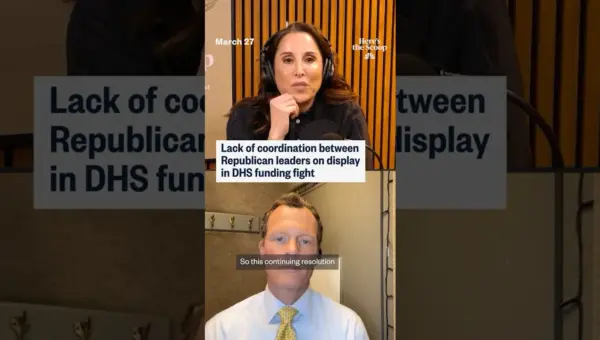
Republican leaders are struggling to find common ground on Department of Homeland Security funding, exposing deep divisions within the party. A proposed House resolution faces an uphill battle due to Senate recess and internal GOP dissent. Speaker Mike Johnson appears to be prioritizing appeasing a conservative faction over seeking broader bipartisan support.
Government Shutdown Sparks TSA Pay Chaos; Woods Arrested
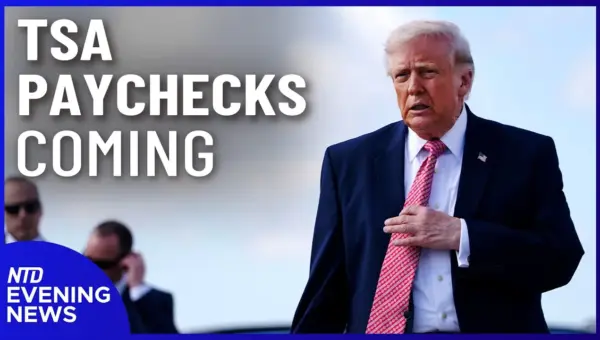
The government shutdown caused major disruptions, leading to TSA agents working without pay and President Trump signing an order to ensure their compensation. Meanwhile, golf icon Tiger Woods was arrested following a car crash in Florida. The news cycle also covered US operations in Iran, support for American farmers, political discussions at CPAC, election record disputes, and lawsuits against social media companies for their impact on students.