Labour’s Policies Vindicated, Ed Miliband Leads From Within
Labour's current policies are increasingly seen as vindicated by events, with Ed Miliband's economic and industrial vision guiding the party's direction. Meanwhile, speculation mounts over Sadiq Khan's potential move to a Westminster peerage and cabinet role, possibly as a response to anticipated poor local election results for Labour in London. The geopolitical landscape, particularly the conflict in the Middle East, also continues to shape the government's agenda.

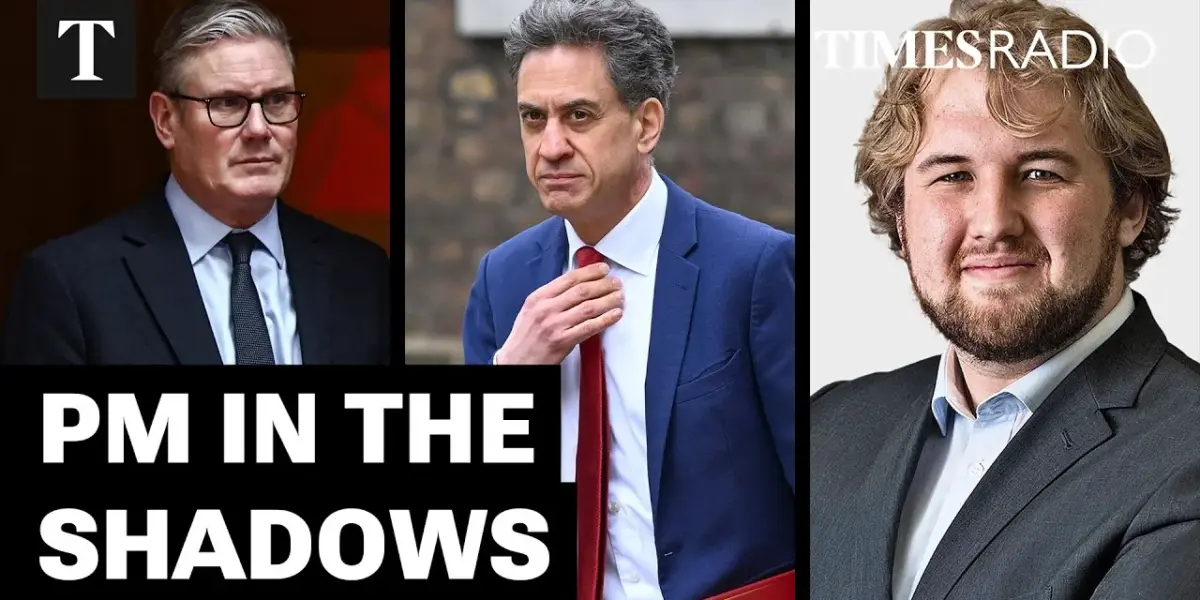
Labour’s Policy Direction Aligns with Ed Miliband’s Vision
The Labour Party is increasingly finding that its current policies are being validated by recent events, according to political commentator Patrick Maguire. There is no significant push within the party to reconsider its stance on key issues like petrochemicals. Instead, the prevailing sentiment, echoed by figures like Tony Blair and Keir Starmer, is that Ed Miliband’s policy framework is the correct path forward.
This perspective suggests that Miliband, though not holding a formal leadership position, is influencing the party’s direction. His ideas on economic, energy, and industrial policy appear to be shaping the government’s strategy, even as the party faces external pressures and internal discussions about future leadership.
Sadiq Khan’s Potential Move to Westminster
Breaking news suggests a potential shift for London Mayor Sadiq Khan, with reports indicating he might be offered a peerage and a cabinet position. This speculation follows a conversation Maguire had with an individual close to Khan, who suggested that a peerage and a move to Keir Starmer’s cabinet is a possibility.
The Financial Times has also reported on the potential for around 15 hereditary peers to become life peers, including a mix of Conservative and Liberal Democrat members, alongside approximately 30 new Labour peers. Sadiq Khan is named as a likely candidate for one of these new Labour peerages.
Adding to this narrative, Ellie Robinson, a former long-time aide to Sadiq Khan, has recently taken up the role of Deputy Chief of Staff to the Prime Minister. This move further fuels speculation about Khan’s potential transition from City Hall to national politics.
Labour Conference and Local Election Fallout
Maguire recounts a conversation at the Labour conference in Liverpool in September 2024, where the topic of Sadiq Khan’s exit strategy from his mayoral role arose. The possibility of Khan receiving a peerage and joining Keir Starmer’s cabinet was discussed as a way to manage potential poor results in the upcoming London local elections.
Labour is bracing for significant losses across London in the May elections. Predictions include losing key boroughs like Wandsworth and Westminster to the Conservatives, inner London boroughs to the Green Party, and inroads by Reform UK in outer London areas. This anticipated poor performance could create a political climate ripe for a major government reshuffle.
The timing of a potential reshuffle is a key question. Whether it occurs immediately after the May election results, signaling a response to a difficult day, or is delayed until the traditional reshuffle season in June and July, remains to be seen. The mayoralty election is not until 2028, but if Khan were to resign in 2026 to accept a peerage, a mayoral by-election could be triggered.
Geopolitical Tensions: Middle East Conflict and Iran’s Strategy
Turning to international affairs, the ongoing conflict in the Middle East is a significant factor shaping the government’s agenda. Former President Donald Trump has stated he will suspend attacks against Iran’s energy infrastructure for 10 days, citing positive talks aimed at ending the conflict.
Trump announced that he granted Iran’s request for a 10-day period, stating that Iran was thankful for the extension. He also mentioned that Iran allowed 10 Pakistani-flagged oil tankers to leave the Gulf unharmed. However, fighting continues, with Israel and Iran exchanging missile fire.
Dr. Alina Kadib, a scholar at Harvard’s Kennedy School and an associate fellow at Chatham House, offered insights into the conflict. She noted that the US has repeatedly offered Iran and its proxies off-ramps since October 7, but these have been refused. Iran’s strategy, according to Dr. Kadib, relies on enduring pressure until a new US administration might accommodate its interests, a tactic she likens to the Syrian regime’s past approach.
Dr. Kadib believes that Iran’s perceived resilience is its Achilles’ heel. She argues that a ground incursion, coupled with military attrition and economic pressure, could eventually lead to political fractures within Iran. While not a swift process, this strategy, alongside the strong US-Israel alliance, aims for a regional order change.
Ed Miliband’s Enduring Influence on Labour Policy
The discussion returns to Ed Miliband’s role within the Labour Party, with Maguire emphasizing his foundational influence on the party’s economic and industrial policy. Miliband’s ideas on re-industrialization and clean energy appear to be a consistent theme, even as the party navigates challenges like rising fuel costs.
Maguire points to Miliband’s past advocacy for policies such as price controls and attacks on perceived profiteers as examples of his influence. The Labour Party, rather than seeking new solutions during crises, seems to be finding that its existing policies, heavily shaped by Miliband, are being confirmed by current events.
This trend suggests that whether Keir Starmer, Wes Streeting, or Angela Rayner eventually leads the party, Miliband’s policy blueprint is likely to remain central. His ability to articulate a comprehensive governing philosophy and economic vision positions him as a key figure, potentially acting as a ‘kingmaker’ in future leadership contests.
Angela Rayner’s Podcast and Future Leadership
Angela Rayner has launched a podcast, featuring Michael Gove as her first guest. This move is seen as a sign of her status as a political player, though the commissioning of a full series is still pending.
The podcast’s debut raises questions about whether Ed Miliband would continue to influence policy even if Rayner or another figure like Wes Streeting were to become leader. Both Rayner and Streeting are noted for their ministerial experience and general political appeal but may lack a fully developed, distinct policy agenda.
In contrast, Ed Miliband provides a clear governing philosophy and a detailed approach to the economy and industry. This makes him a valuable asset to any potential Labour leader, offering both policy direction and a connection to the party’s recent successes. Miliband himself was an early adopter of the podcast format, with his own show having been popular in the past.
Source: PM Or Not, Ed Miliband Is Labour’s Real Leader | Patrick Maguire (YouTube)

Related Articles


Iran Strikes US Base: Are We Learning from Mistakes?
A recent Iranian drone and missile attack wounded American service members and damaged aircraft in Saudi Arabia. This incident highlights concerns about military preparedness and the failure to learn from past mistakes, as exposed aircraft remain vulnerable targets. The ongoing conflict involves complex regional dynamics, including Iran's missile capabilities and the potential involvement of groups like the Houthis, raising questions about future stability.


Iran Bombs U.S. Planes, Escalating Mideast Conflict
Iran has directly attacked U.S. aircraft stationed in Saudi Arabia, confirmed by satellite imagery showing significant destruction. This escalation follows other recent incidents and comes amid threats of continued conflict, with officials estimating the war could last several more weeks.

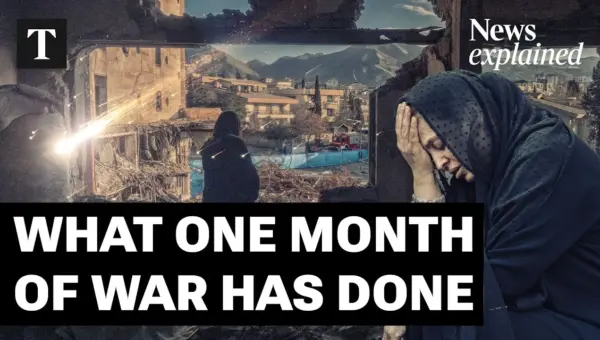
Iran War Erupts: US, Israel Bomb Iran, Leader Killed
A swift and deadly conflict erupted between the US, Israel, and Iran, beginning with major aerial bombardments and resulting in the death of Iran's Supreme Leader. The war saw regional escalation, including attacks on US installations and a ground invasion in Lebanon, causing widespread disruption and a soaring death toll. Despite talk of peace, both sides ultimately claimed victory, leaving the region in a precarious state.