Trump Extends Iran Deadline Amid White House Division
President Trump has extended a deadline concerning Iran and the Strait of Hormuz, citing ongoing talks despite public denials from Iran. Inside the White House, however, reporting reveals significant confusion and tension over the war's strategy and messaging, with some officials describing the President's rhetoric as hyperbolic and the social media approach as disrespectful.

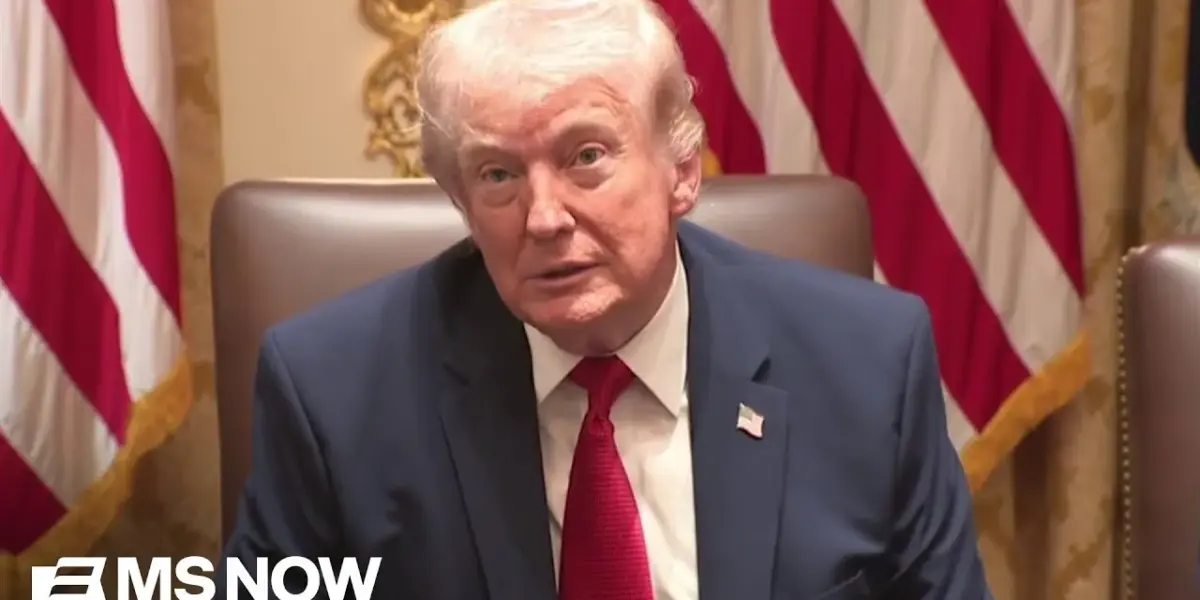
Trump Delays Iran Action, Cites Talks Amid Internal Discord
President Trump has extended his deadline for Iran to reopen the Strait of Hormuz, a critical waterway for global oil transport. The initial deadline, which threatened “obliteration” of Iran’s power plants, was set to expire but has been pushed back by 10 days. Trump cited ongoing, reportedly successful talks as the reason for the delay. This announcement came just after U.S. stocks experienced their largest losses since the start of the conflict, despite the pause in energy strikes.
Fighting continues in the region, however. The Israeli military reported conducting strikes in Tehran early today, with residents describing damage to Kuwait’s main port following an attack. During a cabinet meeting, President Trump shared his perspective on the negotiations, mentioning a “present” he received from Iran: the passage of several ships through the Strait of Hormuz. He stated that Iran now has a chance to make a deal, suggesting they are desperate to negotiate, a claim Iran publicly denies.
“They are begging to make a deal. We’ll see if we can make the right deal, and if they make the right deal, then the strait will open up,” Trump remarked. He dismissed reports of his own desperation to reach an agreement, asserting, “I’m the opposite of desperate. I don’t care.” He also noted that the U.S. has other targets it wishes to hit before withdrawing forces.
Internal White House Tensions Surface Over Iran Strategy
Despite the President’s public pronouncements, reporting reveals significant tension and confusion within the White House regarding the strategy and messaging around the Iran conflict. Three White House officials, two of whom are still employed there, spoke about the growing divide. One official described the President’s recent messaging on Iran as “hyperbolic,” suggesting he has grown bored with the issue and is shifting his focus to domestic concerns.
Another official noted that Trump often employs a strategy of gradually introducing his views to the public, expecting eventual acceptance. However, this approach appears less effective in a wartime scenario. Frustration also exists regarding the White House’s social media strategy. Recent posts have included meme-like content, compilations of attacks, and lighthearted references to serious events, drawing criticism from within.
One individual described the videos as “cringe, disrespectful, and gross,” expressing upset about working at the White House during such a time. A common thread among these officials is the fear of reprisal for voicing dissent. Many believe that expressing disagreement, especially in the context of a potential second Trump administration, could lead to job loss.
Unconventional Approach to Foreign Policy and War
Hagar Shamali, a former spokesperson for the U.S. mission to the United Nations, and Jake Traylor, a White House reporter, discussed the President’s unconventional approach. Trump has historically operated with limited notification to Congress or allies, keeping his strategies close. He has shown distrust towards traditional institutions like Congress, allies, and the press.
This approach has allowed him to conduct operations like the initial strike on Iranian leadership without broad consensus. “It seems to me… it’s just the way about the way he does things and war, not traditional and deeply concerning obviously to members of Congress and allies,” Shamali observed.
The situation is complicated by conflicting pressures from regional allies like Saudi Arabia and Israel, who are urging the U.S. to remain engaged. However, reporting suggests Trump had anticipated a shorter conflict, perhaps only two to four weeks. The political reality may prevent the war from dragging on into the summer months.
The President’s Communication Game: Confusion as a Tool
Traylor elaborated on Trump’s pattern of communication, highlighting his deliberate use of confusion. “He does not care about communicating to the U.S. public, although I would argue that’s a disservice actually in his efforts,” Traylor stated. This strategy extends to the ongoing negotiations, where Trump presents a positive outlook that may not reflect reality or his true intentions.
Drawing from his book, “The Art of the Deal,” Traylor explained Trump’s philosophy: appearing willing to walk away and maintaining confusing communications preserves power. “When you appear willing to walk away, when you are confusing in your communications, you retain all the power,” he said. This tactic is central to his foreign policy objectives, especially in a conflict situation.
Regarding the war’s duration, Traylor believes Trump wants a swift resolution. However, he also warns against ending the conflict too soon, citing potential negative outcomes. “There is no scenario I see where if the vestiges of this regime exist that you’re going to have anything other than a harsh crack down and power vacuum and something much more dangerous certainly for the Gulf,” he explained. He anticipates a middle ground, acknowledging that the conflict cannot extend indefinitely into the summer months.
Looking Ahead: A Precarious Balance
The coming days will be crucial in determining whether diplomatic efforts can de-escalate the situation or if tensions will continue to rise. The President’s extended deadline provides a narrow window for negotiation, but the underlying internal divisions and the unpredictable nature of Trump’s decision-making create a precarious balance. Regional stability hinges on navigating these complex dynamics, with allies closely watching for signs of a clear and consistent strategy.
Source: Inside the White House divide on Iran (YouTube)

Related Articles


Iran Targets US With Cyberattacks, Escalating Digital Warfare
Iran is increasingly using cyberattacks to challenge the U.S., as seen in a recent hack of the FBI director's account. Experts say this is a strategic shift due to Iran's limitations in conventional warfare. The U.S. needs to strengthen its digital defenses, focusing on encryption and cloud computing, rather than solely relying on traditional security measures.

Iran Hacks FBI Chief, Exposing U.S. Cyber Vulnerabilities
A recent hack of FBI Director Kash Patel's personal email by an Iran-linked group highlights Iran's growing cyber threat to the U.S. Experts explain how simple security oversights are exploited, emphasizing the need for basic defenses like two-factor authentication to protect against propaganda and potential infrastructure attacks.

Trump Halts Iran Strikes Amid Stalled Diplomacy
President Trump announced a pause on planned strikes against Iran, citing productive talks, though Iran denies negotiations occurred. Reports also suggest a potential U.S. ground operation on Iran's Hark Island. The situation raises concerns about international support for Ukraine and potential shifts in U.S. foreign policy.