UK’s Starmer Risks US Ties, Courts Iran Threat
British Prime Minister Keir Starmer's stance on Iran is creating a rift with the U.S., raising concerns about national security and appeasing specific groups. The former PM warns of escalating anti-Semitism and calls for stronger conservative leadership, while reflecting on the monarchy and the challenges facing Prince Harry and Meghan Markle.


UK Risks US Ties, Courts Iran Threat Amid Shifting Alliances
The long-standing relationship between the United States and the United Kingdom is facing new challenges. British Prime Minister Keir Starmer’s recent actions have created a noticeable rift with the U.S., particularly concerning how Britain is handling the threat from Iran. This shift in approach is raising questions about Britain’s national interests and its place on the global stage.
Starmer’s Iran Policy Sparks Controversy
Critics argue that Prime Minister Starmer is hesitating, or ‘dithering,’ when it comes to taking a firm stance against Iran. This indecision is seen as an attempt to gain favor with certain Muslim communities within Britain, especially as the Labour Party has been losing support in local elections. Some believe Starmer is trying to please different groups, but this has left Britain in a difficult position with its closest ally, the United States.
The core issue is that Iran poses a significant danger not just to America, but also to Britain and other Western European nations. By appearing hesitant, Starmer may be putting the interests of appeasing a specific segment of the population above protecting British security. This approach is described as a reflection of a broader issue within the British establishment.
Concerns Over Iranian Influence in the UK
Further complicating matters are concerns about Iran’s influence within the UK. Reports suggest that high-ranking officials in Iran, including the head of their military operations, may have close ties to property in Britain. There are also suggestions that the British government has been too close to the Iranian regime, with civil servants from the Foreign Office attending events at the Iranian embassy. This perceived leniency towards Iran, especially when the U.S. has been pushing for stronger sanctions, is seen as problematic.
This situation is particularly worrying given the rise of anti-Semitism in the UK. While most British citizens are not anti-Semitic and are concerned about its spread, some feel that the country’s elite does not reflect the views of the average person. This disconnect is seen as contributing to a decline in societal values.
Escalating Anti-Semitism and Leadership Response
The problem of anti-Semitism is not confined to political policy. In London’s Golders Green neighborhood, an anti-Semitic arson attack occurred, with a group linked to Iran claiming responsibility. This is part of a broader trend of rising anti-Semitic incidents in the UK, the U.S., and across Europe. Experts view this as a sign of societal decay.
The response from current UK leadership is seen by some as inadequate. While Starmer is taking steps on issues like Islamophobia, critics believe he is simultaneously appeasing extremist elements. This includes attempts to define Islamophobia in ways that may prevent criticism of issues like Sharia councils or grooming gangs, which are seen as problems within the UK.
A Call for Stronger Conservative Leadership
Writing in his book, “10 Years to Save the West,” the former British Prime Minister warns that the clock is ticking for Western civilization. He believes that the global left is having a corrosive effect. However, he also expresses faith in the British people, citing their decisions on Brexit and their desire for independence. He suggests that with the right leadership, the UK can be saved from its current course.
To achieve this, he calls for a strong conservative infrastructure, similar to what exists in the United States. He points to the CPAC conference as an example of how such networks and institutions are built. He believes the UK needs to learn from these models to strengthen its own political and social foundations.
Reflections on the Monarchy and Royal Family
The former Prime Minister also shared personal reflections on the British monarchy. He was the last Prime Minister to meet with Queen Elizabeth II before her passing. He remembers her as a monumental figure who always prioritized the country. He believes she would continue to serve the nation if she were still alive today.
Regarding the current King Charles III’s upcoming visit to the United States, he sees it as a positive step. He notes the 250-year history between the U.S. and UK, acknowledging the American Revolution as a moment of separation but also highlighting the success of the United States as a country. The visit is considered important, especially for the U.S., which has a strong connection to its revolutionary past.
Prince Harry and Meghan Markle’s Situation
On a different note, the former Prime Minister addressed the situation of Prince Harry and Meghan Markle. Reports suggest they are facing financial difficulties in Los Angeles. Given their past statements about the Royal Family, returning to the UK and rejoining the family seems unlikely. He suggests that while they are welcome to visit, reintegration into the Royal Family appears improbable after everything that has happened.
Global Impact
This analysis highlights a critical juncture for the UK’s foreign policy and its relationship with the United States. Prime Minister Starmer’s approach to Iran, influenced by domestic political considerations, risks alienating a key ally and potentially emboldening a regime that threatens global security. The rise of anti-Semitism, linked in some instances to Iranian proxies, further complicates the picture, suggesting a broader societal and security challenge that requires a firm and unified response from Western nations. The former Prime Minister’s call for a stronger conservative infrastructure and his faith in the British people point to a desire for a return to traditional values and a more assertive foreign policy. The ongoing developments within the Royal Family, though less geopolitically significant, also reflect underlying tensions and changes within British society. The situation underscores the complex interplay of domestic politics, international relations, and societal values that shape the global order.
Source: Prince Harry, Meghan Markle can stay in US, former British PM says | Katie Pavlich Tonight (YouTube)

Related Articles

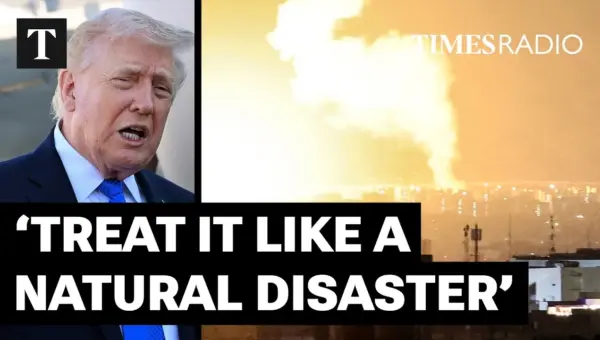
Trump’s ‘Game Show’ Diplomacy Sparks Mideast Chaos
Analysts are likening Donald Trump's "game show" approach to foreign policy to a natural disaster, arguing his unpredictable tactics have already caused significant damage to global markets and stability. The discussion highlights Iran's strategic advantage and raises concerns about "drift" in British politics regarding finances, energy, and national security.


Labour’s Policies Vindicated, Ed Miliband Leads From Within
Labour's current policies are increasingly seen as vindicated by events, with Ed Miliband's economic and industrial vision guiding the party's direction. Meanwhile, speculation mounts over Sadiq Khan's potential move to a Westminster peerage and cabinet role, possibly as a response to anticipated poor local election results for Labour in London. The geopolitical landscape, particularly the conflict in the Middle East, also continues to shape the government's agenda.


Ed Miliband’s Quiet Influence: Is He Labour’s Real Power Broker?
Ed Miliband's enduring political influence is being debated, with some suggesting his ideas are shaping the current Labour government. While he has faced past electoral defeats, his long-term vision for the country continues to be a significant factor in British politics, though questions remain about his personal ambition for the top job.