Iran War Strains GOP: Will Conflict Hurt Trump’s Republicans?
The U.S. military action in Iran is creating significant divisions within the Republican party, impacting Donald Trump's standing. While many supporters at CPAC voiced backing for the war, concerns about costs and prolonged conflict are growing. Polls show mixed support, with the conflict potentially affecting upcoming elections and the future direction of the GOP.

War in Iran Creates Divisions Within Republican Party
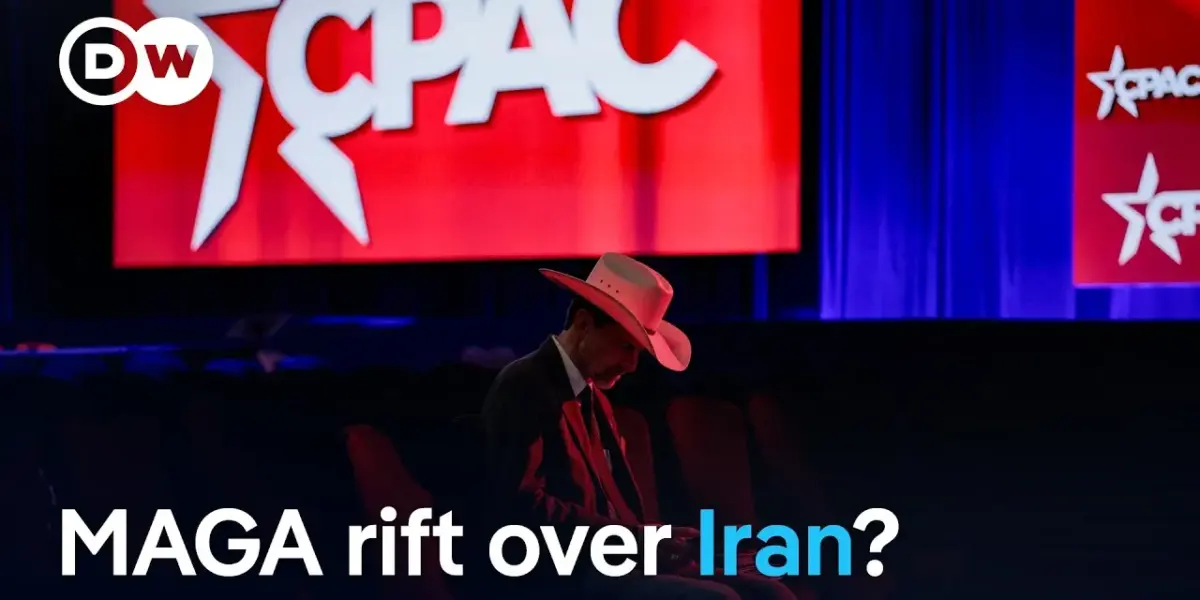
The United States’ military involvement in Iran is creating significant rifts within the Republican party, potentially impacting Donald Trump’s political future. While many staunch supporters at the Conservative Political Action Conference (CPAC) in Texas voiced their backing for the action, concerns about escalating costs, prolonged conflict, and a return to ‘endless wars’ are surfacing. Polls indicate that while a majority of Republicans support the military action, this support wanes among those not identifying with the MAGA movement.
CPAC Attendees Divided on Iran Conflict
At the recent CPAC conference, a gathering often described as the ‘Super Bowl’ of right-wing politics, attendees expressed a range of views on the war in Iran. Some participants strongly supported the military operation, seeing it as a necessary step to remove certain political factions and bring freedom to the Iranian people. They expressed confidence in President Trump’s judgment, even if it meant potential short-term economic hardship, such as higher gas prices. “We are because we still believe President Trump 100%,” one attendee stated, highlighting deep loyalty.
However, a notable portion of attendees also showed hesitation. Many are wary due to past military engagements in the Middle East. They voiced concerns about the prolonged nature of the conflict and the lack of clear evidence that the U.S. will withdraw quickly, as promised. “It kind of feels like we’re just being drugged into another Middle East war,” one person shared, reflecting a sentiment of apprehension. This hesitation suggests that while Trump commands significant loyalty, the rationale and potential consequences of the war are not universally accepted, even within his base.
Polls Show Mixed Support, Declining Approval for Trump
Recent polls reveal a complex picture of Republican support for the Iran conflict. A CBS poll indicated that 84% of all Republicans back the U.S. military action, with support rising to 92% among the MAGA base. However, among Republicans who do not consider themselves part of MAGA, support drops to 70%. This indicates a potential vulnerability for Trump if the conflict escalates or leads to significant negative consequences.
Furthermore, President Trump’s overall approval ratings have seen a decline, reportedly falling as low as 36% in recent days. This drop is largely attributed to public reaction against the war and the resulting increase in prices, particularly for fuel. The economic impact is a key concern, as many Republicans had hoped Trump would fulfill his promise to lower prices and end costly foreign engagements.
Internal Resistance and Shifting Ideologies
Beyond the general Republican base, prominent conservative figures and media personalities have expressed criticism of the war. Figures like Tucker Carlson and Matt Gaetz have been vocal about their opposition, highlighting a split within the movement. Steve Bannon, a key strategist from Trump’s 2016 campaign, was also present at CPAC, suggesting ongoing debates within the party’s leadership.
Matthew Sheffield, a commentator and former right-wing media co-founder, explained that Trump has a unique ability to shape opinion within the Republican party. He noted that the MAGA base was initially against military action in Iran, but Trump’s stance appears to have shifted their views. This loyalty, Sheffield suggests, is a long-term trend that distinguishes Republicans from Democrats and independents, whose opinions are often more closely tied to objective economic conditions. However, he also warned of a potential backlash, particularly regarding ground troops, following the unpopular Iraq War.
Generational Divide and Future Political Landscape
A generational divide in attitudes toward military intervention is also emerging within the Republican party. Younger Republicans, who came of age during the Trump era, are more likely to be skeptical of foreign interventions, influenced by Trump’s own criticisms of past wars like the Iraq invasion. Older Republicans, in contrast, may have been more traditionally in favor of such actions.
This internal division could have significant implications for the upcoming midterm elections and the future of the Republican party. CPAC Chairman Matt Schlapp has already voiced concerns that party infighting could be “devastating” in the midterms. Some extreme voices on the right have even suggested voting for Democrats to protest the current direction of the party. The war’s impact could also affect potential future presidential candidates. JD Vance, for instance, might be hurt if his base of foreign policy isolationists feels betrayed by the conflict. Conversely, figures like Marjorie Taylor Greene, who has been critical of Trump’s foreign policy, could see their influence grow if the war proves unpopular and costly.
Exit Strategies and External Pressures
The question of an exit strategy from the Iran conflict is paramount. While the Republican base may ultimately accept any decision Trump makes to withdraw, there are external pressures at play. Saudi Arabia and Israel, with significant financial and political ties to Trump and his administration, are reportedly pushing for continued military action. This creates a difficult balancing act for Trump, caught between domestic political pressure to disengage and international pressure to persist.
Sheffield believes Trump can withdraw relatively easily, likely framing it as a victory. However, the potential for Israel to continue operations independently remains a wildcard. The ultimate impact on the midterms is still uncertain, as the conflict is several months away from the elections. Yet, the divisions it exposes within the Republican party, particularly among its most ardent supporters and rising political figures, suggest a turbulent path ahead for the GOP.
The future of the Republican party may involve a further shift to the right, potentially favoring figures like Tucker Carlson who have shown a willingness to engage with more extreme elements of the conservative movement. The war in Iran, therefore, is not just a foreign policy issue but a critical test for the Republican party’s unity and its direction in the post-Trump era.
Source: Will the Iran war hurt Trump's Republicans? | DW News (YouTube)

Related Articles

House Funds DHS Short-Term, Senate Stalemate Looms
The House has passed a short-term bill to fund the Department of Homeland Security, but the Senate is expected to reject it. This temporary measure highlights ongoing political divisions and the challenges in reaching long-term budget agreements in the U.S. Congress.

Congress Stalemate Threatens Border Security Funding
The U.S. House passed a temporary funding bill for the Department of Homeland Security, but Senate Democrats are expected to block it. This recurring stalemate highlights deep divisions over border policy and funding, potentially impacting national security and international perceptions of U.S. stability.

Polls Spell Doom: Republicans Face Voter Backlash
New polling data reveals a sharp decline in public confidence regarding the economic impact of Republican policies, particularly under Donald Trump. A significant majority now feel financially worse off, a trend that is especially pronounced among independent voters. This economic discontent poses a major challenge for the Republican party heading into future elections.