Trump Leveraged Airport Chaos for Voter ID Push
Donald Trump's decision to pay TSA agents was revealed to be a tactic to leverage airport chaos for his voter ID agenda. Despite having the authority to act sooner, he allegedly prolonged travel disruptions to pressure for the "Save America Act," a measure critics argue is voter suppression.

Trump Leveraged Airport Chaos for Voter ID Push
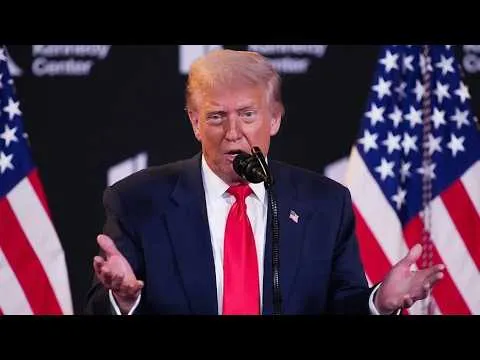
In a significant move, Donald Trump announced he would use executive authority to pay TSA agents, citing an emergency situation and blaming Democrats for “chaos at the airports.” This decision came amid ongoing travel disruptions and long lines plaguing airports across the country. Trump stated he was taking this action to protect the nation and would not allow Democrats to “hold our country hostage.” He directed the Secretary of Homeland Security to immediately pay TSA agents from the existing Department of Homeland Security (DHS) budget.
This action, however, immediately raised questions. If the authority to pay TSA agents existed all along, why wait until this moment? Why allow Americans to face weeks of travel delays, miss flights, and have spring break plans ruined? The implication is that a solution was available but not used, suggesting a deliberate choice to prolong the disruption.
A Missed Opportunity for Bipartisan Agreement
Adding to the complexity, it was revealed that a bipartisan plan to resolve the TSA funding issue had been proposed and rejected. Republican Senator John Kennedy explained a two-step process developed with Senator Ted Cruz. They proposed accepting Democrats’ offer to fund all but immigration enforcement in exchange for a reconciliation bill that would allow Republicans to address their priorities regarding Immigration and Customs Enforcement (ICE) without Democratic votes. This plan, submitted to President Trump, was reportedly rejected with a directive: “No deals with the Democrats.”
“It would have worked. We would have had TSA paid by the end of the week.”
According to Senator Kennedy, the sole obstacle to restoring normal airport operations was Donald Trump’s refusal to compromise. Even Trump himself acknowledged negotiations were underway for a deal to fund TSA but expressed his general dissatisfaction with any potential agreement, stating, “I think any deal they make, I’m pretty much not happy with it.”
The Real Reason: A Bargaining Chip
The critical question then became: why create or prolong this airport chaos? The answer, as revealed by Trump himself, was to use the public’s pain and frustration as leverage. He explicitly advised Republicans not to settle on any deal unless it included his priorities: the “Save America Act,” voter ID requirements, and proof of citizenship for voting. He framed the airport struggles as a direct result of Democratic actions, but the underlying motive was to pressure for the passage of these specific legislative items.
The long lines at airports, therefore, were not an accidental outcome. They were intentionally maintained as a tactic. The pain experienced by travelers was not a bug in the system; it was a feature designed to extract concessions. Trump prioritized preserving this bargaining chip over providing immediate relief to thousands of traveling Americans.
The Save America Act: Voter Suppression in Disguise?
The core of Trump’s demand, the “Save America Act,” is presented as a measure to prevent voter fraud. However, critics argue it is a thinly veiled attempt at voter suppression. The act reportedly aims to force states to hand over voter rolls to the federal government. Furthermore, it would require voters to present specific identification, such as a passport or birth certificate, to cast a ballot. This requirement raises concerns because these documents are not universally accessible or free, potentially disenfranchising millions of Americans.
The cost of obtaining a passport or a certified copy of a birth certificate can act as a de facto poll tax. Additionally, the federal government’s control over passport issuance could give the sitting administration undue influence over who is eligible to vote. Critics point to studies showing extremely low rates of actual voter fraud, such as one examining over a billion ballots cast between 2000 and 2014, which found only 31 instances of fraud. Another investigation in Utah found only one undocumented immigrant on voter rolls, who had never voted.
Historical Context: The Politics of Election Integrity
The debate over voter ID laws and election integrity has a long history in American politics. Proponents argue these measures are necessary to prevent fraud and ensure public confidence in election outcomes. They often point to instances of alleged irregularities as evidence of a need for stricter rules. Opponents, however, contend that such laws disproportionately affect minority voters, the elderly, and low-income individuals who may face greater barriers to obtaining required identification. They view these measures as partisan attempts to suppress votes rather than genuine efforts to secure elections.
The current push, framed through the lens of the “Save America Act,” appears to fit this latter pattern. The strategy involves creating a crisis, blaming the opposition, and then demanding specific legislative changes under the guise of fixing the problem. This approach uses public inconvenience and frustration as a tool to achieve a political objective, rather than pursuing a solution through traditional legislative compromise.
Why This Matters
This situation highlights a critical tension in governance: the use of executive power and the prioritization of political leverage over immediate public welfare. Trump’s decision to pay TSA agents only after leveraging the ensuing chaos for his legislative agenda demonstrates a strategy where public suffering becomes a tool for political gain. It raises fundamental questions about the responsibilities of leaders, especially during times of national inconvenience or crisis.
The implications extend beyond airport security. If this tactic proves effective, it could encourage similar strategies in the future, where public services are deliberately disrupted to force political concessions. This erodes trust in government and normalizes a confrontational approach to policymaking, where compromise is seen as weakness and obstruction is a valid tactic. It suggests a political environment where the needs of citizens are secondary to the pursuit of partisan goals.
Future Outlook
The future of such tactics remains uncertain. However, the revealed strategy suggests a continued focus on using perceived crises to advance specific agendas, particularly concerning election laws. The emphasis on voter ID and proof of citizenship, framed as election security, is likely to remain a central theme for certain political factions. The effectiveness of these tactics will depend on public reaction and the ability of opposing political forces to counter them.
Ultimately, this incident underscores a broader trend: the weaponization of government functions for political advantage. Whether this approach benefits or harms the country in the long run is a matter of ongoing debate and will likely shape future political battles. The underlying issue is whether governing should prioritize public service and compromise or the strategic use of leverage and disruption to achieve partisan ends.
Source: BREAKING: Trump makes MAJOR ANNOUNCEMENT (YouTube)

Related Articles
TSA Workers Get Paid After Record Absences
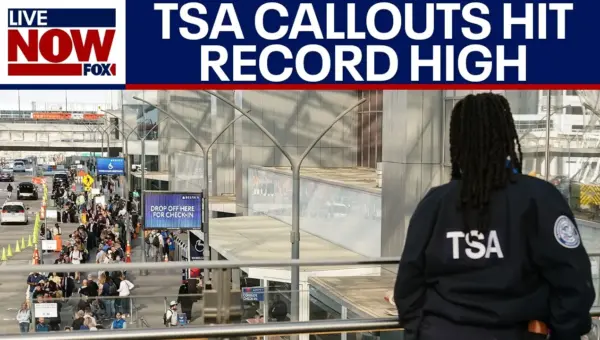
TSA agents will finally receive paychecks after working nearly six weeks without salary, following a directive from President Trump. Record high absences had strained airport operations and caused significant passenger delays. The situation has sparked calls for better protections for essential workers during government shutdowns.
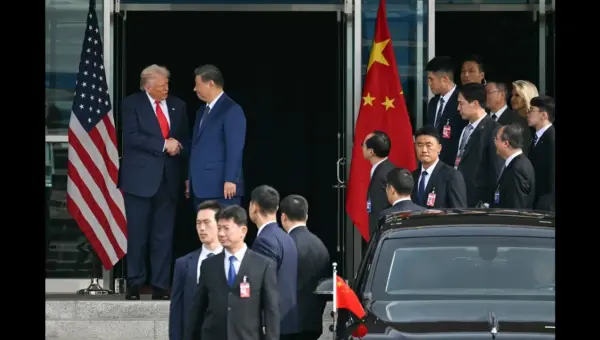
Trump’s “Walk Away” Tactic Signals Tougher Stance on China
Retired Air Force Brigadier General David Stillwell believes President Trump's strategy of being willing to walk away from negotiations puts pressure on China. This tactic, combined with US global actions and strengthened alliances, signals a more assertive American foreign policy.

Voter ID: Common Sense or Suppression?
A growing debate surrounds voter ID laws, with proponents calling them a common-sense measure against fraud and opponents fearing voter suppression. Many countries and U.S. states already require ID to vote.