Pakistan Relays US-Iran Messages Amid Middle East Conflict
Pakistan is actively relaying messages between the US and Iran as a neutral intermediary amid the Middle East conflict. Former Pakistani National Security Advisor Moed Ysef highlighted the country's unique position and historical role in facilitating international diplomacy. While challenges remain in translating these back-channel communications into direct negotiations, Pakistan continues to offer a crucial venue for de-escalation.

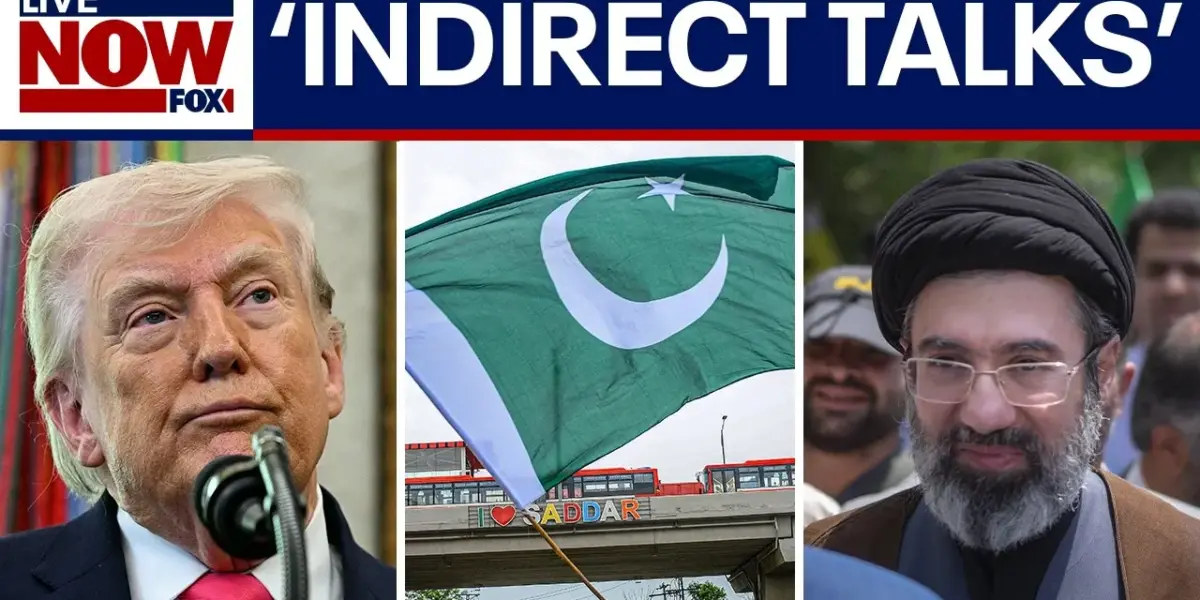
Pakistan Acts as Back Channel in US-Iran Diplomacy
Amid the ongoing conflict in the Middle East, Pakistan has stepped in to play a crucial role as a go-between for the United States and Iran. This diplomatic effort involves relaying messages between the two nations, attempting to de-escalate tensions in a volatile region. The news highlights Pakistan’s strategic position and its history of facilitating complex international discussions.
Expert Insight on Diplomatic Efforts
Moed Ysef, former national security advisor to Pakistan’s prime minister and a senior fellow at Harvard’s Kennedy School, discussed the nature of these back-channel talks. “These things must happen behind closed doors,” Ysef noted, emphasizing the need for privacy in such sensitive negotiations. However, he also acknowledged that in today’s information age, such reports cannot be dismissed. “It’s quite clear now that Pakistan has actually played go-between,” he stated, confirming the country’s active involvement.
Pakistan’s Proposed Framework
Ysef explained that the US has put forth a 15-point plan, and Iran has reportedly responded with a five-point rebuttal. Pakistan has offered its services to facilitate direct conversations between the two parties. “Pakistan’s been out there offering a venue if they want to have direct conversations, offering to play go-between,” Ysef said. He believes countries with direct lines to both the US president and Iranian leadership, like Pakistan, are ideally suited for this role.
Why Pakistan is Uniquely Positioned
Pakistan’s geographical location and political relationships make it a natural choice for this diplomatic mission. It shares a long border with Iran and has a close relationship with the United States. Furthermore, Pakistan has a defense pact with Saudi Arabia and is a partner to other Gulf states, Turkey, and Qatar. This extensive network allows it to be deeply involved in regional stability without being a direct participant in the conflict.
Historical Precedent for Mediation
This is not the first time Pakistan has acted as a mediator on the global stage. Ysef recalled Pakistan’s pivotal role in opening the door for the US-China rapprochement, leading to Henry Kissinger’s historic visit in 1971. “Pakistan was the country that opened the door for the US Raproma to China with Henry Kissinger’s famous visit in ’71,” he stated, showcasing a precedent for its diplomatic capabilities.
Challenges in Bridging the Gap
Despite Pakistan’s efforts, translating message relaying into actual negotiations faces significant hurdles. Both sides currently hold what Ysef described as “maximalist positions.” The US points to its proposed framework, while Iran insists on ending the war on its terms. “For the Iranian leadership, it’s very difficult because the new leadership has to prove that they’re going to stand their ground and not give in to the US for domestic audience benefits,” Ysef explained.
The Path to Real Negotiations
Ysef believes that real conversations will only begin when both nations perceive an overlap in their positions. He expressed doubt about Iran agreeing to permanently give up uranium enrichment or change its stance on Israel. Similarly, he doesn’t foresee the US accepting Iran’s current demands. “This is the incremental process that gets you to the point where they can talk,” he said, unless the situation escalates dramatically through ground invasions or actions by Israel.
Pakistan’s Self-Interest and Regional Stability
Pakistan has a vested interest in seeing the conflict end quickly. The nation is heavily reliant on energy imports, which pass through the Strait of Hormuz. Lifting sanctions on Iran could also open avenues for trade. Moreover, if Saudi Arabia becomes directly involved in the conflict, Pakistan could be drawn in due to its defense pact. “Pakistan has no option but to push as hard as it can for this war to end as quickly as possible,” Ysef asserted.
Building Trust Amidst Violence
Building trust between warring parties is a complex task, especially when violence continues. Ysef clarified that Pakistan is not a mediator with the power to coerce either side into concessions. Instead, it offers a venue and conveys messages, acting as a facilitator. “All it will say is, you can’t blame me if this falls apart. Neither of you have a better option if you want an off-ramp,” he explained. Pakistan’s role is to nudge both sides as a friend, but the ultimate agreement must come from the US and Iran themselves.
Pakistan’s Relationship with Iran
Pakistan and Iran share a unique neighborly relationship, marked by historical ties and a significant Shia population in Pakistan. While Pakistan has historically been closer to Saudi Arabia, it maintains a direct channel with Iran. Ysef noted that Pakistan has earned appreciation in Iran for not aligning with the regional divide, unlike some other countries. Pakistan has also reportedly been instrumental in convincing the US to remove certain Iranian officials from assassination lists, preserving potential negotiators.
Signals of Progress or Failure
Ysef outlined key indicators to watch for regarding the success or failure of these diplomatic efforts. Escalation in military actions, such as US boots on the ground or increased involvement of other Gulf countries, would signal a breakdown. Conversely, the arrival of high-level diplomatic flights in Pakistan could indicate progress. “You will very quickly find out that if they’re sitting across the table in Islamabad, things are moving in the right direction,” he concluded.
Source: Pakistan relaying messages between U.S. & Iran amid conflict (YouTube)

Related Articles

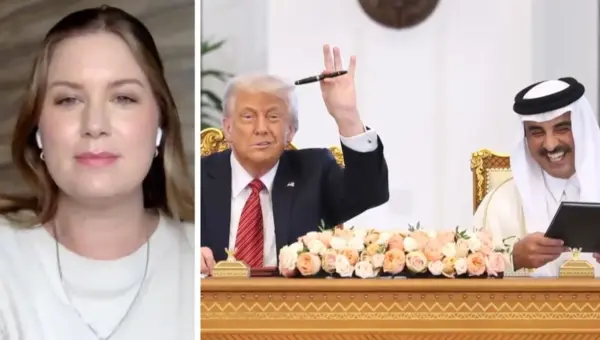
Gulf States Demand Seat at Table on Iran’s Nuclear Future
Gulf states are demanding a seat at the table for any U.S.-Iran talks regarding Iran's nuclear future. This move reflects a growing assertiveness and a desire to shape regional security directly. It signals a potential shift towards more inclusive diplomatic efforts in the Middle East.


Israelis Forge Resilience Amidst Constant Bomb Shelter Drills
Life in Israel is a blend of resilience and constant vigilance, with many families adapting to frequent bomb shelter drills and even sleeping in makeshift shelters. Despite ongoing missile attacks, Israelis strive to maintain normalcy, though businesses face disruption and emotional fatigue is a growing concern.
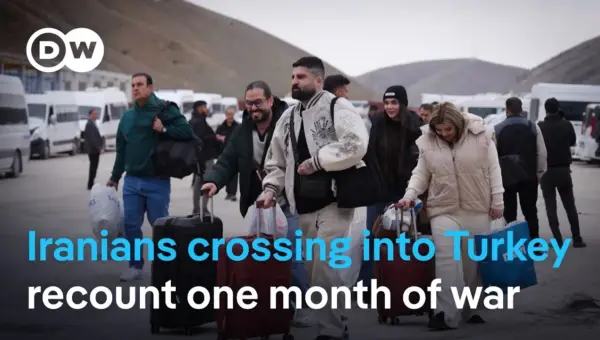
Iran War Exodus: Refugees Flee to Turkey Amidst Bombings
A train from Tehran brings refugees to Turkey, fleeing daily bombings and economic collapse. Many express deep fear for loved ones left behind, while some hold onto national pride and hope for victory. The conflict's impact is also felt economically in Turkey, with rising gas prices.