Trump’s Mail-In Ballot Hypocrisy Fuels Voter Suppression Debate
Donald Trump's personal use of mail-in ballots contradicts his public stance against them, fueling concerns about voter suppression. Evidence suggests widespread voter fraud is rare, and efforts to restrict voting access disproportionately affect marginalized communities.

Trump’s Mail-In Ballot Hypocrisy Fuels Voter Suppression Debate
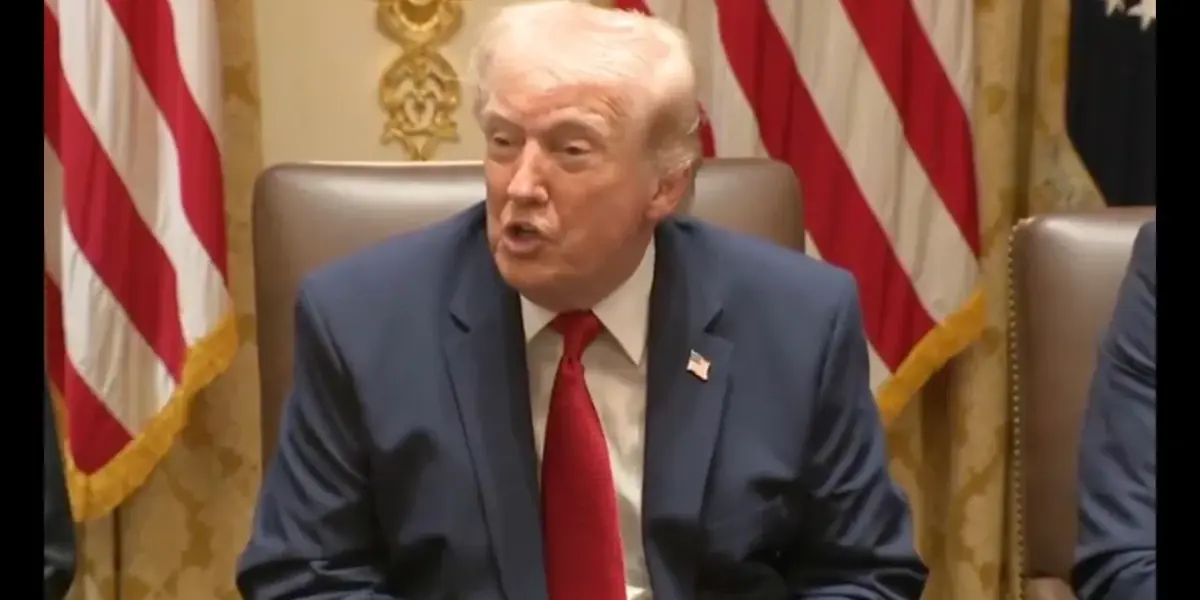
Donald Trump, a vocal critic of mail-in voting, was recently confronted about his own use of the practice. When asked why he voted by mail, Trump’s initial response was telling: “Because I’m president of the United States.” This statement suggests a belief that rules do not apply to him, while others must follow a different set of regulations. It also reveals a contradiction: if mail-in voting were truly fraudulent, as he often claims, why would he trust it with his own ballot?
Trump’s explanation for voting by mail was that he was away from Florida, serving as president in Washington D.C. He pointed out that mail-in ballots have exceptions for those who are away, serving in the military, on business trips, disabled, or ill. However, the transcript highlights that Trump was in Palm Beach for several weekends during the period he voted. This raises questions about whether he truly couldn’t have voted in person, either in Florida or while he was in Washington D.C. The implication is that Trump believes mail-in voting is safe enough for himself but not for others, a stance critics call “mail ballots for me, none for thee.”
The Reality of Mail-In Voting Fraud
The argument that mail-in voting is rife with fraud is not supported by evidence. Studies have consistently shown that widespread voter fraud is extremely rare. For instance, Justin Levitt, a professor at Loyola Law School, reviewed allegations of fraud dating back to 2000. He found only 31 credible instances of impersonation fraud out of more than a billion ballots cast between 2000 and 2014. This is a minuscule number, especially when considering the vast number of votes cast nationwide.
Another example comes from Utah. The state’s Republican party conducted a review of voter rolls, examining over 2 million registrations to find evidence of non-citizens voting. Their investigation found only one non-citizen registered to vote, and that person never actually cast a ballot. These findings, and many others like them, directly contradict the claims of widespread voter fraud often made by Trump and his supporters.
Voter Suppression as the Real Goal
If widespread voter fraud is not a real problem, then why is it such a persistent talking point for some politicians? The answer, according to the analysis, is voter suppression. By raising fears about fraud, politicians can create a pretext for implementing stricter voting laws. These laws, often presented as simple measures like voter ID requirements, can disproportionately affect certain groups of voters.
The transcript points to the “Save America Act” as an example. This bill, pushed by Republicans, includes provisions that could make it harder for millions of eligible voters to cast their ballots. It requires many Americans to present a passport or birth certificate in person to register or update their registration. However, an estimated 21 million U.S. citizens do not have these documents readily available. This requirement would disproportionately impact low-income voters, minority voters, and seniors, many of whom tend to vote for Democratic candidates. The cost of obtaining these documents can also act as a barrier, similar to historical poll taxes.
The Airport Controversy and Political Tactics
The transcript also touches on a controversial tactic involving airport security lines. Trump admitted to suggesting that long lines at airports could be used as leverage to push for the “Save America Act” and other voting-related measures. This strategy aims to create public pressure by inconveniencing travelers, hoping to force concessions from political opponents. The idea is that by making travel difficult, the administration could pressure Democrats to agree to stricter voting laws, including voter ID and proof of citizenship requirements.
This approach highlights a broader pattern: instead of focusing on issues that directly benefit the public, like lowering healthcare costs, addressing hunger, or fixing infrastructure, the energy is directed towards passing legislation that could limit voting access. The analysis suggests that this is a deliberate strategy to maintain power by preventing people from voting, rather than by winning them over with effective governance.
Why This Matters
The hypocrisy of Donald Trump using mail-in ballots while simultaneously claiming they are fraudulent is a stark example of the political tactics employed to undermine trust in elections. The focus on nonexistent widespread voter fraud serves as a smokescreen for efforts to suppress votes. This is not about ensuring election integrity; it’s about manipulating the electoral process to benefit one party. The consequences are profound: if citizens cannot easily cast their votes, their ability to hold their elected officials accountable is severely weakened.
Implications and Future Outlook
The trend of using claims of voter fraud to justify restrictive voting laws is a significant concern for the future of democracy. If these efforts succeed, they could disenfranchise millions of Americans, particularly those from marginalized communities. This could lead to a less representative government and further deepen political polarization. The push for stricter voting laws is likely to continue, and it will require constant vigilance from citizens and voting rights advocates to counter these efforts.
Historical Context
The tactics used to suppress votes have a long and ugly history in the United States. From poll taxes and literacy tests used to disenfranchise Black voters after Reconstruction, to modern-day voter ID laws and purges of voter rolls, the goal has often been to make it harder for certain groups to participate in elections. The current debate over mail-in voting and voter ID laws echoes these historical struggles for voting rights.
The analysis suggests that the Republican party’s current focus on voter ID and proof of citizenship is a continuation of these historical suppression tactics. By framing these measures as necessary for election security, they aim to appeal to a sense of fairness while simultaneously making it harder for eligible voters to cast their ballots. This strategy is not new, but its modern iteration is sophisticated and potentially very effective.
“Republicans are trying to take your voice away for one reason, because they know it has an impact. Prove it to them just a few months from now.”
The author of the transcript, reflecting on these issues, has written a book titled “The Day After: How to Wield Power in a Post-Trump World.” The book explores how power is abused and how it can be wielded more effectively, particularly in the context of progressive politics. It serves as a call to action, urging readers to understand the importance of power and to actively work towards a more just and representative democracy.
Source: MUST-SEE: Trump called out TO HIS FACE for voting by mail (YouTube)

Related Articles

Voter ID: Common Sense or Suppression?
A growing debate surrounds voter ID laws, with proponents calling them a common-sense measure against fraud and opponents fearing voter suppression. Many countries and U.S. states already require ID to vote.
Trump’s Name Everywhere: A ‘Stain’ on GOP Legacy?
Former President Donald Trump's efforts to brand national symbols, including a proposed signature on dollar bills, spark debate. Critics view this as an authoritarian attempt to embed his legacy, potentially staining the Republican Party's history and contrasting with democratic ideals of public ownership.
Trump’s War Talk Stuns Financial Crowd
Donald Trump's recent speech in Miami focused on his foreign policy, particularly his critical views on NATO and his vision for international relations. He declared the U.S. would no longer defend NATO allies, questioned the value of existing alliances, and suggested renaming the Strait of Hormuz. The speech also touched on his personal views of success, his allies, and his perceived role as a global peacemaker.