Iran Tensions Rise as U.S. Delays Action
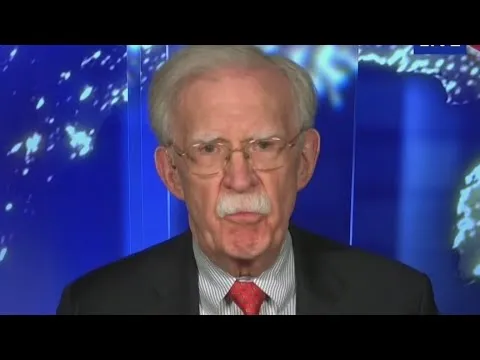
John Bolton, former National Security Advisor, criticizes President Trump's decision to extend the deadline for Iran regarding the Strait of Hormuz. Bolton views the delays as a sign of weakness, suggesting a lack of clear strategy and a desire to exit the situation quickly. He warns that Iran's survival and potential resurgence pose a greater threat than a weakened state.

Iran Tensions Rise as U.S. Delays Action
The United States has extended a deadline for Iran to open the Strait of Hormuz, a key waterway for global oil trade. This decision, announced by President Trump, extends the negotiation period to April 6th. However, Trump still threatens to strike Iran’s power plants if no agreement is reached. Former U.S. Ambassador to the United Nations and National Security Advisor John Bolton sees this delay as a sign of weakness. He believes President Trump is eager to exit the situation without a clear strategy.
Bolton’s Analysis: A Signal of Weakness
Bolton argues that the repeated extensions of the deadline show a lack of firm resolve. He states that the original 48-hour deadline was pushed to five days, and now to ten. This, in his view, suggests President Trump wants to end the standoff quickly, rather than pursuing a long-term objective. Bolton believes the ultimate goal should be regime change in Iran. He feels this objective may have been lost as the situation evolved.
Misinterpreting Iran’s Actions
A significant concern raised is the apparent misunderstanding of Iran’s actions regarding oil tankers. Iran stated it was allowing tankers out of the Gulf. However, these tankers were reportedly filled with Iranian oil, with payment arrangements that could send money directly to Tehran. Bolton suggests this could mean the U.S. is allowing Iran to finance its own war efforts against American service members. He calls this a serious misstep, indicating a loss of focus on the financial implications.
Diplomatic Stalemate and Intermediaries
The Trump administration claims to be in talks with Iran. However, Bolton disputes this, stating that no agreement is close. He suggests that while the U.S. might be speaking with intermediaries like Pakistan, Turkey, or Egypt, direct negotiations with Iran are not happening. Pakistan, in particular, has a vested interest due to its shared border with Iran in the Balochistan province. This region shares a common concern with Iran about separatist movements, creating a complex dynamic.
Iran’s Strategy: Survival and Resurgence
Bolton explains that Iran’s primary strategy is survival. By successfully closing the Strait of Hormuz and intimidating the international community, Iran believes it can win. The concern is what Iran will become once its economy recovers. If Iran is allowed to sell oil freely and rebuild its nuclear and missile programs, as well as its support for terrorist groups, it will be far more powerful. This resurgence could make future containment efforts significantly more difficult.
The Dilemma: Ground Troops vs. Inaction
The situation presents a difficult choice. General Wesley Clark, a military expert, noted that the longer the standoff continues, the greater the necessity for ground troops. However, both the American public and many members of Congress oppose sending U.S. soldiers into Iran. This leaves President Trump with a dilemma. Some, like Senator John Kennedy, have suggested declaring victory and withdrawing, as proposed by President John F. Kennedy in a different context. They argue it’s time for the U.S. to come home.
The Risk of an Empowered Iran
Bolton’s argument is that leaving the current Iranian regime in place, even if weakened, is ultimately more dangerous. He questions the consequences if Iran can now blackmail the U.S. by threatening the Strait of Hormuz. He believes a stronger, unconstrained Iran would pose a much greater threat. This would make it harder for oil-producing Arab states in the Gulf to operate safely. The current situation, where Iran is an adversary and Gulf Arab states are allies, is seen as illogical and unsustainable.
Global Impact: Shifting Power Balances
The extended deadline and the ongoing diplomatic uncertainty surrounding Iran have significant global implications. The Strait of Hormuz is crucial for transporting a large percentage of the world’s oil. Any disruption there can cause global energy prices to spike, affecting economies worldwide. Iran’s ability to project power and threaten international shipping demonstrates its influence in a volatile region. The U.S. strategy, or perceived lack thereof, impacts regional alliances and the broader geopolitical balance between major powers.
Historical Context: The Cycle of Confrontation
The current tensions with Iran are part of a long history of confrontation. Following the 1979 Iranian Revolution, relations between the U.S. and Iran have been strained. This includes incidents like the Iran hostage crisis and ongoing disputes over Iran’s nuclear program and regional activities. The U.S. has employed sanctions as a primary tool to pressure Iran. However, these sanctions have had mixed results, often leading to economic hardship for the Iranian population while the regime’s behavior remains a concern for international stability.
Economic Leverage: Sanctions and Oil
Economic factors are central to this standoff. U.S. sanctions aim to cripple Iran’s oil exports and limit its access to international finance. This economic pressure is intended to force Iran to change its behavior. However, Iran has sought ways to circumvent these sanctions, including through complex oil sales and payment arrangements. The control over the Strait of Hormuz gives Iran significant leverage, as it can threaten to disrupt global oil supplies, impacting economies that rely on these shipments.
Future Scenarios: Escalation or De-escalation?
Several future scenarios are possible. One is continued diplomatic stalemate, with intermittent threats and delays, potentially leading to a gradual increase in Iran’s capabilities and regional assertiveness. Another scenario involves a miscalculation leading to military escalation, which could have devastating consequences for the region and the global economy. A less likely scenario is a breakthrough in negotiations leading to a de-escalation of tensions. The current path, characterized by delays and unresolved issues, suggests a prolonged period of uncertainty.
Source: Trump shows weakness by delaying power plant strikes in Iran: Bolton | Elizabeth Vargas Reports (YouTube)

Related Articles
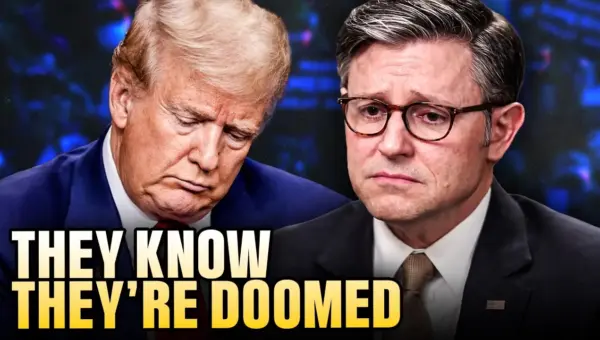
Polls Spell Doom: Republicans Face Voter Backlash
New polling data reveals a sharp decline in public confidence regarding the economic impact of Republican policies, particularly under Donald Trump. A significant majority now feel financially worse off, a trend that is especially pronounced among independent voters. This economic discontent poses a major challenge for the Republican party heading into future elections.
Iran’s Missile Threat Reduced by 90%, Analyst Says
An analyst reports that Operation Epic Fury has degraded Iran's missile launchers by 90%, despite challenges in targeting hidden sites. The conflict's duration and media coverage are also discussed, with implications for global energy markets and investor confidence.
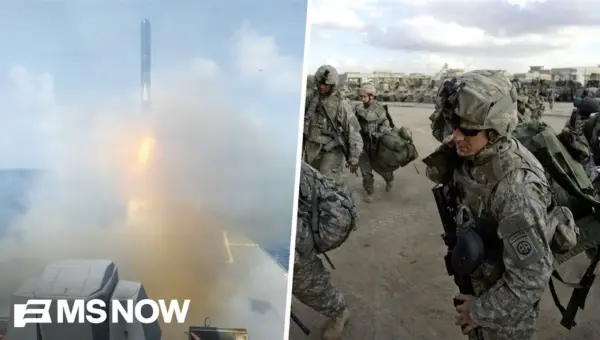
Iran Missile Strikes Injure US Troops, Raise War Concerns
Iranian missile strikes have injured U.S. service members, escalating tensions as the conflict nears one month. The attacks are raising concerns about the effectiveness of U.S. military strategy and the depletion of crucial missile stockpiles. Global oil prices have surged, impacting economies worldwide.