Trump’s War Talk and Obama Jab Spark Political Firestorm
Donald Trump's recent call to Fox News stirred controversy with his claims about military successes in Iran and his lingering resentment over a 2011 Obama roast. He also touched on his perceived success with the "gay vote."

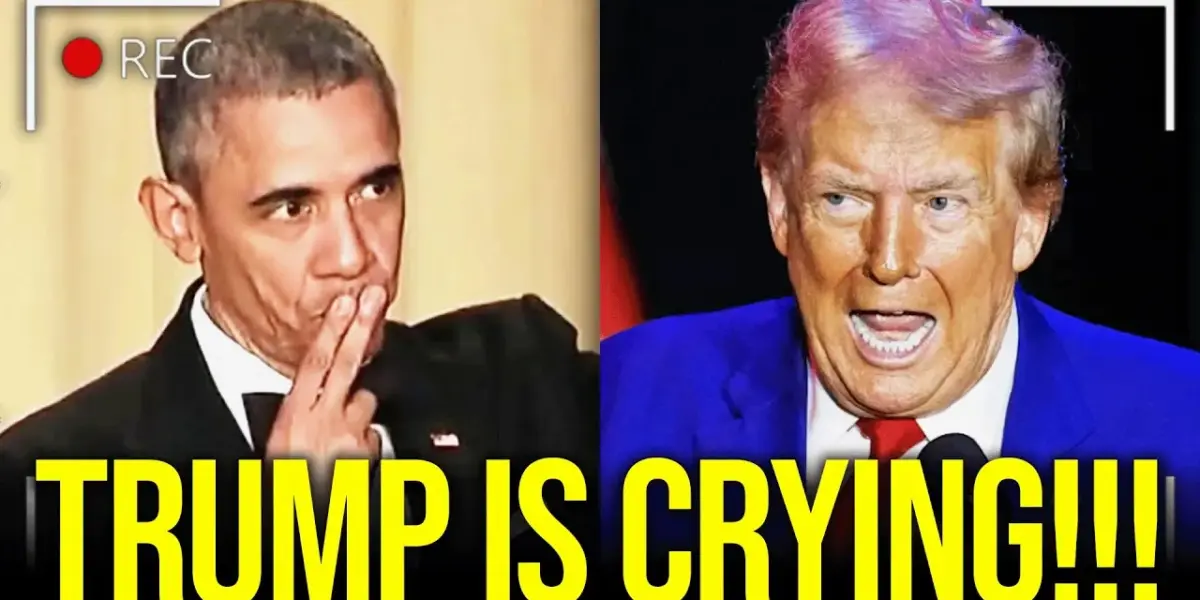
Trump’s War Talk and Obama Jab Spark Political Firestorm
Donald Trump recently called into Fox News’ “The Five” to discuss current events, but his remarks about the ongoing conflict in Iran and a past jab from Barack Obama have sparked considerable debate. Trump, speaking from a position of former presidential authority, touched on a range of issues, including the war, the economy, and even his past relationship with the LGBTQ+ community.
During the call, Trump was asked about potential voter disappointment regarding his administration’s involvement in foreign conflicts, especially if those voters expected a more isolationist approach. He responded by emphasizing the need to protect America, citing the danger posed by nations with nuclear weapons. He drew on personal history, mentioning his uncle, a professor at MIT who understood nuclear power, to illustrate the immense force involved.
The former president also discussed his recent actions regarding Iran, specifically a decision to pause the destruction of energy plants. He stated that Iran had requested this pause, and while he wasn’t entirely pleased with their cooperation, he granted it. Trump asserted that the U.S. had already achieved significant victories, claiming to have “knocked out their navy” and “air force.” He described their naval vessels as “pretty good chips” and their air force as “completely knocked out.” He also mentioned that Iran’s missile capabilities were significantly reduced, down to about 9%, and that their missile launchers had been destroyed.
However, these claims have been met with skepticism. Critics point out that Iran’s air force and navy are known to be outdated, making Trump’s boasts about dismantling them seem less impressive. The ongoing inability to freely move ships through the Strait of Hormuz, despite these claimed military successes, raises questions about the effectiveness of the strategy. Furthermore, the conflict has resulted in American troop deaths and increased national debt, without a clear resolution or change in the Iranian regime.
Obama’s 2011 Jab and Trump’s Reaction
The conversation then shifted to a memorable moment from the 2011 White House Correspondents’ Dinner. President Obama used the event to playfully tease Donald Trump about his birtherism claims and his perceived interest in running for president. Obama joked that while Trump had faced criticism, he would eventually get to be president, unlike Trump.
Trump, on his recent call-in, addressed this moment, although his recollection seemed somewhat muddled. He initially stated he enjoyed the jokes and that they had nothing to do with his decision to run for president. Yet, he also mentioned he was treated “rudely and crudely” by the press from the beginning and that he had enjoyed the jokes, suggesting a complex emotional response. He claimed that the Obama roast was not the reason he decided to run for president, but rather the general treatment he received from the press after his 2016 election win.
There’s a popular theory that Obama’s jab at the dinner was a significant catalyst, pushing Trump to enter the political arena. While Trump denies this, his continued focus on the event suggests it did have a lasting impact on him. It’s worth noting that Trump had shown interest in politics and even explored presidential runs in earlier years, creating a website and visiting early primary states before 2016. Obama’s comments likely added fuel to an already simmering ambition.
The Gay Vote and Political Strategy
In a surprising turn, Trump also brought up the “gay vote,” stating he performed very well with it. He even mentioned playing the “gay national anthem” as his walk-off music during his campaign, suggesting it helped him. He proudly stated that no Republican had ever achieved such success with this demographic.
The validity of these claims about the “gay vote” is often questioned. The transcript notes that there’s little actual evidence to support the idea that Republicans perform significantly better with this group. It raises the question of whether this was a strategic appeal or a genuine reflection of his perceived support.
Why This Matters
Trump’s recent statements offer a glimpse into his political messaging and his approach to foreign policy and domestic appeal. His claims about military victories in Iran, while disputed, highlight a tendency to project strength and decisive action. His continued dwelling on the Obama roast, even years later, shows how deeply personal slights can influence political narratives and motivations.
The mention of the “gay vote” also speaks to evolving political strategies. As parties seek to broaden their appeal, engaging with diverse demographic groups becomes crucial. Whether these appeals are authentic or purely tactical remains a subject of ongoing analysis.
Historical Context and Future Outlook
The conflict in Iran and the broader Middle East has a long and complex history, with U.S. involvement dating back decades. Trump’s approach, characterized by strong rhetoric and a focus on perceived decisive actions, contrasts with more traditional diplomatic strategies. His claims of having “decapitated” the Iranian military, while exaggerated, echo a desire for clear, impactful outcomes.
The theory that Obama’s 2011 insult spurred Trump’s presidential run is a fascinating piece of political folklore. While Trump had flirted with politics before, the intensity of his reaction to the roast suggests it played a role in solidifying his resolve. It underscores how personal interactions can have significant political consequences.
Looking ahead, Trump’s continued focus on projecting strength and his willingness to engage with controversial topics suggest his political style will remain a defining feature. The effectiveness of his messaging, particularly regarding foreign policy and his appeal to specific voter groups, will continue to be closely watched as the political landscape evolves.
The analysis of Trump’s claims about Iran reveals a disconnect between his rhetoric and the observable reality on the ground. The deeply embedded nature of groups like the Iranian Revolutionary Guard Corps (IRGC) means that simple military actions or the removal of a few individuals are unlikely to achieve lasting regime change. This complex reality often gets simplified in political discourse, making it difficult for the public to grasp the full picture.
Ultimately, Trump’s call-in to Fox News provided a mix of policy discussion, personal grievances, and political posturing. It reinforced his characteristic communication style and his ability to generate headlines, even when discussing complex international issues or revisiting past political encounters.
Source: Trump Stuns Fox Hosts with Obama Bombshell (YouTube)

Related Articles

MAGA Faces Crisis: Internal Strife and Public Doubt Emerge
The MAGA movement is reportedly facing internal divisions and growing public doubt. Key issues like the Iran conflict and economic concerns are creating rifts within the base, while criticism questions the movement's appeal and direction. These factors suggest a potential fracturing of the once-unified political force.

Trump Flirts With Host, Dodges Iran Human Rights Question
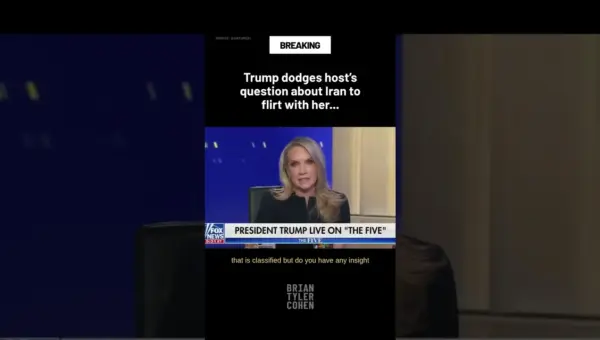
During an interview, Donald Trump deflected a question about the human rights situation in Iran. Instead of answering, he reminisced about a past lunch and complimented the interviewer's appearance. This exchange highlights a trend in political communication where personal interactions can overshadow serious global issues.
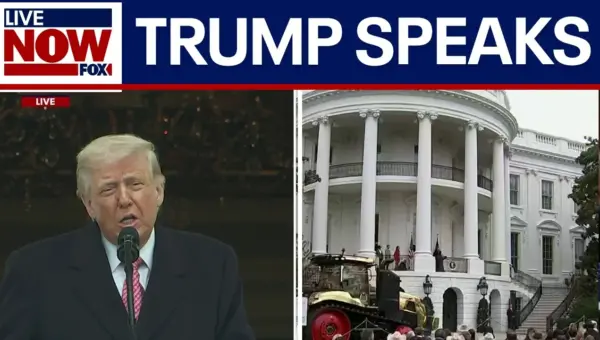
Trump Courts Farmers with Promises at White House
President Donald Trump hosted a large gathering of American farmers at the White House, highlighting his administration's support through aid packages, tax cuts, and deregulation. He pledged continued efforts to boost farm income, expand trade, and reduce equipment costs. Farmers shared testimonials, expressing gratitude for policies aimed at easing financial burdens and ensuring the future of agriculture.