Russia Earns Billions as Oil Prices Spike
Russia is unexpectedly earning billions of dollars from oil sales as geopolitical conflicts drive prices near $100 per barrel. Despite sanctions, premium pricing for Russian oil, particularly from India, provides significant revenue. This boost strengthens Russia's economy and its ability to fund ongoing military operations.


Russia Reaps Billions as Oil Prices Surge Amid Geopolitical Tensions
Unforeseen consequences are reshaping the global oil market, with recent conflicts unexpectedly boosting Russia’s revenues. Despite international sanctions, Russia is now selling its oil at a premium, earning billions of dollars that could help sustain its military activities.
Conflict Drives Oil Prices Near $100 Per Barrel
Escalating tensions in the Middle East have severely disrupted oil supply routes. Damage to critical infrastructure and the blockage of key shipping lanes, like the Strait of Hormuz, have sent oil prices climbing. Global benchmark Brent crude has surged back towards the $100 per barrel mark. This price level puts a significant strain on the global economy, which has struggled to absorb such high energy costs.
US Eases Sanctions to Stabilize Markets
In response to the surging prices and potential economic fallout, the United States has taken an unusual step. It has allowed Russian and Iranian oil, already loaded onto tankers, to be sold on the global market without restrictions. This move is not an attempt to aid these nations but rather a practical measure to increase much-needed supply and cool down overheated prices.
Russia Flips the Script on Oil Discounts
For the past four years, Russia has been forced to sell its oil at a considerable discount, often 20% to 30% below the prevailing market rates. However, this situation has dramatically reversed. India has recently agreed to purchase approximately 60 million barrels of Russian oil, not at a discount, but at a premium. This means Russia is now fetching prices around $5 to $10 higher than the Brent crude benchmark, with the oil selling for about $100 per barrel.
Massive Revenue Boost for Russia
This significant shift in pricing strategy translates into substantial financial gains for Russia. The deal with India alone is expected to generate between $6 billion and $7 billion in revenue for the Russian economy. This influx of cash strengthens Russia’s financial position considerably.
Iran Also Benefits from Premium Oil Sales
Iran is experiencing a similar positive financial outcome. India has also agreed to buy 5 million barrels of Iranian oil at a premium price. This transaction is anticipated to bring in roughly half a billion dollars for Iran. The combined effect of these deals highlights how geopolitical events can lead to unexpected economic benefits for sanctioned countries.
Unintended Consequences of Geopolitical Events
The sequence of events reveals a complex interplay of global economics and politics. A conflict restricts oil supply, leading to higher prices. The US intervenes to add supply by relaxing sanctions on certain oil shipments. Ultimately, Russia and Iran, despite being targets of sanctions, are now selling their oil at higher prices, generating more revenue than before.
Market Impact: A Boon for Russia’s War Chest
The implications of these developments are far-reaching. Every additional billion dollars earned strengthens the Russian economy. This financial boost can provide the resources needed to sustain its ongoing military operations in Ukraine. The conflict in Iran, therefore, has become an unintended source of significant financial benefit for Russia.
What Investors Should Know
The current oil market dynamics suggest that geopolitical instability continues to be a major driver of energy prices. Investors should monitor supply disruptions and the responses of major economies. The ability of sanctioned nations to find new markets and command premium prices highlights the resilience of certain economies and the complex global energy trade.
The longer these high oil prices persist and the more sanctioned oil finds its way to market at inflated rates, the greater the financial benefit for Russia. This situation underscores the challenges in isolating economies through sanctions when global demand for essential commodities remains high.
The war restricts supply, prices go up, the USA allows sanctioned oil back in and Russia ends up making more money, not less.
This intricate situation presents a stark reminder that market forces and geopolitical strategies often produce unpredictable outcomes. The global economy’s reliance on oil means that conflicts in producing regions will likely continue to impact prices and benefit certain players, regardless of international pressure.
Source: RUSSIAN Oil Shock (YouTube)

Related Articles


Trump’s Iran Claims: Shocked or Deluded by War Games?
Donald Trump claimed surprise over Iran's actions in the Strait of Hormuz, but experts suggest retaliation was inevitable. Military war games likely predicted such a scenario, raising questions about the advice given to the President.


Israel’s Strategy Against Iran Revealed
Israel's strategy to counter Iran's nuclear ambitions and regional influence centers on containment, utilizing a mix of covert military actions, intelligence operations, and diplomatic pressure. Analysts highlight the growing urgency due to Iran's nuclear advancements, while also noting the persistent risk of escalation in the volatile Middle East.
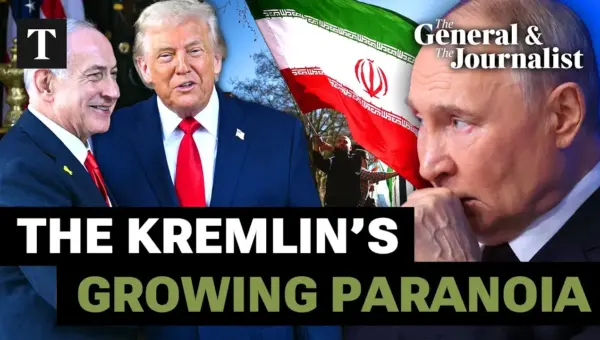
Kremlin Shakes: Elite Discontent Fuels Putin’s Paranoia
Internal turmoil and paranoia are reportedly gripping the Kremlin as President Putin faces growing elite discontent and the realities of the Ukraine war. Meanwhile, Russia's strategic involvement in the Iran conflict highlights complex calculations and potential risks, even as a wider global war remains unlikely.