Trump’s Iran Strategy: A Risky Game of Make-Believe
General Sir Richard Shirreff critically analyzes the Trump administration's Iran strategy, deeming it flawed and lacking foresight. He argues that military actions and regime change tactics are simplistic, drawing parallels to past failures and highlighting the growing threat of drone warfare. The analysis questions the existence of a clear strategy and exit plan, suggesting a dangerous path towards a potential quagmire.

Trump’s Iran Strategy: A Risky Game of Make-Believe
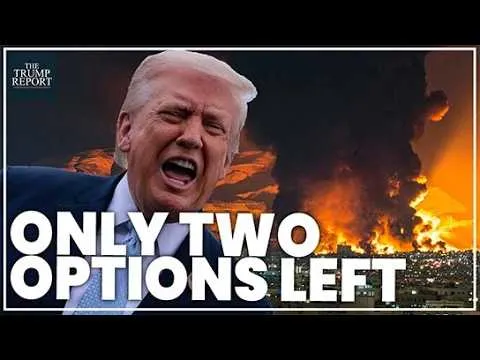
General Sir Richard Shirreff, a former NATO deputy supreme allied commander, offers a stark assessment of the Trump administration’s approach to Iran. He suggests that the strategy, particularly regarding regime change and military actions, is based on flawed assumptions and a dangerous lack of foresight. This analysis dives into the complexities of the situation, questioning the effectiveness of current tactics and exploring potential consequences.
Assessing Regime Change Tactics
Recent events, including the reported killing of an Iranian naval commander, have fueled discussions about regime change in Iran. However, General Shirreff doubts that such targeted killings significantly alter the broader objectives. He points to the decentralized and resilient nature of Iran’s structure, comparing it to past U.S. experiences in Iraq. The idea that removing a single leader will dismantle the entire system is, in his view, a simplistic and often unsuccessful approach.
“The assumption that you could take out a leader and somehow the organization… fails to take account of the fact that the depth… you take out one guy, there’s always somebody who’s going to step up to the mark.”
Instead of leading to change, these actions might actually strengthen the regime’s grip and solidify support among hardliners. This, in turn, makes negotiated solutions less likely.
The Limits of Military Action
When considering alternatives for regime change, General Shirreff questions the effectiveness of military force, especially bombing. He draws a parallel to the 2003 invasion of Iraq, which, despite initial successes, led to widespread chaos and strategic failure. The core principle he emphasizes is the need to win “hearts and minds.” Alienating the local population, he warns, only benefits the adversary.
Bombing, in his opinion, is a crude tool that can actually entrench existing regimes. True change, he argues, requires a much more complex and long-term strategy. He cites the end of the Cold War as an example, a process that took decades of building civil society and undermining economies through sustained pressure.
Criticism of Trump’s Approach
General Shirreff is highly critical of the Trump administration’s understanding of these complexities. He describes their approach as “ignorant” or “staggeringly incompetent.” The idea that a single strike could solve the issue or that public statements about eliminating capabilities are accurate is dismissed as “laughable.” He likens the administration’s actions to an “old-fashioned sheriff who walks into town and fires from the hip.” This unsophisticated approach, he believes, is not suited for the intricate realities of international conflict.
He questions whether such advice was even considered, suggesting that a lack of clear strategy and a focus on short-term gains over long-term consequences are defining features of the current policy. The administration’s claims of obliterating Iranian capabilities are met with skepticism, as Iran continues to launch missiles and drones.
The Rise of Drone Warfare
A significant concern highlighted is the growing dominance of drones in modern conflict. General Shirreff points out that despite the U.S. possessing a powerful navy, cheap Iranian drones can effectively disrupt crucial shipping lanes like the Strait of Hormuz. This reflects a rapid pace of technological change where asymmetrical warfare, often employing drones, poses a significant challenge to conventional military might.
The situation is likened to a guerrilla force fighting a conventional one, with the advantage lying with the less conventional side. The cost-effectiveness of drones versus expensive missile defense systems presents a difficult problem for the U.S. military, potentially depleting resources and requiring extensive time to replenish.
War-Gaming and Ignoring Advice
A critical question arises: did the U.S. military adequately war-game potential Iranian responses, such as closing the Strait of Hormuz, and were these warnings ignored? General Shirreff finds it hard to believe that a sophisticated military organization wouldn’t conduct such simulations. If they did, it implies that crucial advice was disregarded. Alternatively, he suggests that President Trump may have purged advisors who would have presented dissenting opinions, creating an environment where only agreeable information is heard.
Negotiation vs. Escalation
The narrative surrounding negotiations is also complex. While Trump claims Iran is desperate for a deal, Iran denies any ongoing talks. General Shirreff believes both sides might be dissembling. He argues that Iran, by controlling the Strait of Hormuz, is in a stronger position and has little incentive to negotiate unless significant guarantees are met. Conversely, he suggests that Trump might be the one who needs a deal, facing pressure from economic factors like high oil prices.
The options presented for military action, such as seizing islands or blockading oil hubs, are viewed with caution. While they might offer temporary relief, they risk prolonged conflict and do not guarantee a change in regime. General Shirreff draws a parallel to the disastrous Gallipoli campaign, where initial attempts to force straits led to significant losses and ultimately failed.
The Specter of Ground Troops
The discussion then turns to the potential deployment of ground troops. General Shirreff believes it’s already evident that air power alone is insufficient. He contrasts the current situation with the First Gulf War, which had clear objectives, strong political leadership, and overwhelming force, leading to a swift conclusion with minimal casualties. The current conflict, however, has the potential to devolve into a quagmire, far worse than the 2003 Iraq war.
He emphasizes the importance of public support and a clear strategy, elements he feels are lacking in the current approach. The comparison to Napoleon’s disastrous march on Moscow serves as a historical warning against overambitious military campaigns without proper planning and realistic goals.
An Exit Strategy or a Quagmire?
Ultimately, General Shirreff concludes that there is no clear exit strategy. The administration appears to be “making it up as they go along.” The options range from cutting losses and negotiating, which would be a significant humiliation for Trump and potentially America, to deeper military engagement. Even if islands are seized, maintaining control in harsh terrain and against persistent drone attacks presents immense challenges.
The idea of a quick resolution within Trump’s desired four-to-six-week timeline is deemed impossible. While Trump might declare victory prematurely, the underlying issues – a destabilized region, high oil prices, and ongoing attacks – would remain, fooling no one.
NATO’s Role and Future Outlook
Regarding the involvement of NATO allies, General Shirreff is skeptical. He believes Trump has eroded trust within the alliance through his past actions and rhetoric. While oil price hikes might pressure European nations, he argues that military intervention alongside the U.S. would be a mistake. Instead, he suggests that European countries should work towards a negotiated settlement, even if it means a separation from the U.S. approach.
The current relationship with the U.S. under Trump is described as an “abusive relationship” with a “predator president.” This dynamic, he believes, needs to fundamentally change how allies approach the situation. The path forward, in his view, lies not in further military escalation but in a clear-eyed assessment of the situation and a pursuit of diplomatic solutions, even if they are difficult and may not align with initial political ambitions.
Source: Trump is ‘making it up’ as he goes | Gen. Richard Shirreff analyses Trump’s Iran lies (YouTube)

Related Articles
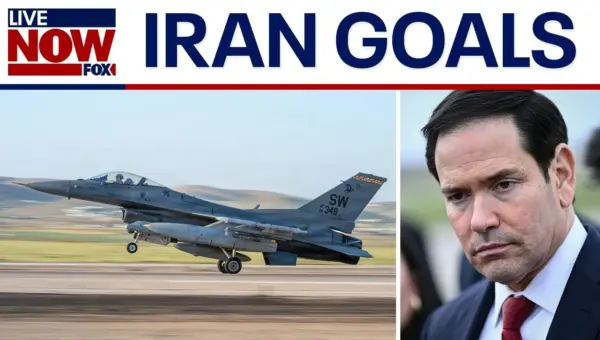
Rubio: US Can Achieve Iran War Goals Without Troops
Senator Marco Rubio outlined a strategy to counter Iran without deploying U.S. ground troops, focusing on weakening the regime and enhancing maritime security. He also criticized Cuba's economic system and expressed concerns about West Bank violence.
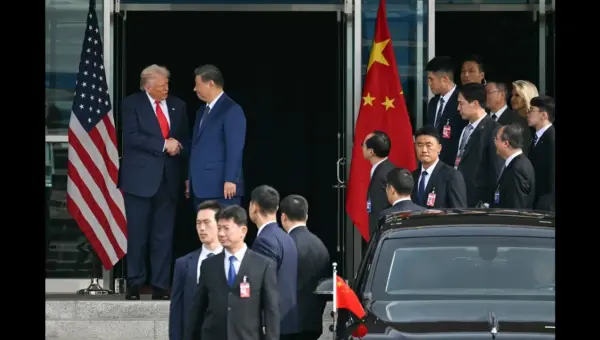
Trump’s “Walk Away” Tactic Signals Tougher Stance on China
Retired Air Force Brigadier General David Stillwell believes President Trump's strategy of being willing to walk away from negotiations puts pressure on China. This tactic, combined with US global actions and strengthened alliances, signals a more assertive American foreign policy.


Israel Escalates Iran Strikes, Warns of Wider War
Israel has launched significant strikes inside Iran following continued missile fire, warning of further escalation. The conflict risks wider regional instability and economic disruption, especially concerning the Strait of Hormuz.