Trump Hints at Iran Deal Collapse Amid NATO Criticism
President Trump expressed doubts about reaching a peace deal with Iran, while also criticizing NATO's response to the ongoing conflict. The U.S. has offered a 15-point plan via Pakistan as mediator and allowed oil tankers through the Strait of Hormuz.

Trump Hints at Iran Deal Collapse Amid NATO Criticism
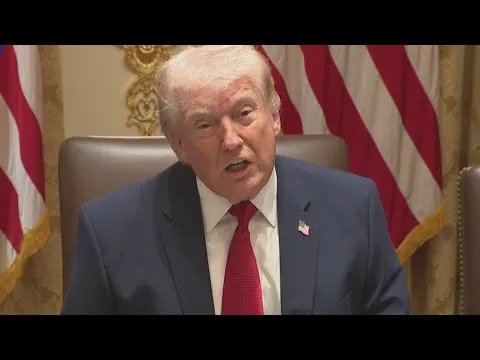
President Trump’s recent cabinet meeting revealed a complex geopolitical situation, marked by his doubts about a peace deal with Iran and sharp criticism of NATO’s role in the ongoing conflict. The meeting, which lasted nearly two hours, covered a range of topics, but the war in Iran and its economic impact took center stage.
Iran Conflict and Peace Talks
During the meeting, President Trump and other cabinet members highlighted successes in the military campaign against Iran. They stated that Iran’s navy and air force have been significantly weakened. The administration also reiterated its concerns about Iran’s potential nuclear capabilities, emphasizing the need for decisive action.
However, the most striking development concerned the peace negotiations. Trump expressed uncertainty about the possibility of reaching a deal with Iran, describing the situation as a difficult negotiation. “I don’t know if we’ll be able to do that,” he stated, suggesting that while Iran is willing to make a deal, the path forward is unclear. He did mention that the U.S. is in touch with the “right people” to facilitate talks.
Special Envoy Steve Witkoff provided details on the peace proposals. A 15-point plan has been presented to Iran, with Pakistan acting as a mediator for these potential peace talks. As a gesture of goodwill, the U.S. has allowed multiple oil tankers to pass through the Strait of Hormuz, a key waterway for global oil transport. This move signals a willingness to de-escalate tensions while negotiations proceed.
Criticism of NATO
President Trump also used the press conference to criticize NATO, calling the alliance too slow to respond to the crisis in the Middle East. He described the conflict as a “task that we are going to remember about the lack of help that came from NATO.” This statement underscores a growing frustration with the perceived lack of support from key allies during a critical international event. Trump suggested that the conflict serves as a stark reminder of this perceived shortfall.
Economic Outlook and Gas Prices
The economy was another major topic. President Trump touted economic successes, particularly concerning gas prices, which have been a concern for many Americans. He claimed that drug prices have also fallen significantly due to deregulation. The administration pointed to record tax refunds and substantial foreign investment as signs of economic strength. Trump described the war as a “little detour” for the economy, suggesting it would not cause lasting damage.
Treasury Secretary Scott Bessent predicted that energy prices would likely decrease once the conflict ends. This outlook aims to reassure the public about the stability of energy markets and the broader economy.
Global Impact
The developments surrounding Iran have significant global implications. The Strait of Hormuz is a vital chokepoint for roughly one-fifth of global oil consumption. Any disruption or perceived instability there can lead to increased oil prices worldwide. The U.S. military actions, while touted as successful, also carry the risk of wider escalation. The uncertainty surrounding the peace talks means the region could remain volatile.
Furthermore, President Trump’s criticism of NATO raises questions about the future of transatlantic alliances. A weakening of NATO could alter security dynamics in Europe and beyond, potentially emboldening adversaries. The U.S. stance suggests a potential shift towards a more unilateral foreign policy, relying less on traditional alliances.
Historical Context
The U.S.-Iran relationship has been fraught with tension for decades. Following the 1979 Iranian Revolution, relations deteriorated significantly. The U.S. has historically sought to curb Iran’s nuclear program and influence in the region. Previous administrations have employed sanctions and diplomatic pressure. The current conflict and negotiation efforts are part of this long-standing dynamic, with the U.S. trying to find a balance between deterrence and diplomacy.
Economic Leverage
Economic factors play a crucial role. Sanctions have been a key tool used by the U.S. against Iran. The U.S. has also sought to influence global energy markets. By allowing oil tankers through the Strait of Hormuz, the U.S. demonstrates its ability to manage and influence key trade routes. The promise of lower energy prices post-conflict is a direct economic incentive for stability.
Future Scenarios
Several future scenarios are possible. One is a successful peace deal, leading to de-escalation and stabilization in the region. Another is continued conflict, with potential for wider regional war. A third scenario involves a breakdown of talks, leading to prolonged tension and continued U.S. military presence. Given Trump’s expressed doubts, a successful resolution may be challenging, but the U.S. efforts through mediators like Pakistan suggest an ongoing commitment to finding a diplomatic solution.
Source: Trump says a deal with Iran may not be possible | NewsNation Live (YouTube)

Related Articles

Stocks Ignore War Risks, Focus on “Taco Moments”
Stock markets appear to be overlooking the severe supply chain risks stemming from the Iran conflict, focusing instead on potential diplomatic de-escalations. While the S&P 500 shows resilience, bond and commodity markets signal deep concern over disruptions to critical resources like LNG, helium, and fertilizers.

U.S. Iran Tensions Rise Amid Shifting Alliances
Rising tensions between the U.S. and Iran are creating a volatile geopolitical situation. With conflicting signals on de-escalation and potential shifts in alliances like NATO and U.S.-Israel relations, the path forward remains uncertain. The global economy and regional stability hang in the balance.


Iran Targets US With Cyberattacks, Escalating Digital Warfare
Iran is increasingly using cyberattacks to challenge the U.S., as seen in a recent hack of the FBI director's account. Experts say this is a strategic shift due to Iran's limitations in conventional warfare. The U.S. needs to strengthen its digital defenses, focusing on encryption and cloud computing, rather than solely relying on traditional security measures.