Fukuyama on China’s Enduring Dynastic Legacy: From ‘Precociously Modern State’ to the ‘Bad Emperor Problem’
Political scientist Francis Fukuyama analyzes China's political system, drawing parallels between the contemporary Communist Party and ancient dynastic rule, highlighting the persistent challenge of top-down control and the 'bad emperor problem.' He discusses his peculiar meeting with former top official Wang Qishan and expresses concern over Xi Jinping's authoritarian turn, while also acknowledging the grave dangers facing American liberal democracy under figures like Donald Trump.

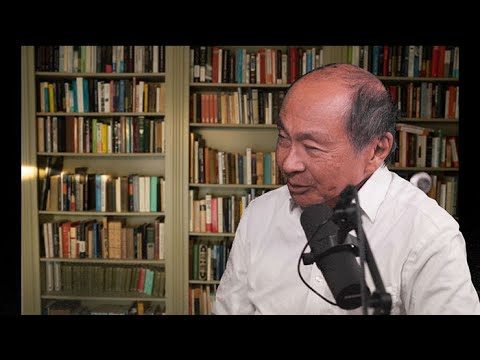
Fukuyama on China’s Enduring Dynastic Legacy: From ‘Precociously Modern State’ to the ‘Bad Emperor Problem’
In a recent candid discussion, renowned political scientist Francis Fukuyama offered a penetrating analysis of China’s political trajectory, drawing parallels between the contemporary Communist Party and the ancient imperial dynasties. Speaking with Dan Wang, Fukuyama delved into the historical underpinnings of China’s state-building, the persistent challenges of top-down control and corruption, and the implications for both its domestic stability and the global future of liberal democracy.
Fukuyama, author of the seminal two-volume work ‘The Origins of Political Order,’ emphasized China’s unique position as a ‘precociously modern state’—a civilization that pioneered a centralized, merit-based bureaucracy centuries before any European nation. However, this early achievement, he argues, came with an inherent flaw: a lack of accountability mechanisms and distributed power, leading to what he terms the ‘bad emperor problem.’
China’s Enduring Dynastic Blueprint: Control Without Accountability
Fukuyama’s core argument posits that the Chinese Communist Party (CCP) functions as a ‘worthy successor’ to the dynastic Chinese state, inheriting its fundamental structural characteristics. “They did not have accountability mechanisms, and they did not have kind of shared and balanced powers within the government that could check each other,” Fukuyama noted, referring to both historical and contemporary China. Instead, both systems relied on elaborate top-down monitoring systems, which, despite their sophistication, are inherently prone to breakdown.
He drew a vivid historical analogy: Imperial China’s bureaucracy, the first of its kind, faced the perennial problem of controlling its own officials, leading to the creation of the eunuch corps to monitor bureaucrats for corruption. This, in turn, necessitated anti-eunuch units to monitor the monitors, creating an unsustainable chain of surveillance. “You keep piling these control mechanisms, top-down control mechanisms, one on top of another. And it seems to me that that is a system that eventually breaks down,” Fukuyama explained.
This historical pattern, he contends, is mirrored in the CCP’s approach to governance. The broad perception of party cadre corruption led to the establishment of the Central Commission for Discipline Inspection (CCDI), a powerful body operating outside regular party mechanisms. Yet, the question remains: who monitors the CCDI? The existence of bodies like the ‘central patrol group’ to oversee the CCDI suggests a continuation of this ancient control dilemma. While modern technology, ‘big data,’ and the ‘surveillance state’ might make top-down control more feasible today, Fukuyama remains skeptical of its long-term efficacy without fundamental shifts in governance.
An Encounter with Power: Wang Qishan and the Limits of Dialogue
Fukuyama recounted a memorable, if perplexing, meeting with Wang Qishan, the former head of the CCDI and a powerful figure within the CCP. Invited to China ostensibly for a conference, Fukuyama found himself in the ‘inner sanctum’ of party headquarters, expecting a curious and cosmopolitan interlocutor. What transpired, however, was less a conversation and more a monologue.
Wang, known for his interest in Western thought and his efforts to translate works like Tocqueville, dominated the discussion. Fukuyama managed to pose only one question: whether China might someday curb corruption through an independent judiciary. Wang’s response was unequivocal: “Absolutely not. That’ll never happen. You know, the party can’t give up control over itself in that fashion.”
The meeting’s aftermath was equally peculiar. A transcript of the interaction mysteriously appeared on the Chinese internet for several days before being removed. This led to widespread speculation among Fukuyama’s Chinese contacts: Was it an attempt by Wang to signal independence or an act of loyalty to Xi Jinping by demonstrating the party’s firm stance against liberal reforms? To this day, Fukuyama receives a New Year’s card from Wang Qishan, a curious postscript to an enigmatic encounter.
Xi Jinping’s Authoritarian Turn and the Reversal of Liberal Hopes
The discussion also touched upon the dashed hopes for greater liberalization in China. Fukuyama noted that many Chinese elites, particularly academics, had anticipated a more open system from the generation of leaders succeeding Hu Jintao. However, the exact opposite occurred with the rise of Xi Jinping.
Fukuyama highlighted a significant setback in China’s political development: Xi Jinping’s elimination of the 10-year term limit for leaders. This institutionalized limitation, put in place during the Deng Xiaoping era, was a rare example of an authoritarian regime voluntarily constraining its own power. Its removal, Fukuyama observed, was a “really bad sign about the direction Xi Jinping was going.”
Wang, the interviewer, offered a more revisionist view of Deng Xiaoping, labeling him “half a Mao” for his autocratic methods and behind-the-scenes influence even after stepping down. While acknowledging Deng’s concentration of power enabled sweeping economic reforms, Fukuyama emphasized the inherent dangers of such unchecked authority, particularly when a “bad emperor” emerges.
Fukuyama, who has a significant readership in China and whose books are translated (albeit censored), revealed that he is now banned from traveling to the country, denied a visa for Hong Kong after officials demanded a list of all his writings on China. This points to the tightening ideological control under Xi Jinping, even as Fukuyama’s work on China’s historical achievements is appreciated by some within the country.
China’s Ahistorical Paradox: Grandeur and Amnesia
Dan Wang underscored a profound paradox in modern China: a nation that frequently invokes its 5,000 years of history and grandeur, yet is remarkably ‘ahistorical.’ The Cultural Revolution, with its widespread destruction of cultural heritage, historical records, and traditional urban landscapes, created a profound rupture with the past. This, combined with active suppression and censorship of history by the Communist Party, results in a society that struggles to remember its own past accurately.
Fukuyama echoed this sentiment, lamenting Mao’s suppression of Chinese knowledge of their own history, particularly Confucianism. He found it ironic that a foreigner like himself could serve as an introduction to their own history for some Chinese, a role that should ideally be filled by Chinese scholars enjoying freedom of expression. The inability to write honestly about Chinese history today remains a significant concern.
The ‘Bad Emperor Problem’ and the Indispensability of Liberal Institutions
At the heart of Fukuyama’s critique of China’s political system is the ‘bad emperor problem’—the inherent defect in any system where a single individual wields immense, unchecked power. While a ‘good emperor’ like Deng Xiaoping can enact transformative changes rapidly (e.g., shifting from a command economy to a market-based one), there is no guarantee that the person at the top will possess good intentions or sound judgment.
Fukuyama argues that the only viable solution to this problem lies in adopting a “liberal set of institutions”—a system based on law, with distributed power and robust checks and balances. “The whole purpose of checks and balances is put in place to prevent a bad emperor from dominating the political system,” he stated. While acknowledging the challenges even in democracies (like the US under Trump), he maintains that modern societies, as they’ve developed, have recognized the necessity of distributing power to prevent catastrophic damage by a single individual.
However, Fukuyama is pessimistic about China’s prospects for multi-party elections, given the Communist Party’s overwhelming dominance and the lack of experienced opposition. He envisions a more plausible path towards a “more liberal China” through increased checks on unbridled power, similar to the institutionalized term limits of the Deng era.
Liberalism in Crisis: Redefining its Core in a Fractured World
The conversation pivoted to the broader meaning and future of liberalism itself. Fukuyama defined liberalism broadly as believing in “limitations on state power… to protect individual rights, and to guarantee a certain quality of decision making.” This includes deliberation, the ability of stakeholders to push back against policies, and ultimately, a true rule of law where the state operates within legal bounds.
He acknowledged the erosion of the term’s meaning, noting the confusion surrounding labels like ‘liberal’ and ‘conservative.’ While some, particularly younger generations, are abandoning the term, Fukuyama stressed the importance of retaining the core principles, regardless of the label. The challenge, as Dan Wang pointed out, is to find new, compelling terminology that resonates in the 21st century.
Adding a sobering note, Fukuyama expressed deep concern for the state of American liberal democracy, which he believes is “in grave danger right now” due to the rise of an “unapologetic authoritarian figure” (Donald Trump) who is damaging existing institutions. While checks like the judiciary and elections still exist, the potential for subversion, particularly in future elections, poses a serious threat. The ability of the system to correct itself remains uncertain, making the upcoming midterm elections a critical test.
The discussion concluded with a stark reminder of the interconnected challenges facing both China and the world’s leading democracies. While China grapples with the enduring legacy of absolutism and the ‘bad emperor problem,’ Western liberal democracies are contending with internal threats to their own foundational principles, underscoring a global struggle for accountable governance and the preservation of individual rights.
Source: China and the United States Part II: Dan Wang interviews Frank Fukuyama (YouTube)

Related Articles


Trump’s Late-Night Posts Spark Stability Concerns
Donald Trump's recent late-night social media activity, featuring attacks on historical figures and political rivals, has sparked renewed debate about his stability. This analysis explores the erratic rhetoric, the role of allies, and the broader context of global and domestic anxieties.
Trump Claims Xi Letter Acknowledged Halt to Weapon Sales
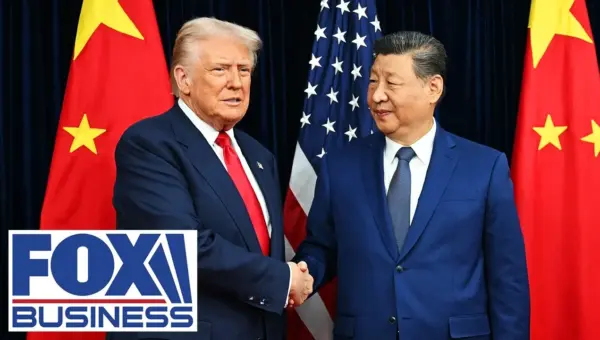
Former President Donald Trump revealed that Chinese President Xi Jinping sent him a letter acknowledging a halt to weapon sales. Trump also discussed his tough trade policies against China, including significant tariffs on cars and other goods. These trade actions and ongoing geopolitical tensions can create market uncertainty for investors.


Hungary Rejects Authoritarianism, Sending Shockwaves Globally
Hungary's decisive election of Peter Maguar over Victor Orban marks a significant victory against authoritarianism, impacting global politics. Orban's model influenced movements like MAGA, but his rejection offers critical lessons for the US. The election highlights the fight against corruption and foreign influence, signaling a potential shift in the global balance of power.