Money Talks: Why Economic Pain Could End Trump’s Iran War
Experts suggest that financial pressure, not military might, is the most likely factor to end President Trump's potential war with Iran. High oil prices and their impact on the US economy and public opinion could force a quicker resolution than anticipated.

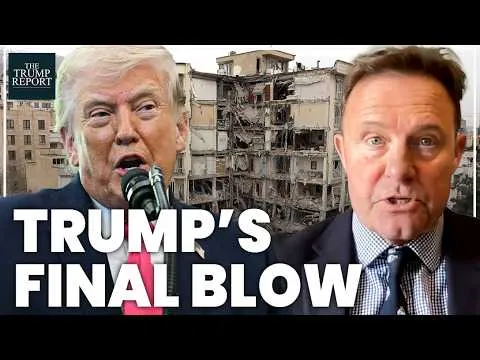
Money Talks: Why Economic Pain Could End Trump’s Iran War
The conflict in Iran is a complex issue, and many are looking for a swift end. While President Trump has expressed a desire to wrap things up quickly, possibly by May 14th, experts suggest this goal faces significant challenges. The US military is putting in a lot of effort, but Iran continues to fight back. With key dates approaching, like a meeting with China’s President Xi, and the US midterm elections looming, the current situation isn’t painting a picture of a strong international leader.
Reports suggest the Pentagon is preparing for a “final blow” in Iran. However, what this means is unclear. It’s highly unlikely to involve a nuclear strike. Instead, the focus seems to be on controlling the Strait of Hormuz, a vital waterway. This area is Iran’s key leverage point. Opening it up is a major challenge for Trump. He could try to negotiate, but Iran has shown little interest in his proposed plan. If talks fail, military action is on the table.
Military Options and Their Dangers
Controlling the Strait of Hormuz requires more than just air power. It means securing the coastlines around it. While the Omani and Emirati sides are easier to manage, a long stretch of the eastern coast belongs to Iraq. The US is sending in more troops, including Marines and airborne divisions, which could be used to take control of key islands or even parts of Iran. However, taking these areas is one thing; holding them is another. The transcript highlights how even small, determined groups with missiles can damage large ships, as seen with the Houthis in the Red Sea. This suggests that securing the Strait of Hormuz could be a difficult and dangerous operation.
The idea of a “final blow” through overwhelming air power, similar to the 2003 Gulf War but on a larger scale, is also discussed. While the US has immense air power, it’s believed they’ve already hit most key targets and leadership. This leaves the conflict potentially open-ended, contradicting Trump’s desire for a quick resolution. The repeated strikes on nuclear facilities haven’t brought the conflict to a close.
A special forces operation to seize enriched uranium is also considered. While the US has the capability for such a complex mission, its usefulness is questioned. Enriched uranium alone isn’t a nuclear weapon. The infrastructure needed to build one is largely destroyed in Iran. Such an operation would be largely for show and carries immense risk. Past US special forces operations in Iran have not gone well, making this option seem unlikely.
The Economic Factor: Trump’s Real Interest
The analysis strongly suggests that financial pain is the most likely factor to end the conflict. President Trump may not fully grasp geo-strategic politics or military strategy, but he understands money. The current situation in the Gulf is hurting the global economy, especially the price of oil. High oil prices benefit Russia significantly, while hurting American consumers and the US economy. This economic pressure could be what forces Trump’s hand.
The US public is sensitive to rising prices, especially at the gas pump. With midterm elections approaching, a public unhappy about economic hardship could deal a major blow to Trump’s political standing. Therefore, the financial consequences of the war are seen as a more powerful motivator for a ceasefire than military or diplomatic efforts alone. It is hoped that this financial pressure will lead to a cessation of hostilities sooner rather than later.
Broader Implications and Future Outlook
The conflict also has wider implications. There are concerns about Iran’s nuclear plants being attacked, either intentionally or accidentally, which could spread contamination to Gulf states. Iran has also been accused of using chemical weapons in the past and potentially threatening nuclear facilities in Abu Dhabi. These are serious concerns that add to the instability of the region.
Furthermore, the conflict draws attention away from other global issues. The war in Ukraine, where Ukraine has had recent success in hitting Russian infrastructure and reclaiming territory, might see a diversion of US military aid to the Middle East. This could weaken Ukraine’s position against Russia, benefiting President Putin. The interconnectedness of these global events highlights the far-reaching consequences of the Iran conflict.
The Houthis in the Red Sea could also resume attacks, potentially disrupting shipping through the Suez Canal again. This would add to global inflation and could even trigger a global recession. While Iran might not mind this outcome, it would be disastrous for the world economy. The situation is a complex web of potential escalations, with many factors pointing towards prolonged conflict rather than a quick resolution, unless economic realities force a change in strategy.
The financial element is the one that is going to make a difference here. Trump seems to know little about geo strategic politics, little about the military, but he does seem to understand, you know, money and dollars.
Why This Matters
Understanding the motivations behind international conflicts is crucial for informed citizenship. This analysis suggests that economic self-interest, particularly the impact of high oil prices on the US economy and public opinion, may be a more significant driver for ending the Iran conflict than traditional military or diplomatic pressures. The potential for a prolonged war, its impact on global stability, and its connection to other ongoing conflicts like Ukraine, underscore the importance of seeking peaceful resolutions. The economic consequences, felt by consumers worldwide, are a powerful, albeit unwelcome, force that could shape the future of this conflict.
Source: One thing will make Trump stop his Iran war – money | Hamish de Bretton-Gordon (YouTube)

Related Articles

G7 Allies Clash Over Iran War Strategy, Urge Focus on Russia
G7 foreign ministers met in Paris, revealing deep divisions over the U.S. war with Iran. European allies urged the U.S. to pressure Russia, linking its actions to the conflict and fearing support for Ukraine will wane.

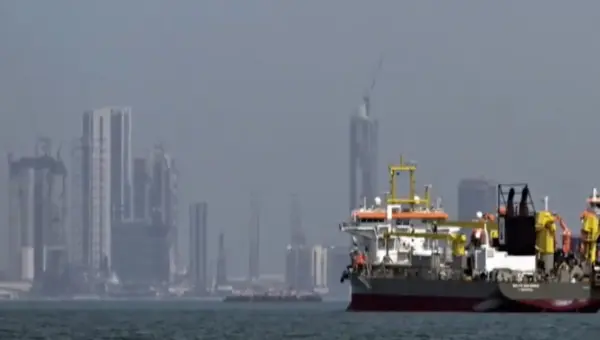
Iran Blocks China Ships, Exposing Beijing’s Weak Grip
Iran's recent decision to block Chinese ships at the Strait of Hormuz is exposing the limits of Beijing's influence in the Middle East. This action is causing delays and cancellations for Chinese manufacturers, turning a perceived geopolitical win into an economic strain.
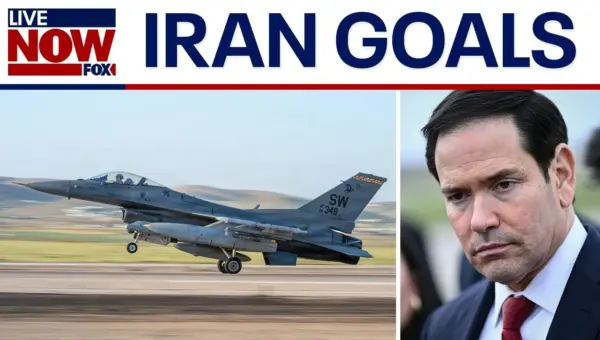
Rubio: US Can Achieve Iran War Goals Without Troops
Senator Marco Rubio outlined a strategy to counter Iran without deploying U.S. ground troops, focusing on weakening the regime and enhancing maritime security. He also criticized Cuba's economic system and expressed concerns about West Bank violence.