Teens Run Drug Rings: Law’s ‘Loophole’ Fuels Youth Exploitation
Young people are increasingly taking charge of county lines drug operations, exploiting legal protections designed to safeguard victims. Police are concerned that the Modern Slavery Act, intended to help those exploited, is being used as a 'loophole' by teenagers running drug networks, making prosecutions difficult.

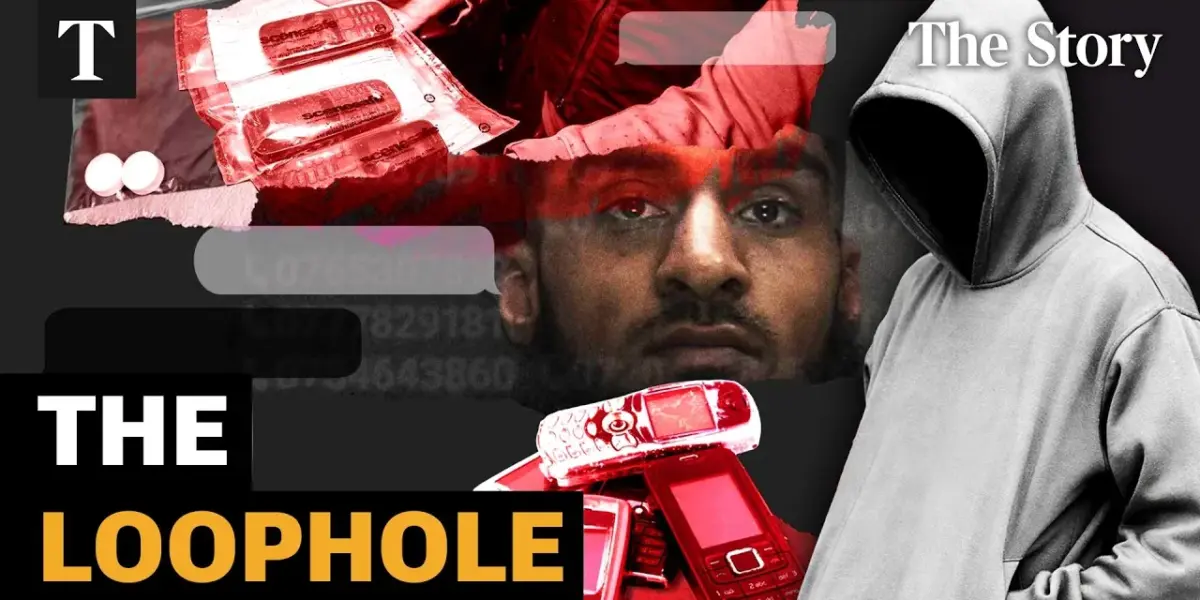
Teens Now Leading Drug Operations, Exploiting Legal Protections
In October 2023, police in Leeds arrested an 18-year-old, Solomon Samari, with hundreds of pounds of cocaine and heroin. He admitted drug dealing and was sent to a young offender’s institution. Just over a year later, in January 2025, police in York arrested someone with the same name on similar charges. This time, officers were part of ‘Operation Titan,’ a major effort to stop county lines drug dealing. They believed Samari was behind the ‘Sam line,’ one of many drug networks targeting York.
These lines used young people from outside the city to deliver drugs, passing on the risks of violence and arrest. The ‘Sam line’ and ‘Diego line’ were particularly dangerous, often fighting for control in the area. When Samari was arrested, the ‘Sam line’ went silent for a month. Officers hoped the problem was over. But then, messages started again. Even though Samari was in jail, someone else was running the line.
‘Sam Line’ Expands Rapidly, Targeting New Customers
Police watched as the ‘Sam line’ grew quickly in early 2025. They sent out mass texts to drug users in York, offering deals like ‘two for £15.’ Sergeant Mike Brocken, who leads a team fighting organized crime, showed data illustrating this growth. In one week in July, the ‘Sam line’ sent 403 messages. This was a huge jump from just 25 messages five months earlier.
“The customer base that the line has is ever growing,” Brocken explained. “They might say, for instance, that the ‘Sam line’ product is particularly good at the minute or it’s particularly cheap.” If every offer was accepted, this busy week could bring in about £6,000. Over a year, this could mean more than £300,000 in profit. “This is big business,” the report states. As a line becomes more successful, the person in charge can step back and let others handle the work. This is often where children are recruited, helping to meet the rising demand.
Child Exploitation Team Steps In
When children get involved, a different police team gets involved: the child exploitation unit. Detective Sergeant Amy Foster and Police Constable Phil Hallum work with social services and schools to help young people at risk of being exploited. They know that children can be threatened or robbed by gangs and are often seen as ‘disposable assets’ – easily replaced.
“They’re human beings at the end of the day, vulnerable at that,” said Foster. “The damage is already done. Some of the violence and the threats and coercion that they’ve been victim to will live with them forever.” Detective Inspector Cheryl Quinn leads this team. She described the rewarding moments when children finally open up after months of denying they are being exploited.
‘Usain’s’ Story: A 14-Year-Old Caught in the System
The team’s investigation into the ‘Sam line’ began with ‘Usain,’ a 14-year-old boy they had been working with for two years. Police first met Usain by chance after he was involved in a minor bus accident. It quickly became clear that no one knew who he was or had anyone to vouch for him. He didn’t attend school and wasn’t related to the people he was living with.
Usain had come to the UK with his mother when he was 12. She left him with a family friend and then moved away. Usain was left alone and vulnerable. The people he lived with had connections to drug dealing, putting him at risk of being drawn into that world. “He’s so vulnerable and he’s got nothing else in his life,” said Quinn. “So, why wouldn’t he want to be part of a family that is going to put their arms around him and take care of him?”
A Debt and a Dangerous Choice
Over time, police saw Usain involved in minor crimes like bike thefts. They worried if he was doing this willingly or being influenced. Intelligence suggested he was traveling and possibly involving other young people. Then, Usain made a panicked confession to his youth justice officer: he was involved in a county line.
He had lost about £1,000 worth of drugs he was supposed to deliver. Now he owed a lot of money to the person who recruited him. Fearing the consequences, Usain was reluctant to speak to the police. The threat of violence and being called a ‘grass’ often stops young people from talking. When Usain became completely unreachable, his worried team feared what he might have to do to repay the debt.
Teenagers Taking Control: A ‘Nightmare’ Scenario
Usain had been working for the ‘Sam line.’ The investigation revealed five more teenagers – three boys and two girls – were connected to the same operation. Quinn called it a “nightmare.” Many of these children didn’t see themselves as victims. They felt they were being looked after because they were making money, earning about £250 a week.
While the child exploitation team worked to safeguard these young people, Sergeant Brocken’s team focused on finding the line holder. They arrested a suspect, who turned out to be just 17 years old. This teenager was accused of running the ‘Sam line’ and arranging for children even younger than him to sell drugs. “I’ve never heard of anything like that,” Brocken admitted. He learned that this wasn’t an isolated case; other operations were also being run by 16-year-olds.
The Modern Slavery Act: A ‘Loophole’ for Young Dealers?
The law in Britain aims to protect victims of exploitation, especially children. However, police and prosecutors are finding that this protection might be encouraging gangs to put children in charge of drug networks. The Modern Slavery Act allows individuals, including children, to use a ‘section 45 defense.’ This means they can argue they are not guilty because their actions were a result of exploitation.
For adults, this defense requires proof of compulsion. But for children, there is no such requirement. This makes it easier for them to avoid prosecution. “The law itself is encouraging gangs to recruit children into more senior positions in their drug networks,” the report suggests. The Crown Prosecution Service (CPS) review found that the section 45 defense could be abused by criminals.
A Difficult Balance: Protecting Victims, Prosecuting Offenders
District Crown Prosecutor Rachel Baldwin explained that the system is designed to protect victims. Referrals are made to the National Referral Mechanism (NRM), where a ‘reasonable grounds decision’ is made. If positive, the person receives support. However, this can also mean that someone suspected of a crime might not be prosecuted if they can show they were exploited.
Baldwin believes the system has improved, and it’s no longer a ‘get out of jail free card.’ The CPS is now better at testing evidence of exploitation. They look at phone records, bank accounts, and other evidence to counter defense claims. “The real victims of trafficking and modern day slavery are protected, but it’s also really important that people that aren’t are prosecuted,” Baldwin stated. This is a difficult balance to strike.
System Failures or Necessary Protections?
Sergeant Brocken sees the system differently. He described a case where a 14-year-old boy was stabbed. The police arrested an adult and a teenager. The adult was charged, but the child, believed to be exploited, was released. A month later, the same teenager was rearrested, running a different county line. He was bailed again, receiving another positive exploitation decision.
For Brocken, this shows the system is being abused. He believes the teenager is using the law as a loophole. “He is now choosing to go down this route. It’s then really difficult to still see those people as victims when actually they’ve made a choice to continue to supply drugs. They’re not being exploited. They are now the exploiters,” he said. The justice system struggles to deal with these cases quickly, sometimes leading to long delays.
What’s Next?
The ongoing debate highlights the challenge of balancing child protection with the need to prosecute drug offenders. As gangs adapt their tactics, the law and law enforcement must find ways to keep pace. The effectiveness of the Modern Slavery Act in preventing exploitation while holding those responsible accountable remains a critical issue to watch.
Source: On the Line: The Loophole – Investigation | Part 3/5 (YouTube)

Related Articles

Ex-Drug Runner Details Harrowing ‘County Lines’ Exploitation
A former 'county lines' drug runner, known as Mike, has shared his harrowing experiences of being lured into drug dealing as a teenager. He details the exploitation, violence, and near-fatal encounters that led him to realize the severity of his situation and the importance of support systems for vulnerable youth.


Judge Rejects Maduro’s Bid to Dismiss Drug Charges
A federal judge in New York has denied a motion to dismiss drug trafficking charges against former Venezuelan leader Nicolas Maduro and his wife, Cilia Flores. The couple's defense argued the U.S. government's actions blocked access to funds needed for their legal defense. Meanwhile, NBC anchor Savannah Guthrie shared the emotional details of her mother's disappearance and the ongoing investigation.


US May Fund Maduro’s Defense in Drug Trial
Nicolas Maduro, facing drug trafficking charges in the U.S., may have his defense funded by American taxpayers if Venezuela cannot pay due to sanctions. His lawyers are in court seeking a judge's intervention.