France’s 2027 Election: Uncertainty Reigns as Macron Party Faces Challenges
France's 2027 presidential election faces significant uncertainty, with no clear frontrunner emerging after recent municipal elections. A minister from Macron's party highlighted the open political landscape and the need for recomposition. The discussion also covered the UK's post-Brexit relationship with the EU from a French viewpoint.

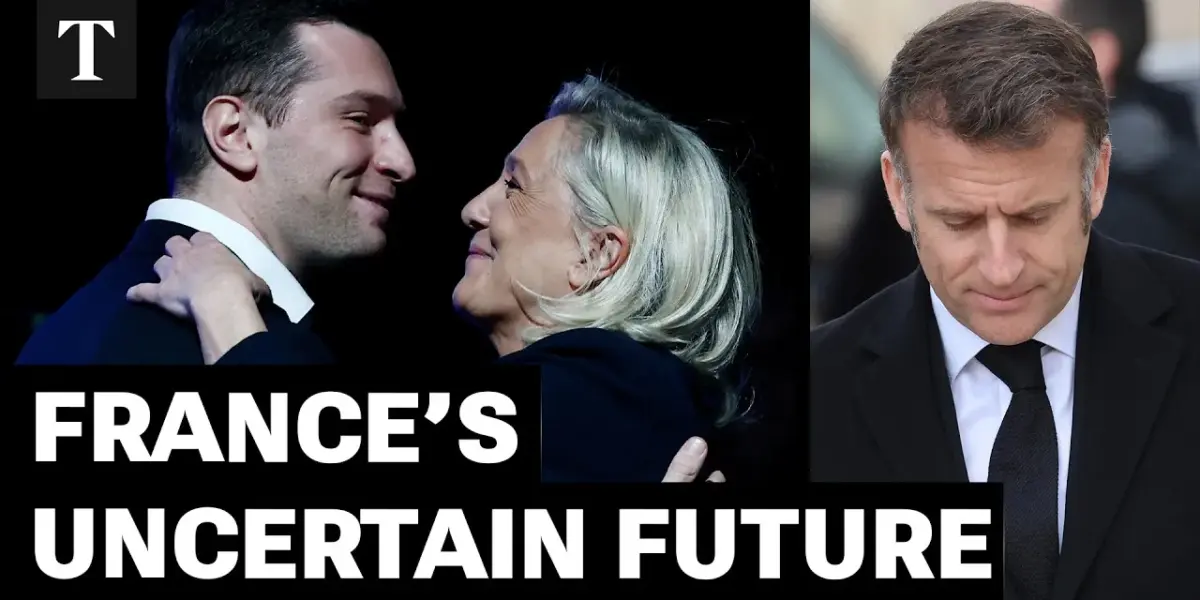
French Politics in Flux Ahead of 2027 Presidential Race
PARIS – France’s political future remains highly uncertain as the nation gears up for the 2027 presidential elections. A member of President Emmanuel Macron’s Renaissance Party and government minister, speaking recently, emphasized that no one can predict the outcome with certainty. The political landscape is described as wide open, requiring a significant recomposition and rebuilding of the French political scene.
Municipal Election Results Show Mixed Bag for Major Parties
Recent municipal election results in France have provided a complex picture. While Macron’s Renaissance Party, a relatively new entity formed from traditional left and right-wing parties, won some major cities like Bordeaux and Annecy, its candidates often struggled when directly associated with the president. This led to losses in key areas like Nice, Lyon, and Pau. However, the party’s representative pointed out that these wins demonstrate the party’s growing presence in key territories, despite its newness.
The far-right National Rally, led by Jordan Bardella and Marine Le Pen, maintained a strong position, winning several medium-sized towns and appearing set to reach the second round of the presidential election. Despite concerns, the party did not experience the widespread gains some analysts had predicted based on earlier European election results. The hard-left also underperformed, while the socialist party saw a slight improvement.
Potential Candidates and Shifting Alliances
The question of who might challenge the National Rally in a potential second-round presidential runoff is a major point of discussion. Former Prime Minister Edouard Philippe is seen as a strong contender, but his association with President Macron could be a hurdle. The minister stressed that comparing the current situation to the 2016-2017 period, when Macron’s rise was unexpected, highlights the unpredictability of French politics. “Anyone telling you that they know for sure what is going to happen in 2027 in France is lying,” she stated, underscoring the open nature of the race.
A key takeaway from the local elections was the underperformance of parties that formed alliances with the far-right or far-left. In contrast, the socialist party’s decision to refuse an alliance with the far-left party in Paris was seen as a factor in their significant victory there. This suggests that rebuilding trust and finding unified centrist candidacies will be crucial.
The National Rally’s Position and Legal Challenges
The National Rally presents itself as a fresh alternative, unburdened by past governance. However, the minister noted that the party, led by a political family, has been active for a considerable time. The potential impact of Marine Le Pen’s legal situation, specifically an embezzlement conviction that could bar her from running if an appeal fails, adds another layer of complexity. The French justice system’s independence was highlighted as a factor that will play out in the coming months.
UK’s Relationship with the EU: A French Perspective
The discussion also touched upon the United Kingdom’s relationship with the European Union, nearly ten years after the Brexit vote. From a French perspective, the decision to leave the EU was regretted. Despite the difficult negotiations, the current relationship between France and the UK is described as strong, with cooperation evident in areas like support for Ukraine and shared geopolitical interests. The minister acknowledged that while working together outside the EU is possible, it is different from the pre-Brexit era.
While not directly stated as an official EU position, the minister shared a personal view that a UK return to the EU would be welcomed, contingent on specific conditions regarding rejoining the single market or customs union. The process of such a return, she noted, would likely involve lengthy negotiations, similar to those that defined Brexit itself.
Source: France’s 2027 Elections Up In The Air | Macron Minister (YouTube)

Related Articles
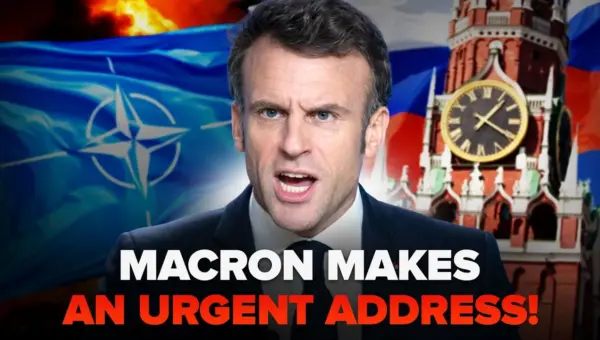
Macron Urges Iran to Halt Attacks; Ukraine Cites Russian Gains
French President Macron urged Iran to halt regional attacks, citing humanitarian risks and the need for security guarantees. Meanwhile, Ukraine claims Russia is profiting from Middle East instability to fund its war effort and that its own spring offensive has failed.
UK Eyes Closer EU Ties Amid Economic Headwinds
As the UK grapples with economic headwinds and geopolitical instability, calls for closer ties with the European Union are gaining traction. Shadow Chancellor Rachel Reeves advocates for a more aligned approach to boost growth, while acknowledging the political tightrope involved in navigating 'red lines' on freedom of movement and budget contributions. Meanwhile, rising energy costs and a flatlining economy present immediate challenges.
Macron Pledges Unwavering Support to Ukraine Amidst Global Tensions
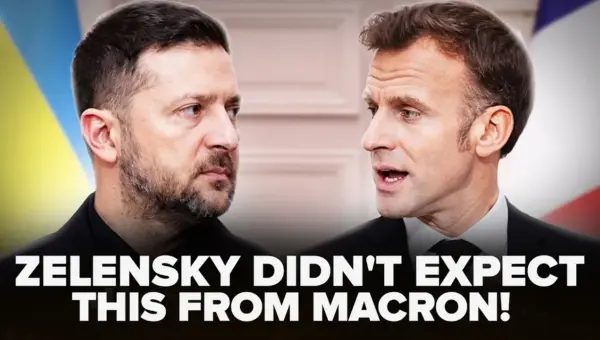
French President Emmanuel Macron reaffirmed unwavering support for Ukraine during a visit with President Volodymyr Zelenskyy, vowing global attention will not waver from the conflict. Macron highlighted Russia's strategic failures and the strengthening Iran-Russia alliance, while stressing Europe's commitment to Ukraine's defense and EU accession.