US Senate’s CBDC Ban: A 2030 Time Bomb?
The US Senate's recent vote to ban retail CBDCs appears to be a win for privacy, but a closer look reveals a sunset clause set to expire in 2030. Critics argue this temporary ban is a strategic move to allow private stablecoin infrastructure to develop, potentially paving the way for government-controlled digital dollars by the end of the decade.

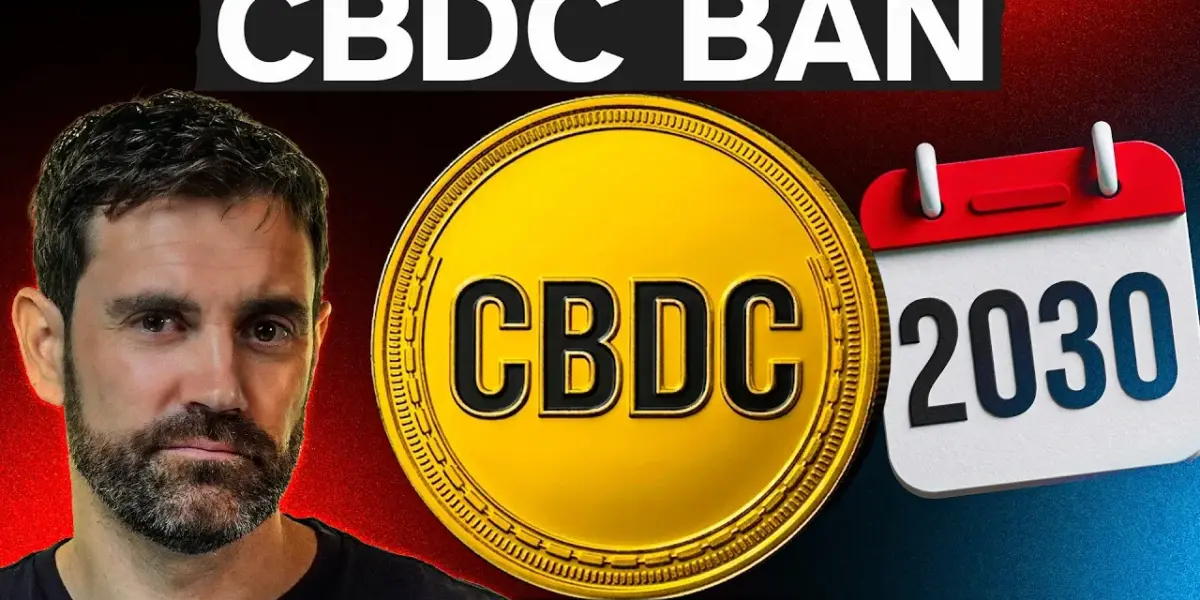
US Senate’s CBDC Ban: A 2030 Time Bomb?
On March 12, 2026, the United States Senate voted 89 to 10 to pass HR644, known as the 21st Century Road to Housing Act. While this large housing reform bill appears to ban the creation of a retail Central Bank Digital Currency (CBDC), a closer look at the legislation reveals a potential loophole. Critics argue that a specific clause in the bill acts as a ticking time bomb, allowing for a digital dollar to be introduced later.
The Apparent Ban and the Hidden Clause
The legislation defines a CBDC and explicitly prohibits the Federal Reserve from issuing one to the public. It also bans similar digital assets. Mainstream news reported this as a major win for financial freedom and privacy, with groups like the Digital Chamber and the Blockchain Association applauding the move. Even the White House issued a statement supporting the provision, citing privacy concerns.
However, Section 101 of the bill includes a sunset clause. This means the prohibition on the Federal Reserve issuing a retail CBDC is not permanent. It is set to expire on December 31, 2030. This makes the ban a temporary moratorium, lasting about four years.
Political Maneuvering Behind the Sunset Clause
Senator Elizabeth Warren, a co-author of the bill and ranking member of the Senate Banking Committee, reportedly insisted on this 2030 sunset clause. Without her support, the housing bill might not have passed. She remained silent about the expiration date in her public statements.
The 2030 date is significant because it aligns with the next presidential term. If a pro-CBDC administration wins the election in November 2028, they could be in power when the ban expires. Additionally, Federal Reserve Chair Jerome Powell’s term ends in May 2026, potentially allowing for new leadership more favorable to CBDCs.
Opposition to a Permanent Ban
Senator Ted Cruz attempted to make the ban permanent by filing an amendment to strike the sunset clause. This amendment failed, and Senator Cruz was one of the ten senators who voted against the final bill. Other senators who voted no, like Rand Paul and Ron Johnson, are known for their strong stances against government surveillance. They likely voted no because the ban did not go far enough.
The 89 senators who voted yes could be comfortable with a digital dollar returning in the future. By including the sunset clause, Congress avoids permanent accountability. Instead of passing a new law to implement a CBDC, future lawmakers would only need to do nothing for the ban to expire.
Wholesale CBDCs and Private Stablecoins: The Loopholes
While the retail CBDC ban lasts until 2030, the Federal Reserve is still developing wholesale CBDC infrastructure. Wholesale CBDCs are digital settlement tools used only between financial institutions and central banks. Projects like Cedar have shown that distributed ledger technology can significantly speed up cross-border settlements.
Furthermore, the passage of the Genius Act in July 2025 established a framework for private stablecoins. These stablecoins, like Tether and USDC, are dollar-backed digital tokens. The Genius Act requires issuers to have the ability to freeze, seize, or destroy tokens on government orders. This effectively creates a regulated private infrastructure for digital dollar payments.
The Rise of Private Stablecoins
The stablecoin market is massive, with a combined market capitalization of around $262.7 billion. Tether holds over $187.1 billion, and Circle’s USDC has $75.6 billion. Circle, now a public company, is positioning itself as a key player in machine-to-machine payments, with 98% of AI agent payments reportedly settled in USDC.
In 2025 alone, stablecoins processed over $33 trillion in transactions, rivaling Visa and Swift. These stablecoin issuers also become major buyers of U.S. government debt, creating a self-reinforcing incentive for the government to support the stablecoin market.
A Collision Course with Crypto Legislation
The temporary CBDC ban is creating legislative challenges. In the House of Representatives, some lawmakers want to change the bill to a permanent ban. This disagreement could stall the housing bill, which in turn could delay other important legislation like the Clarity Act. The Clarity Act aims to provide comprehensive market structure rules for digital assets and has been stalled in the Senate, partly due to disputes over stablecoin yields.
If the Clarity Act fails to pass due to these legislative gridlocks, the classification of major crypto assets as digital commodities by the SEC and CFTC could be reversed by a future administration. This would create significant uncertainty for the broader crypto market.
Global Developments in CBDCs
While the U.S. debates a temporary ban, other countries are rapidly advancing their CBDC projects. China’s digital yuan (e-CNY) has processed billions of transactions. The People’s Bank of China has even allowed commercial banks to pay interest on digital yuan balances, driving institutional adoption.
China is also using its digital yuan in cross-border payments through projects like the Bank for International Settlements’s mBridge. This initiative has already settled billions in cross-border payments, with the digital yuan dominating the transaction value. This development threatens the dominance of the U.S. dollar. The European Central Bank is targeting 2029 for the full launch of its digital euro, and over 134 countries are exploring CBDCs.
The Two-Track Strategy
The U.S. appears to be following a two-track strategy. Track one involves the public retail CBDC ban with a 2030 expiration date, creating political cover and a false sense of security. Track two focuses on building private infrastructure through stablecoins, embedding surveillance features like KYC and the ability to freeze funds.
By the time the CBDC ban expires, the private infrastructure will be in place. A future Congress could then simply adopt this existing infrastructure, effectively launching a CBDC without needing new legislation. This means the development of a CBDC has been outsourced to Wall Street and scheduled for the end of the decade.
Conclusion: A Snooze Button on the Digital Dollar
The Senate’s vote, while appearing as a victory for financial privacy, might be a temporary pause. The 2030 sunset clause allows for the continued development of private digital payment systems that could be co-opted by the government. The true threat may not be a government-issued CBDC, but a regulatory framework that mandates CBDC-level surveillance for all digital dollars, regardless of who issues them.
Source: The CBDC Ban Is a 2030 Time Bomb (YouTube)

Related Articles


Crypto’s “Warfare” Era Ends? SEC/CFTC Clarity Offers Hope
The SEC and CFTC have announced a framework to classify digital assets, identifying 16 as commodities. This move aims to end years of perceived "warfare" and "lawfare" against the crypto industry under the Biden administration.


Bitcoin Bottom Signals Stack Up Amid Regulatory Hopes
Bitcoin shows potential bottoming signals, with on-chain data aligning with historical patterns and regulatory developments offering cautious optimism. Despite differing analyst views on future catalysts, adoption trends and investor conviction suggest a resilient cryptocurrency market.


Congressman Slams 2 AM Voice Vote on Security Funding
A Republican congressman criticized a late-night Senate voice vote on homeland security funding, calling it "disgusting" and "under the cover of darkness." He argued the process bypassed proper procedure and failed to fully fund critical agencies like the TSA and Coast Guard, contributing to public frustration with Washington.