Iran Nuclear Deal in Doubt Amid Hostage Release
The release of American hostage Dennis Coyle highlights ongoing geopolitical tensions, particularly with Iran. While claims of Iran agreeing to forgo nuclear weapons have been made, questions persist due to continued uranium enrichment and strategic maneuvering in the Strait of Hormuz. Meanwhile, revelations of Iranian espionage in Silicon Valley add another layer of complexity to the nation's international activities.

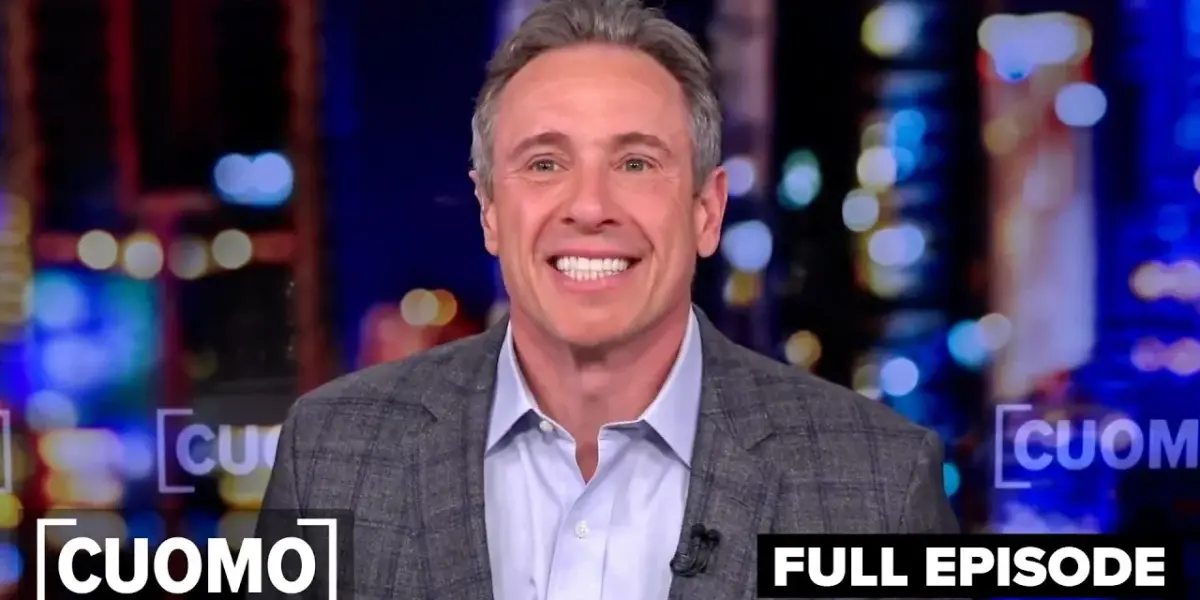
Iran Nuclear Deal in Doubt Amid Hostage Release
The recent release of American hostage Dennis Coyle from Taliban captivity has brought a moment of relief and pride. However, it also shines a spotlight on complex geopolitical dealings, particularly concerning Iran’s nuclear program and its role in regional stability. The situation is not as simple as a single event, but rather a web of diplomatic maneuvers, economic pressures, and competing interests.
A Hostage Freed, But Questions Remain
Dennis Coyle, a 64-year-old academic researcher, was held for 420 days by the Taliban in Afghanistan. His release followed a coordinated effort involving his family, media attention, and the U.S. Special Envoy for Hostage Response, Adam Bowler. President Trump’s administration played a role, with media coverage, including an interview with NewsNation’s Katie Pavlage, reportedly prompting direct engagement from the President.
Coyle expressed deep gratitude for his freedom and the efforts made to secure it. He spoke of his desire to return to his mother and his appreciation for those who worked on his behalf. His experience highlights the personal toll of international conflict and the dedication of those working to bring Americans home. This success, while significant for Coyle and his family, occurs against a backdrop of ongoing international tensions, especially with Iran.
Iran’s Nuclear Ambitions and Diplomatic Pledges
The transcript touches on claims that Iran has agreed not to pursue nuclear weapons. This assertion, made by the President, is met with skepticism by some. Representative Ammy Barra, a member of the House Foreign Affairs Committee, pointed out that Iran still possesses 60% enriched uranium. This suggests that while diplomatic progress may be claimed, the technical capability for nuclear weapon development may still exist.
The idea of a “gift” from Iran, described as oil and gas related, has also been questioned. Some interpret this as Iran selectively controlling passage through the Strait of Hormuz, allowing only friendly vessels. This action, while potentially easing some tensions, is seen by others as a strategic move rather than a genuine concession.
Competing Views on Iran Policy
The discussion features differing perspectives from Congress on how to handle Iran. Representative Randy Fine believes the President’s objectives—no nuclear weapons, no long-range missiles, no navy, and no missile shield—have been largely met through military degradation. He emphasizes that regime change was never stated as a goal, and therefore, the current state, if it stops hostilities, is a success by those metrics.
Conversely, Representative Barra stresses the need for clearer objectives and the involvement of allies. She highlights the continued enrichment of uranium and the potential for Iran’s regime to become even more aggressive. Both acknowledge the suffering of the Iranian people but differ on the current administration’s approach and its measurable success, especially as long as the current regime remains in power.
Economic Leverage and Regional Stability
The Strait of Hormuz is a critical global energy route. Iran’s ability to control or influence passage through this waterway gives it significant economic and strategic leverage. Any disruption or selective allowance of traffic can impact global oil prices and supply chains. The mention of a potential one-month ceasefire and Iran’s announcement to reopen the strait to non-hostile vessels, but not American ones, illustrates this complex dynamic.
Economic sanctions have been a key tool used against Iran. Special Envoy Adam Bowler mentioned actions taken in Iran and Venezuela as examples of not tolerating certain behaviors and bringing Americans home. This indicates that economic pressure is part of the broader strategy to influence Iran’s actions, including its nuclear program and regional behavior.
The Shadow of Espionage
Beyond nuclear concerns and hostage diplomacy, the transcript reveals another dimension of Iran’s activities: espionage. The arrest of the Gandali sisters, accused of stealing trade secrets from Silicon Valley tech giants like Google for the Iranian regime, highlights a different, yet equally concerning, aspect of Iran’s international operations.
Former FBI operative Eric O’Neal and former CIA agent Tracy Walder discussed the nature of this espionage. They explained that while cyber attacks are prevalent, traditional human espionage remains a significant threat. The sisters allegedly exploited trust within companies to steal information, costing the U.S. billions annually. The financial and technological impact of such espionage is substantial, allowing Iran to potentially accelerate its own research and development by acquiring advanced secrets.
Historical Context and Future Scenarios
The long history of U.S.-Iran tensions, including past diplomatic agreements and breakdowns, forms the backdrop for current events. The ongoing debate over Iran’s nuclear program echoes decades of international efforts to control proliferation. The current situation, with claims of a nuclear agreement alongside evidence of continued enrichment and espionage, suggests a delicate and uncertain path forward.
Future scenarios could range from a renewed diplomatic push that genuinely halts Iran’s nuclear ambitions and reduces regional tensions, to a continued state of friction with potential for escalation. The involvement of allies, the stability of the Iranian regime, and the effectiveness of economic and diplomatic pressure will all play crucial roles in shaping these outcomes. The espionage revelations add another layer of complexity, suggesting that even if a nuclear deal is struck, other covert threats will persist.
Global Impact
The developments surrounding Iran have significant global implications. Any progress or setback in controlling Iran’s nuclear program directly affects global security and the non-proliferation regime. Tensions in the Strait of Hormuz can disrupt global energy markets, impacting economies worldwide. Furthermore, Iran’s actions, whether through espionage or regional proxy activities, contribute to broader geopolitical instability in the Middle East and beyond.
The interplay between hostage diplomacy, nuclear negotiations, and espionage reveals a multifaceted challenge. The U.S. and its allies must navigate these complex issues, balancing the desire for peace and security with the need to counter threats and protect national interests. The effectiveness of current strategies, particularly in light of differing political viewpoints domestically, will determine the future trajectory of international relations with Iran.
Source: EXCLUSIVE: Freed U.S. Hostage, Did Iran Agree to No Nukes? Iran Sister Spies | CUOMO Full Show 3/24 (YouTube)

Related Articles
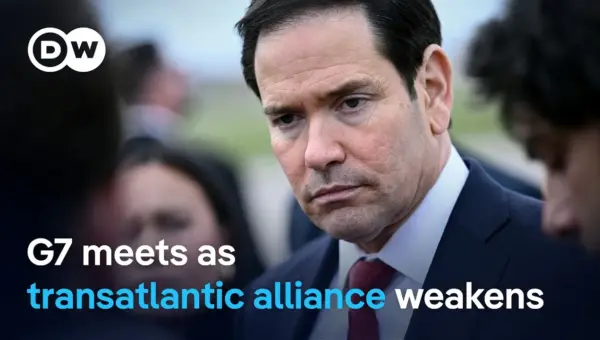
G7 Allies Clash Over Iran War Strategy, Urge Focus on Russia
G7 foreign ministers met in Paris, revealing deep divisions over the U.S. war with Iran. European allies urged the U.S. to pressure Russia, linking its actions to the conflict and fearing support for Ukraine will wane.

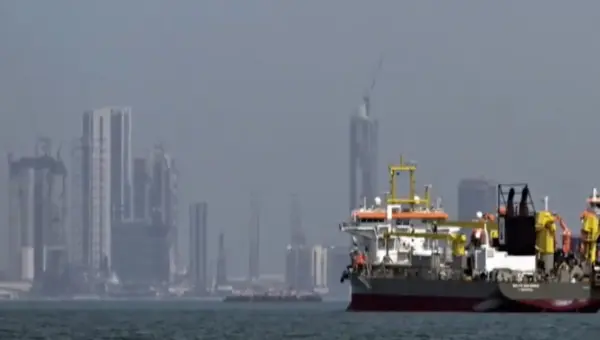
Iran Blocks China Ships, Exposing Beijing’s Weak Grip
Iran's recent decision to block Chinese ships at the Strait of Hormuz is exposing the limits of Beijing's influence in the Middle East. This action is causing delays and cancellations for Chinese manufacturers, turning a perceived geopolitical win into an economic strain.
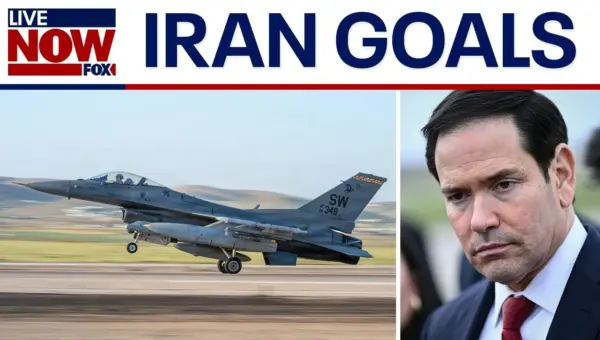
Rubio: US Can Achieve Iran War Goals Without Troops
Senator Marco Rubio outlined a strategy to counter Iran without deploying U.S. ground troops, focusing on weakening the regime and enhancing maritime security. He also criticized Cuba's economic system and expressed concerns about West Bank violence.