Ukraine Strikes Russian Baltic Port, Icebreaker
Ukraine struck key Russian Baltic infrastructure, including a unique icebreaker and oil export facilities, while Russia launched massive aerial assaults. These actions highlight a widening conflict encompassing logistics, energy, and diplomacy.


Ukraine Strikes Russian Baltic Port, Icebreaker
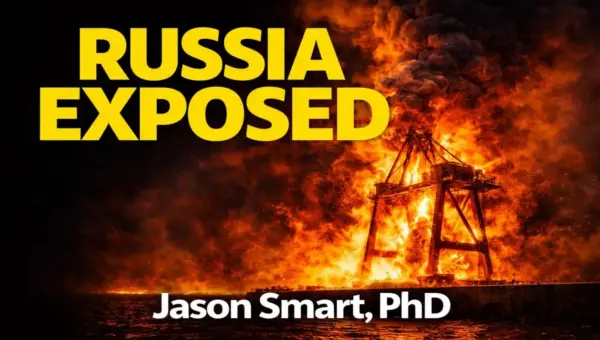
Russia launched one of its largest aerial assault waves of the war, with nearly 400 drones and 23 cruise missiles overnight. This was followed by another 556 drones in a rare daytime attack. As Western analysts warned of a new Russian spring offensive in eastern Ukraine, Kyiv responded with strikes deep inside Russia. Reports indicate targets included a Project 23550 patrol icebreaker at the Vyborg Shipbuilding Plant and infrastructure linked to Novatek at Ust-Luga in Leningrad Oblast. These locations are nearly 1,000 kilometers from Ukraine’s northern border. The attacks forced Russia’s Baltic ports of Primorsk and Ust-Luga to halt oil loading due to visible fires and smoke.
Russia’s Aerial Barrage Aims to Overwhelm
The scale of Russia’s recent aerial assault is significant. Ukrainian officials reported nearly 400 long-range drones and 23 cruise missiles launched overnight. This was followed by an unusual 556 drones in a daytime attack. In total, this amounted to close to 1,000 drones in one of the largest bombardments since the war began over four years ago. The barrage caused damage in 11 regions across Ukraine.
One Russian drone hit the Bernardine monastery, a 16th-century church in Lviv’s historic center. This shows the strikes targeted areas far beyond the front lines and not just military objectives. Such a large-scale attack aims to overload Ukraine’s air defense systems. Ukrainian President Volodymyr Zelenskyy used the moment to renew calls for more air defense munitions. Concerns are growing about U.S. Patriot interceptor stocks, especially with attention focused on the U.S.-Iran conflict.
The timing of the attack also carried political weight. While Ukrainian representatives were meeting in the United States, Russia launched its drone waves. This signaled that talks do not pause military pressure. Battlefield coercion remains part of the negotiation process. The widespread attacks also highlighted the interconnectedness of infrastructure, civilian life, and regional energy stability.
Moldova reported that a key power line linking it to Europe was damaged during the same wave of attacks. Citizens were urged to reduce electricity use during peak hours. Russia’s strategy does not require every drone to hit a critical target. Constant pressure, repeated headlines, and the need for Ukraine to spend scarce resources everywhere create fatigue and strain. This psychological pressure can be felt even if many incoming systems are intercepted or the military effect on the front is limited.
Eastern “Fortress Belt” Faces New Offensive
While Russia increases aerial pressure, its military focus appears to be shifting to eastern Ukraine. Reports suggest a new Russian spring offensive is expected in the so-called “Fortress Belt.” This heavily defended area includes the cities of Sloviansk, Kostiantynivka, and Pokrovsk, with Kramatorsk also playing a key role in the defensive system.
Over the past week, Russia has reportedly launched battalion-size assaults northeast of Sloviansk and smaller attacks near Pokrovsk and Kostiantynivka. These actions aim to set the stage for a broader offensive. Authorities in Sloviansk announced the evacuation of children after Russian forces advanced to within 20 kilometers east of the city. Ukraine’s General Staff reported over 600 Russian assaults in four days, with many concentrated near these eastern cities.
Russian military leadership has stated that the offensive is underway in all directions, targeting Sloviansk, Kramatorsk, and Kostiantynivka. These cities form the core of Ukraine’s eastern defense. However, analysts remain cautious about calling this a breakthrough moment for Russia. While Russia has sufficient manpower for advances, the extent of these gains is uncertain.
Recent attacks in northern Donetsk have involved a significant number of armored vehicles, suggesting an intent to accelerate gains. Yet, these efforts have often been neutralized by drone-dominated battlefields. Experts predict that Russian progress may be limited to a few hundred square kilometers per month, rather than a dramatic collapse. The Institute for the Study of War (ISW) expects tactical gains around the Fortress Belt in 2026, not a major breakthrough.
Russia’s intensification of efforts does not automatically equate to operational success. Ukraine, meanwhile, has reported taking back some territory on the southeastern front and claims to be eliminating more troops than Russia is recruiting. Disruptions to Russian military communications, possibly related to Starlink usage, have also been noted.
Ukraine Strikes Key Baltic Infrastructure
Ukraine’s response extended beyond the front lines, targeting strategic assets deep within Russia. On the night of March 24-25, a vessel was reportedly struck at the Vyborg Shipbuilding Plant in Leningrad Oblast. Early reports identified the vessel as the Purga, a Project 23550 patrol icebreaker. This type of vessel combines the functions of an icebreaker and a warship, making it a unique target.
The strike signals that specialized Russian state and security assets, even far from the front, are not immune. More economically significant was a deep-strike operation against Novatek-owned facilities in the port of Ust-Luga. This port, nearly 1,000 kilometers from Ukraine’s border, processes and exports gas condensate into petroleum products. These products are crucial for Russia’s economy and for circumventing sanctions.
Kyiv’s message is clear: strikes on maritime and oil-and-gas infrastructure aim to reduce Russia’s ability to finance and sustain the war. This connects technology, economics, sanctions, and military planning. Targeting these hubs affects war finance and military endurance, moving beyond mere symbolism.
Disruption at Baltic Ports
The attacks had immediate consequences. Russia’s Baltic ports of Primorsk and Ust-Luga, major export terminals, suspended crude oil and oil-product loading. Fires broke out, with smoke visible from Finland. These strikes are among the most significant to date against Russia’s oil export facilities.
Primorsk can export over 1 million barrels of crude oil daily, while Ust-Luga exported 32.9 million metric tons of oil products last year. Russia’s defense ministry claimed to have shot down 389 Ukrainian drones overnight, highlighting the scale of the assault. Ust-Luga was reportedly sealed off, with reservoirs ablaze.
The cumulative effect of these strikes is significant. If facilities resume operations only to be hit again, issues of reliability, insurance, costs, and security arise. The market begins to price in risk for Russian export infrastructure. This creates a meaningful burden for Russia, even if operations are eventually restored.
Geopolitically, the strikes add uncertainty to global oil markets already affected by Middle East conflicts. Markets are now forced to consider the Russia-Ukraine war and the Middle East together, potentially leading to higher prices and supply risks. This can reshape policy conversations for consumers, governments, and Europe.
Diplomatic Channels Amidst Escalation
Amidst battlefield pressure and energy strikes, Russia has signaled that diplomatic channels remain open. Kremlin spokesman Dmitry Peskov stated that Russia is in contact with the United States regarding a possible settlement and hopes for continued mediation efforts. Moscow maintains contact through existing channels and welcomes U.S. efforts to create conditions for dialogue.
This indicates Russia’s strategy of maintaining pressure while engaging in diplomacy. The aim may be to normalize escalation as background noise, rather than a disqualifying behavior. This approach coincides with the ongoing spring offensive narrative and the recent large-scale aerial attacks.
Hungary’s Energy Politics and Moldova’s Warning
Adding complexity to the situation, Hungarian Prime Minister Viktor Orban stated that Hungary would gradually halt natural gas deliveries to Ukraine. This is linked to the resumption of crude oil flows through the Druzhba pipeline, which Hungary and Slovakia claim was damaged by a Russian drone attack. Ukraine states repairs are ongoing.
Ukraine was set to receive significant amounts of gas from Hungary, representing a portion of its total expected supply from Eastern Europe. Hungary’s actions could deprive itself of substantial revenue. European leaders have struggled to persuade Orban to lift blockades on aid for Ukraine, and he has also hinted at cutting electricity exports.
These actions highlight vulnerabilities within Europe’s support system for Ukraine. National politics and infrastructure disputes can be indirectly beneficial to Moscow, even without direct control. This creates an uneven and potentially costly coalition.
Moldova Faces Regional Spillover
Moldova’s situation serves as a warning of regional spillover effects. Following Russian attacks in neighboring Ukraine, a key power line providing energy to Moldova was put out of action. Moldova’s parliament approved a 60-day energy state of emergency.
The Isaccea-Vulcanesti power line carries electricity from Romania to Moldova, passing through Ukrainian territory. This demonstrates how the physical network connecting countries to energy security can be exposed to the war. The conflict’s geography now extends beyond front lines to include corridors, routes, and cross-border dependencies.
Russia’s broader pressure campaign remains strategically relevant by making neighboring states feel vulnerable, complicating European coordination, and forcing Ukraine to stretch its defenses. This preserves Russia’s options and bargaining space. However, Ukraine’s demonstrated ability to strike Russian logistics and assets also alters the strategic equation.
Source: Russia's Baltic is in GRAVE DANGER — Ukraine Destroyed 'One-of-a-Kind' Target. (YouTube)

Related Articles


UK Diesel Shortage Fears: Government Urged to Prepare
The UK faces potential diesel supply shortages starting mid-April due to global tensions impacting shipping routes. Experts urge the government to prepare contingency plans, warning of price hikes and disruptions. While a complete lack of fuel isn't expected, proactive measures are seen as crucial to avoid panic and ensure supply chain stability.


Russia’s TV Dreams of Dividing Europe
Russian state television broadcasts increasingly aggressive rhetoric, discussing the division of Europe and dismissing Ukraine's statehood. This contrasts with battlefield realities and official diplomatic stances, highlighting a dual strategy of projecting strength and seeking geopolitical advantage. Analysts warn that these televised fantasies ignore the ongoing war and Ukraine's fight for sovereignty.

Ukraine Strikes Russian Oil Hubs, Straining War Funding
Ukraine's repeated strikes on Russian oil export terminals are targeting the financial backbone of Moscow's war machine. These attacks aim to cripple Russia's revenue streams and force a costly defense of its energy infrastructure, creating significant economic and political pressure on the Kremlin.