China’s Rare Earth Grip Fuels Global Security Fears
China's near-monopoly on rare earth minerals, built over decades, now raises global security concerns. Author Thomas Nowakowski argues this control is a strategic move, not an accident. Investors are finally taking notice, driving a push for domestic production and self-sufficiency.

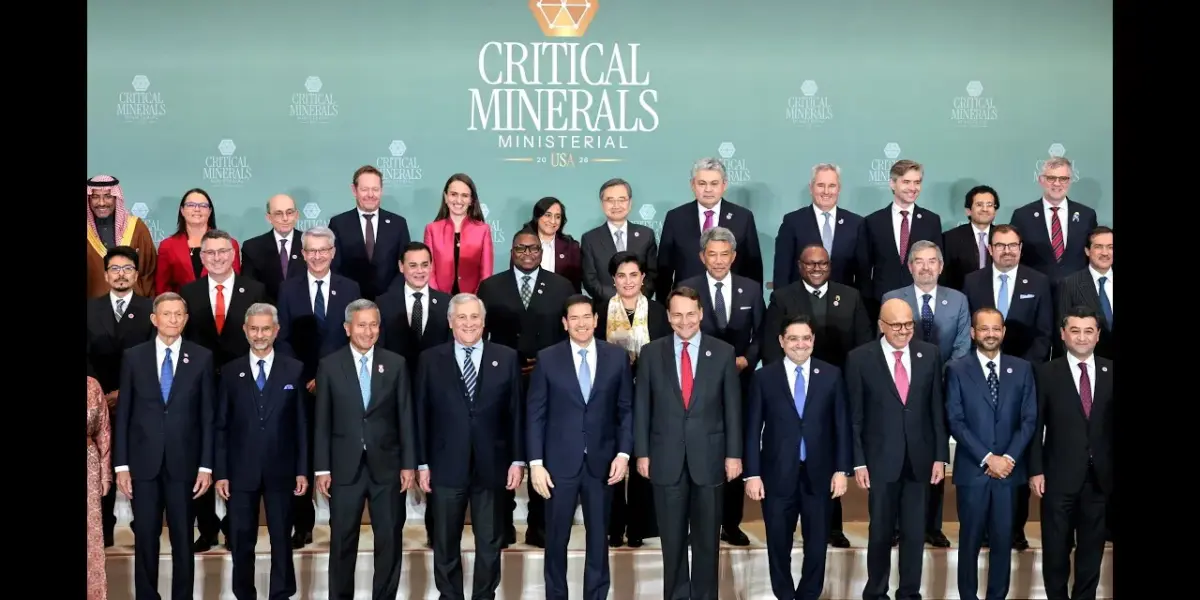
China’s Rare Earth Grip Fuels Global Security Fears
For years, China has quietly built a near-monopoly on rare earth minerals, the essential ingredients for modern technology. Now, as the world wakes up to this reality, concerns are growing about national security and economic independence. Investors and experts are calling for a change, but is it too late to break China’s powerful hold?
A Strategic Masterclass in Mineral Control
The control China exerts over rare earth minerals isn’t a recent development; it’s the result of a long-term strategy. Author Thomas Nowakowski, in his book Mineral War, argues that this focus on resource control is typical for totalitarian regimes. He points to historical examples like the Soviet Union, where massive industrial complexes were built to support military power and ensure regime security. These complexes require vast amounts of metals and minerals, making control over their supply a top priority.
Nowakowski identifies 17 key rare earth minerals. In some cases, China controls an astonishing 99% of the global production. This isn’t just about business; it’s about power. The Chinese Communist Party has even weaponized this control, enacting an Export Control Law in 2020. This law allows China to limit exports based on political disputes with other nations. Profits are secondary to strategic advantage.
People weren’t paying attention when China was doing all these things. We think in terms of sales and profit, and they think in terms of market share.
This perspective highlights a fundamental difference in approach. While Western nations often focus on quarterly profits and market share in the traditional sense, China prioritizes long-term strategic dominance. This means they are willing to forgo immediate financial gains to secure their global position and influence.
The Awakening: Investors Finally Take Notice
For years, the idea of investing in critical minerals outside of Chinese control seemed unappealing to many. Dave Martin, an advisor who worked with portfolio manager Thomas Nowakowski, recalls trying to convince investors to fund a critical metals fund that avoided Chinese investments. “5, 10 years ago, no one was interested,” Martin stated. “Now, it’s the hot topic in the financial markets.”
The shift in investor interest is dramatic. There’s a greater focus on metals now than there was even a year or two ago. This change is driven by a growing understanding of the risks associated with relying so heavily on a single source for these vital materials. It’s no longer just about financial returns; it’s about national security and the need for self-sufficiency.
Why This Matters: Beyond Technology
Rare earth minerals are not just buzzwords; they are fundamental to the technologies that define our modern world. These elements are crucial for everything from smartphones and electric car batteries to wind turbines and advanced defense systems. Without a stable and secure supply, nations face significant risks to their economic stability and military capabilities.
China’s dominance means it holds considerable leverage over countries that depend on these minerals. This leverage can be used to influence international relations, pressure trading partners, and gain strategic advantages. The weaponization of export controls, as seen with China’s 2020 law, demonstrates a willingness to use resource control as a geopolitical tool. This creates a precarious situation for nations trying to maintain their independence and technological edge.
Historical Context: The Long Game of Resource Control
The pursuit of resource control is a recurring theme throughout history. Nations have long recognized that controlling essential raw materials can translate into significant power. From ancient trade routes for spices and metals to the oil politics of the 20th century, securing access to vital resources has been a cornerstone of national strategy.
China’s approach to rare earth minerals can be seen as a modern manifestation of this historical reality. By strategically investing in mining, processing, and refining capabilities over decades, while other nations neglected these areas, China has positioned itself at the center of the global supply chain. This long-term vision, often overlooked by Western investors focused on short-term gains, has paid off handsomely in terms of geopolitical influence.
The Future Outlook: A Race for Independence
While the United States and other Western nations still lag significantly behind China in rare earth production, awareness is growing, and investment is increasing. There’s a renewed focus on domestic mining and exploration. Countries are beginning to look at the resources potentially sitting in their own backyards, resources that were previously uneconomical to extract or process due to Chinese competition.
The challenge is immense. Establishing new mines and processing facilities takes time and significant investment. Furthermore, China’s established infrastructure and expertise create a formidable barrier to entry. However, the shift in mindset, driven by national security concerns, is a crucial first step. The coming years will likely see a global effort to diversify supply chains and reduce dependence on any single nation for these critical materials, marking a new era in the strategic importance of minerals.
Source: China Controls 99 Percent of Global Rare Earths Production ‘In Some Cases’, Says Author (YouTube)

Related Articles


US Must Block China’s Tech Access for Security
US national security experts are raising alarms about China's access to advanced AI chips, arguing it threatens strategic advantages. This, coupled with charges against Chinese entities for fentanyl precursor sales and a ban on foreign routers, signals a growing effort to prioritize security over business ties.
Trump’s “Walk Away” Tactic Signals Tougher Stance on China
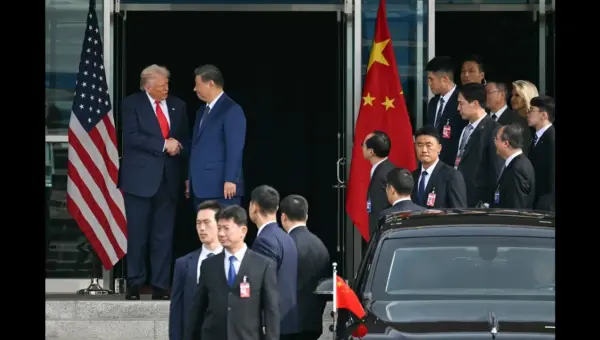
Retired Air Force Brigadier General David Stillwell believes President Trump's strategy of being willing to walk away from negotiations puts pressure on China. This tactic, combined with US global actions and strengthened alliances, signals a more assertive American foreign policy.

China Fights Back: Tariffs Loom Ahead of Trump Visit
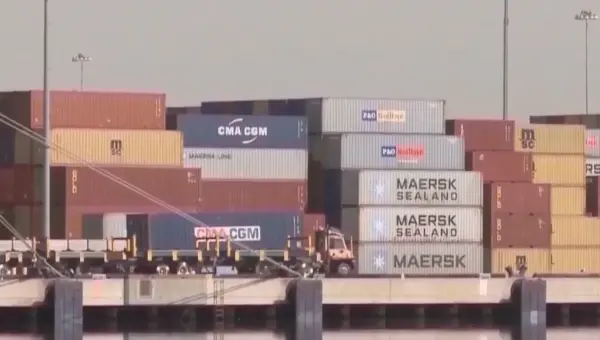
China is retaliating against US trade investigations that could lead to higher tariffs. This escalating trade tension occurs just before a planned visit by President Trump. The dispute involves accusations of unfair practices and impacts global supply chains.