Market Swings on Headlines, US Economy Faces Price Shocks
Geopolitical tensions and mixed economic signals are causing significant market volatility, leading to rapid price swings. Investors are advised to consider defensive sectors and assets poised for recovery amidst rising inflation and consumer costs.

Market Volatility Soars Amid Geopolitical Headwinds
The financial markets are currently experiencing significant swings, driven by a constant barrage of news headlines and mixed signals. Joseph Tanius, Chief Investment Strategist at Northern Trust Asset Management, describes the market as reacting “on a whim,” swayed by alternating waves of hopeful news about potential conflict resolution and stark reminders of ongoing tensions.
This choppy environment, characterized by two-way volatility, makes it challenging for investors to gauge the market’s true direction. The VIX, often called the fear index, has seen considerable movement, reflecting this uncertainty. While the broader market has shown signs of green on certain days, the month-to-date performance for some indices can still be negative, highlighting the difficulty in finding consistent gains.
Geopolitical Tensions Fuel Price Shocks
The ongoing geopolitical situation, particularly involving the U.S. and Iran, is a major factor contributing to market instability. Mixed messages regarding peace talks and the lack of a clear end to conflicts create an unpredictable backdrop. This uncertainty directly impacts energy prices, with higher oil prices posing a challenge to global economic growth.
However, the U.S. finds itself in a unique position as a net exporter of energy. Any signs of de-escalation or an “off-ramp” from international conflicts can lead to a bounce back in U.S. risk assets. This dynamic is partly responsible for the positive market reactions seen on days with encouraging news, even as broader economic concerns persist.
Economic Outlook: Inflation and Recession Risks
The U.S. economy is currently grappling with two primary challenges: inflationary price shocks stemming from tariffs and the more recent oil price shock. These factors are feeding into overall inflation, complicating the Federal Reserve’s efforts to manage the economy.
Despite these pressures, Tanius’s base case is that the U.S. economy will avoid a recession. The probability of a recession has been increased to 30%, but the presence of fiscal stimulus and an accommodative Federal Reserve, potentially signaling one rate cut, offer some support.
Consumer Costs Surge Amidst Fuel Price Hikes
A significant indicator of rising consumer costs is the dramatic increase in diesel prices. The average price of diesel fuel has jumped from $3.74 a gallon a month ago to $5.36 today. This surge is expected to be passed on to consumers through the supply chain, impacting household budgets.
This trend is also evident in other sectors. The U.S. Postal Service, for instance, is set to impose its first-ever 8% fuel surcharge on packages, directly linking delivery costs to the price of gasoline used by trucks and jets. Airlines are also facing higher operational costs due to increased fuel expenses.
Fed’s Stance on Inflation
The Federal Reserve faces a difficult task in controlling inflation when faced with external shocks like rising oil prices. However, as long as long-term inflation expectations remain anchored, the Fed is likely to look past these temporary price surges. The key for the central bank is to maintain confidence that inflation will eventually return to its target levels.
Investment Strategy in Volatile Times
In response to the current market dynamics and elevated volatility, Tanius suggests reducing exposure to emerging markets and leaning into assets poised for a sharp rebound once geopolitical conflicts subside. The United States, from a regional perspective, is seen as a key area for investment.
Specific areas recommended for exposure include infrastructure, natural resources, and real assets. These sectors have demonstrated resilience and performed well amidst the ongoing conflict. Their long-term impact on the economy suggests they should continue to benefit as the conflict’s effects ripple through global markets.
Defensive Sectors Offer Protection
When market volatility is high and expected to remain elevated, a shift towards more defensive sectors typically makes sense. Tanius favors consumer staples and utilities, sectors that tend to provide more protection during uncertain economic periods. These areas are less sensitive to economic downturns and offer more stable returns.
Conversely, consumer discretionary stocks, which sell non-essential goods and services, may be less attractive in the current environment. Investors are advised to consider sectors that offer stability and resilience in the face of economic headwinds and geopolitical uncertainty.
Market Impact
The current market is highly sensitive to geopolitical news, leading to rapid price swings. Higher energy prices are a significant concern, impacting inflation and consumer spending. The Federal Reserve faces a delicate balancing act, trying to curb inflation without derailing economic growth.
What Investors Should Know
Investors should be prepared for continued volatility. Focus on the long-term outlook and consider diversifying into sectors that offer stability, such as consumer staples and utilities, or those poised to benefit from recovery, like infrastructure and natural resources. Understanding the U.S.’s position as an energy exporter provides a nuanced view of how global energy shocks might affect domestic markets.
Source: The market is reacting on a whim, expert says (YouTube)

Related Articles


G7 Allies Clash Over Iran War Strategy, Urge Focus on Russia
G7 foreign ministers met in Paris, revealing deep divisions over the U.S. war with Iran. European allies urged the U.S. to pressure Russia, linking its actions to the conflict and fearing support for Ukraine will wane.

Iran Blocks China Ships, Exposing Beijing’s Weak Grip
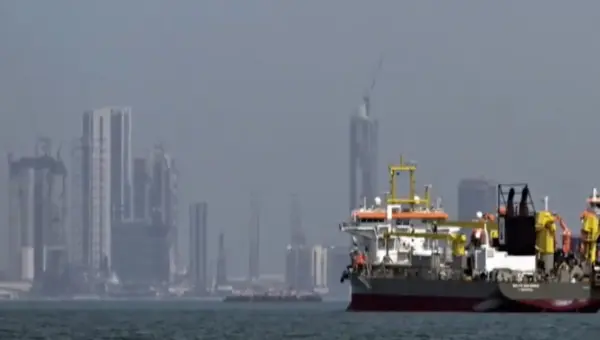
Iran's recent decision to block Chinese ships at the Strait of Hormuz is exposing the limits of Beijing's influence in the Middle East. This action is causing delays and cancellations for Chinese manufacturers, turning a perceived geopolitical win into an economic strain.
Trump’s “Walk Away” Tactic Signals Tougher Stance on China
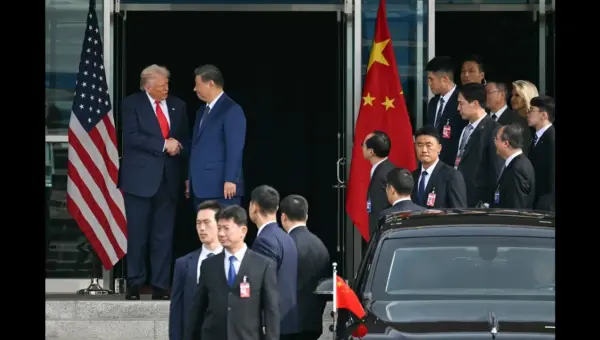
Retired Air Force Brigadier General David Stillwell believes President Trump's strategy of being willing to walk away from negotiations puts pressure on China. This tactic, combined with US global actions and strengthened alliances, signals a more assertive American foreign policy.