Trump’s War Talk & Court Tirade Stun GOP
Donald Trump recently delivered a speech where he discussed military operations in Iran, calling them "operations" to avoid needing congressional approval. He also launched a strong attack on the Supreme Court, labeling justices, including his own appointees, as "criminals."

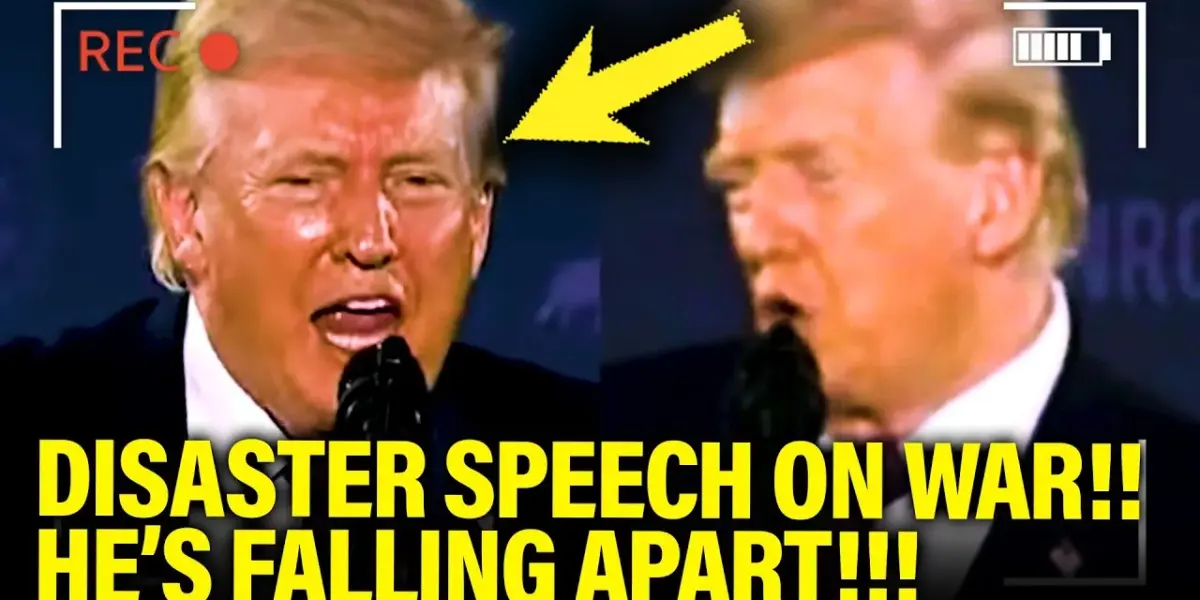
Trump’s War Talk & Court Tirade Stun GOP
During a recent speech to the National Republican Congressional Committee, Donald Trump made several striking statements about a military operation in Iran and the U.S. Supreme Court. His remarks have drawn significant attention and debate, highlighting a unique approach to political rhetoric and policy discussion.
Renaming Conflict for Authorization
Trump began by explaining his choice of words regarding the situation in Iran. “We can’t call the war in Iran a war because then I would need congressional authorization,” he stated. Instead, he opted to call it an “operation.” This distinction, he suggested, was to avoid the need for approval from Congress, a body that must formally declare war. He later elaborated, saying, “I won’t use the word war because they say if you use the word war, that’s maybe not a good thing to do. They don’t like the word war because you’re supposed to get approval.” He referred to the action as a “military decimation” but noted that some “don’t like the good publicity” or seeing the U.S. succeed.
Attacking the Supreme Court
The tone shifted dramatically as Trump turned his attention to the Supreme Court. He directly attacked the justices, including those he appointed, calling them “criminals.” His frustration seemed to stem from a specific court decision that he believes is costing the country “hundreds of billions.” He expressed anger that the court did not include a sentence in a ruling that would have prevented the repayment of money. “The Supreme Court didn’t want to put one little sentence that all money taken in up till this date doesn’t have to be paid back,” he lamented. He even stated that two justices he appointed “sicken” him because they are “bad for our country.”
Claims of Global Respect and Economic Strength
Earlier in his speech, Trump painted a picture of America’s renewed global standing. “We are the hottest country ever. Everybody loves the United States of America,” he declared. He contrasted this with a past where the country was “viewed as a joke” and “laughed at all over the world.” He also expressed surprise at the current state of the U.S. economy, expecting higher oil prices and a greater stock market impact from recent events. “I actually thought… when I went on to do something that for 47 years should have been done by any of the other presidents… I thought it was be much worse,” he said, referring to actions taken by his administration.
Criticism of Biden Administration
Trump also criticized the current administration, suggesting that under President Biden, energy costs and inflation would be much higher. “The cost of energy and electricity would be the highest ever, which it was prior to this administration,” he claimed. He also warned of rampant crime and other social issues if the current administration remained in power. He used strong language, calling it “woke lunacy and transgender for everybody.”
Bragging About Settling Wars and Financial Deals
The former president boasted about his administration’s accomplishments, including settling “eight wars” and being on the verge of winning another. He also mentioned securing significant financial commitments from Middle Eastern nations. “I came back with $2 trillion for our country. I came back with two trillion from Saudi, two trillion from Qatar, two trillion from UAE,” he stated, attributing these funds to a shift in alliances after recent regional events.
Support from Allies
The speech was met with strong support from some Republican lawmakers. Speaker Mike Johnson presented Trump with a newly created “America First Award,” calling him the “suitable and fitting recipient” and praising the “new golden era in America.” Johnson lauded Trump’s leadership, stating, “Promises made, promises kept. Donald, we did it.” He further claimed that the beginning of a second Trump administration would be “one of the most consequential of all time” and that Trump would be remembered as “clearly one of the greatest, if not the greatest presidents of all time.”
Historical Context and Presidential Power
Trump’s remarks on using the term “operation” instead of “war” touch upon a long-standing debate about executive authority versus congressional oversight in military actions. Presidents have historically used various terms to describe military engagements, sometimes to manage public perception or avoid requiring formal declarations of war. This practice has often led to scrutiny from those who believe it circumvents the constitutional role of Congress in authorizing military force. Trump’s direct criticism of the Supreme Court, especially justices he appointed, is also notable, as it goes against the traditional expectation of deference to the judicial branch, even from those who appoint judges.
Why This Matters
These statements are significant because they reveal Trump’s framing of complex foreign policy issues and his approach to the judicial system. His willingness to label military actions as “operations” to bypass Congress raises questions about constitutional boundaries. Furthermore, his open condemnation of the Supreme Court, particularly his own appointees, signals a potentially contentious relationship with the judiciary. The strong endorsement from Speaker Johnson also indicates a continued alignment between key Republican figures and Trump’s assertive political style. This dynamic is crucial for understanding the future direction of the Republican party and potential policy decisions should Trump return to office.
Implications and Future Outlook
Trump’s rhetoric suggests a presidency that would continue to challenge established norms in foreign policy and the separation of powers. The emphasis on executive action and direct confrontation with the judiciary could lead to increased political and legal friction. His focus on perceived economic successes and national strength, coupled with sharp criticism of opponents, remains a central theme. The strong backing from figures like Speaker Johnson suggests that this style of politics continues to resonate within a significant portion of the Republican base. Looking ahead, these themes are likely to remain prominent in political discourse, shaping debates about national security, economic policy, and the role of government institutions.
Source: Trump has PSYCHOTIC MELTDOWN over WAR in DISASTER SPEECH!!! (YouTube)

Related Articles
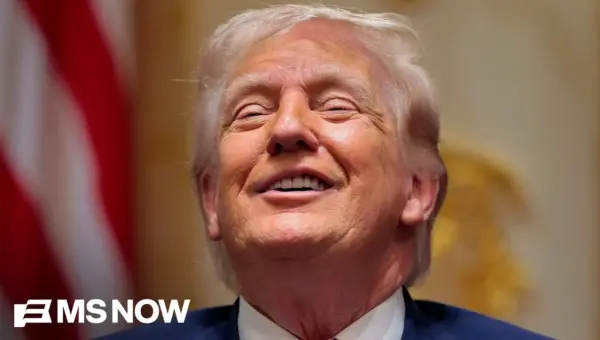
Trump’s Name Everywhere: A ‘Stain’ on GOP Legacy?
Former President Donald Trump's efforts to brand national symbols, including a proposed signature on dollar bills, spark debate. Critics view this as an authoritarian attempt to embed his legacy, potentially staining the Republican Party's history and contrasting with democratic ideals of public ownership.

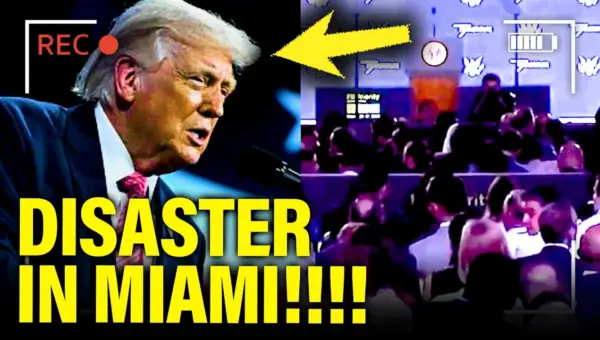
Trump’s War Talk Stuns Financial Crowd
Donald Trump's recent speech in Miami focused on his foreign policy, particularly his critical views on NATO and his vision for international relations. He declared the U.S. would no longer defend NATO allies, questioned the value of existing alliances, and suggested renaming the Strait of Hormuz. The speech also touched on his personal views of success, his allies, and his perceived role as a global peacemaker.
Trump’s Warpath: New Threats Signal Imperial Ambitions
Recent statements from Donald Trump reveal a potential embrace of increased military action and interventionist foreign policy. This approach, characterized by critics as "imperialism 2.0," contrasts with his past promises of peace and has even drawn criticism from parts of his own base. The implications for U.S. global engagement and domestic priorities are significant.