China Courts Vietnam: Is a Secret Southern Stronghold Brewing?
Three top Chinese ministers recently visited Vietnam, a move far beyond routine diplomacy. The inclusion of the Public Security Minister in a '3+3' strategic dialogue suggests China's focus is on security and internal stability, not just economics. This visit may signal Beijing's efforts to secure a strategic fallback position in southern China, bordering Vietnam, amid growing international pressure.

China Courts Vietnam: Is a Secret Southern Stronghold Brewing?
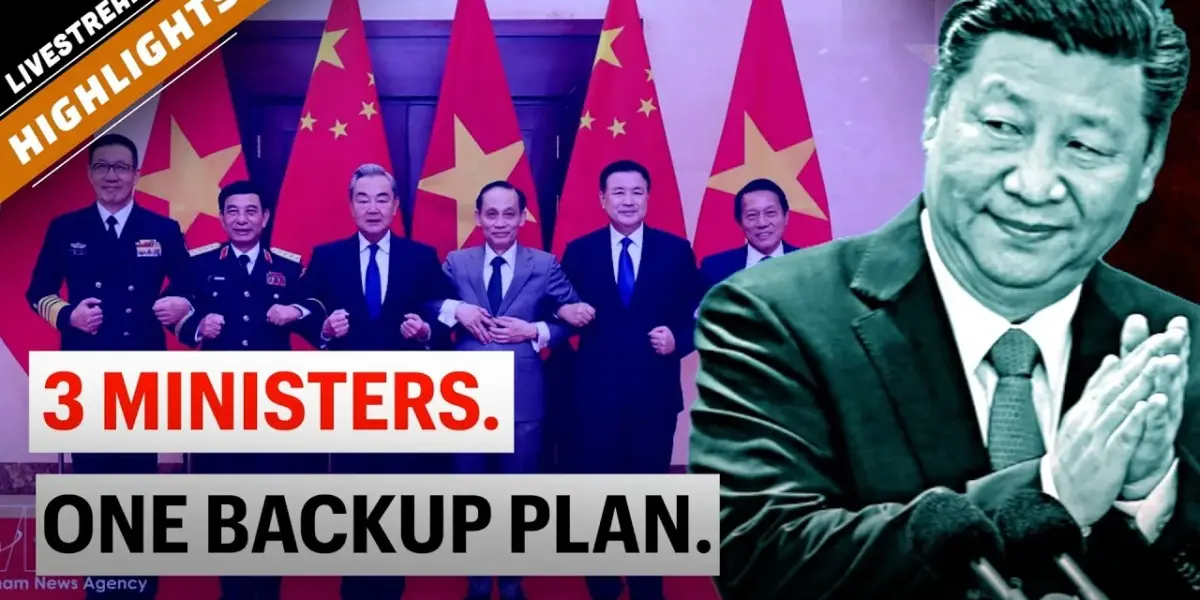
In mid-March, a highly unusual delegation from China traveled to Vietnam. This wasn’t just any diplomatic visit; it involved three of China’s most powerful ministers: Foreign Minister Wang Yi, Public Security Minister Wang Xiaohong, and Defense Minister Dong Jing. The fact that these three top officials visited together, immediately after China’s annual political meetings, signals that this was far from a routine trip. It was a clear message about China’s deepening strategic interests.
A Rare ‘3+3’ Meeting
The official announcement stated the visit was at Vietnam’s invitation to attend the first ministerial-level meeting of a new ‘China-Vietnam 3+3’ strategic dialogue. This format is notable because typically, international diplomacy involves a ‘2+2’ meeting, usually between foreign and defense ministers. China’s addition of a third pillar – public security – is what makes this meeting unique and expands its scope significantly.
The inclusion of the Public Security Minister, who oversees China’s police and domestic stability, is particularly striking. This role is usually focused on internal matters, not foreign relations at this high level. The meeting’s expanded focus now touches upon intelligence sharing, maintaining internal stability, border control, and even regime security – issues that go beyond traditional state-to-state interactions.
Why Public Security Matters
The presence of the Public Security Minister suggests potential concerns about counter-intelligence, leaks, or defections. It could also address cross-border issues like telecom fraud and fugitive tracking. Some analysts even suggest the inclusion of a protocol officer, who isn’t strictly necessary for such high-level visits, might indicate preparations for future top leader meetings, possibly involving Chinese President Xi Jinping himself.
Not About Business Deals
Interestingly, the delegation did not include any high-ranking economic officials, despite the significant trade volume between China and Vietnam. This absence points to the visit’s true priorities: security, geopolitics, and strategic alignment, rather than economic cooperation or trade agreements. The focus was clearly on building stronger ties in sensitive areas.
China’s Growing Isolation
The timing and nature of this visit can be understood within the broader context of China’s international relations. President Xi Jinping has faced diplomatic challenges in the West and has seen some traditional allies drift away. This has led to a perception of China becoming more isolated on the global stage. In this situation, China is turning to ideological neighbors like Vietnam, a fellow communist state, to strengthen its position and avoid appearing completely alone.
A Southern Fallback?
More speculative, but intriguing, whispers suggest a deeper motive: China might be quietly preparing a strategic fallback position in its southern Guangxi province, which borders Vietnam. This idea posits that if Beijing faces political instability, loss of control, or even wartime retreat, Xi Jinping could move south to continue leading from Guangxi. Vietnam’s cooperation would be critical in such a scenario, making securing Vietnamese support a key objective.
Several details fuel this speculation. Xi Jinping has reportedly visited Guangxi more often than his predecessors. Furthermore, Guangxi has recently seen massive infrastructure development, including state-of-the-art organ transplant hospitals. While unusual, these developments, alongside new canals, rail links to Vietnam, port clusters, logistics hubs, and enhanced border surveillance, paint a picture of Guangxi becoming a strategic southern gateway and potential command center.
Geopolitical and Strategic Advantages
Even setting aside the more extreme fallback scenarios, the Guangxi-Vietnam region holds significant strategic value for Beijing. It sits next to the Gulf of Tonkin, offering a crucial area for China if tensions rise in the South China Sea. Guangxi’s inland location also makes it less vulnerable than coastal cities like Shanghai in the event of a conflict. This region could serve as a secondary power center and a vital logistics corridor through Vietnam to Southeast Asia.
A Strategic Signal
When viewed through this lens, the high-level delegation to Vietnam, including the public security chief, makes strategic sense. It suggests Beijing is actively seeking alignment with Vietnam on security matters. While China presented a comprehensive security and diplomatic package, Vietnam’s response, as often seen in its foreign policy, has been one of cautious engagement, maintaining its boundaries and insisting on international norms.
Why This Matters
This high-profile visit and the underlying strategic considerations highlight a critical trend: China’s increasing focus on securing its flanks and building alliances in its immediate neighborhood as global pressures mount. The potential development of Guangxi as a strategic southern hub, with Vietnam’s tacit or explicit cooperation, could significantly alter regional security dynamics. It signals Beijing’s proactive approach to maintaining stability and control, even under challenging international circumstances. Vietnam’s careful balancing act between its powerful neighbor and international principles will be crucial in shaping this evolving relationship.
Implications and Future Outlook
The strategic alignment sought by China suggests a long-term vision for regional security and influence. The emphasis on public security indicates a growing concern for internal stability and control, both within China and in neighboring countries. For Vietnam, this presents a complex challenge: how to benefit from its relationship with China while safeguarding its own sovereignty and navigating international expectations. The future will likely see continued efforts by China to deepen these security ties, met with Vietnam’s characteristic pragmatism and cautious diplomacy. The infrastructure developments in Guangxi will bear close watching as potential indicators of Beijing’s strategic planning.
Historical Context
China and Vietnam share a long history, including periods of close alliance and conflict. Both are one-party communist states, a shared political system that has historically facilitated certain types of cooperation. However, Vietnam has also historically maintained a strong sense of independence and has navigated its relationship with China with caution, often balancing its ties with Beijing against those with other global powers like the United States. This visit can be seen as a modern iteration of this complex, long-standing relationship, driven by contemporary geopolitical shifts.
Source: Why China’s Vietnam Move May Be About More Than Diplomacy (YouTube)

Related Articles

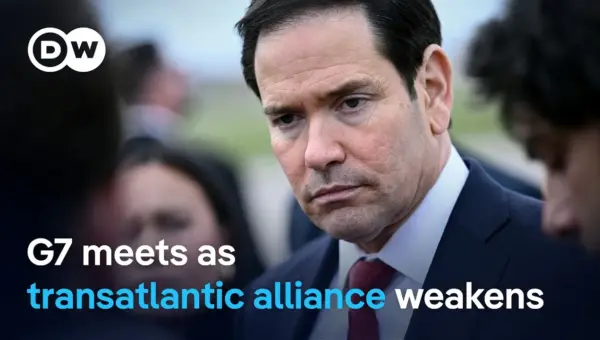
G7 Allies Clash Over Iran War Strategy, Urge Focus on Russia
G7 foreign ministers met in Paris, revealing deep divisions over the U.S. war with Iran. European allies urged the U.S. to pressure Russia, linking its actions to the conflict and fearing support for Ukraine will wane.


US Must Block China’s Tech Access for Security
US national security experts are raising alarms about China's access to advanced AI chips, arguing it threatens strategic advantages. This, coupled with charges against Chinese entities for fentanyl precursor sales and a ban on foreign routers, signals a growing effort to prioritize security over business ties.
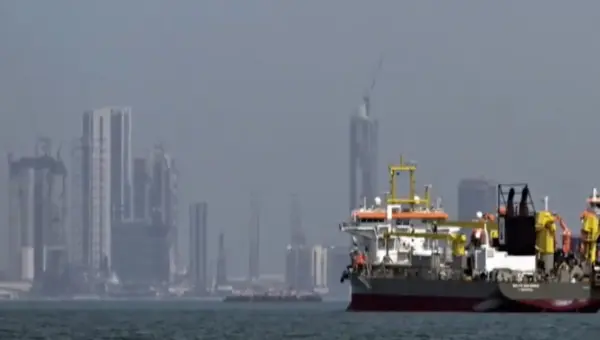
Iran Blocks China Ships, Exposing Beijing’s Weak Grip
Iran's recent decision to block Chinese ships at the Strait of Hormuz is exposing the limits of Beijing's influence in the Middle East. This action is causing delays and cancellations for Chinese manufacturers, turning a perceived geopolitical win into an economic strain.