Noem’s $220M Ad Spree Sparks Questions Over Spending
Questions swirl around Kristi Noem's $220 million ad campaign after financial filings revealed unusual spending. A no-bid contract, a signing bonus, and payments to a barrel racer have raised concerns about transparency and accountability in how the funds were used.

Noem’s $220M Ad Spree Sparks Questions Over Spending
Former Homeland Security Secretary Kristi Noem recently spent $220 million on a large ad campaign. This spending has raised serious questions about how the money was used. Noem claims former President Trump approved the campaign, but Trump denies knowing anything about it. Since both individuals have been known to stretch the truth, it’s difficult to know who is telling the truth.
Unpacking the Spending Details
For a long time, there was no clear breakdown of where this $220 million went. However, new financial filings recently released to The Daily Beast have shed some light on specific expenses. While not every detail is public, we now know about some of the costs involved in Noem’s extensive media push.
One notable expense involved thousands of dollars spent on makeup. This was reportedly for events and appearances Noem made over the past year. These costs, while perhaps not the largest, add to the public’s curiosity about the campaign’s overall budget.
A No-Bid Contract and a Signing Bonus
The advertising campaign was handled by an Ohio-based political consulting firm called The Strategy Group. This firm received a contract without competitive bidding. The firm was led by Ben Yoho, who is married to Trisha McLoughlin. McLoughlin previously served as Noem’s spokeswoman at the Department of Homeland Security.
The CEO of The Strategy Group told senators that the firm built Safe America Media. This involved production services for 45 video ads and six radio spots. The total cost for these services came to $286,137. Adding to the unusual nature of the contract, The Strategy Group also received a $60,000 signing bonus.
A signing bonus is typically given to professional athletes when they sign a new contract. It is not common practice for government contracts or services. For example, when hiring a contractor to fix your roof, you wouldn’t offer an extra payment just for choosing them. This bonus, in a no-bid contract, has led to speculation and accusations of potential impropriety, with some suggesting it resembles a bribe or kickback.
Unusual Payments to a Barrel Racer
Another line item that has drawn attention is a $20,000 payment made to Jill Moody. Moody is a barrel racer from South Dakota. She has won the reserve world championship twice. Her horse has also earned significant prize money, over $260,000 in a single competition.
The connection between a barrel racer and a $220 million ad campaign is not immediately clear. The transcript does not explain why this payment was made or what services, if any, Ms. Moody provided. This specific payment adds another layer of mystery to the overall spending of the ad campaign.
Why This Matters
The spending of public funds, especially in large amounts, requires transparency and accountability. When contracts are awarded without competition and unusual bonuses are given, it erodes public trust. Citizens have a right to know how their tax dollars are being spent and to be assured that the money is used efficiently and ethically.
The lack of clear explanations for these expenditures raises concerns about potential waste or misuse of funds. The appearance of favoritism, such as awarding a no-bid contract to a firm connected to a former employee’s spouse, also invites scrutiny. These kinds of financial dealings can create the impression that decisions are not based on merit but on personal connections.
Implications and Future Outlook
This situation highlights the ongoing need for strong oversight in government spending. It suggests that even in campaigns promoted as beneficial for public awareness, the details of financial transactions can be opaque. The scrutiny faced by Noem could lead to increased demands for more detailed reporting on political advertising budgets in the future.
Moving forward, voters and watchdog groups will likely pay closer attention to how similar campaigns are funded and managed. The public expects clarity and justification for large expenditures, especially when they involve public figures and potentially public money. The controversy surrounding this $220 million ad campaign serves as a reminder that transparency is key to maintaining public confidence in government operations.
Historical Context
Large-scale government advertising campaigns are not new. They have often been used to promote public health initiatives, national security messages, or policy changes. However, the scale of this particular campaign and the questions surrounding its funding and execution make it stand out.
Political advertising itself has become a massive industry. The strategies and costs involved have grown significantly over the decades. This case, involving a substantial sum and allegations of questionable contract practices, fits into a broader history of debates about campaign finance and the effectiveness of political messaging funded by large budgets.
Source: Kristi Noem's spending spree EXPOSED (YouTube)

Related Articles
Idaho Protects Victims’ Dignity, Sparks National Debate
Idaho has enacted a new law to shield victims' families from graphic crime scene photos, prioritizing dignity over public access. This move, driven by personal tragedy and advocacy, aims to prevent re-traumatization and is sparking calls for similar protections nationwide.

NJ Cops Can’t Hide Faces: New Mask Ban Sparks Debate
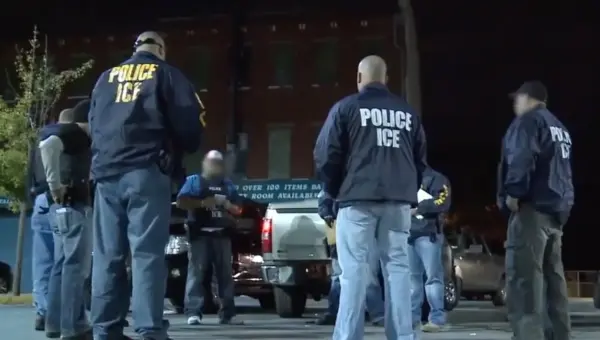
New Jersey has banned law enforcement officers, including ICE agents, from wearing masks on duty. The new law also requires officers to show ID before arrests. This move aims to boost transparency but raises safety concerns for officers and sparks debate with federal agencies.
Trump’s Cabinet Meeting: A Glimpse into White House Decision-Making
President Trump's March 26 cabinet meeting, broadcast live, offered a rare glimpse into White House decision-making. Such meetings are crucial for understanding policy coordination and presidential leadership. The trend towards transparency in government operations is becoming more pronounced.