Iran Rejects US Ceasefire, Offers Counter-Proposal Amid Escalating Conflict
Iran has rejected a US ceasefire proposal and issued its own counter-offer, demanding guarantees against future wars and control over the Strait of Hormuz. Amid escalating missile and drone attacks from Iran and increased US troop deployments, diplomatic solutions appear distant, complicated by deep-seated mistrust and conflicting strategic goals.

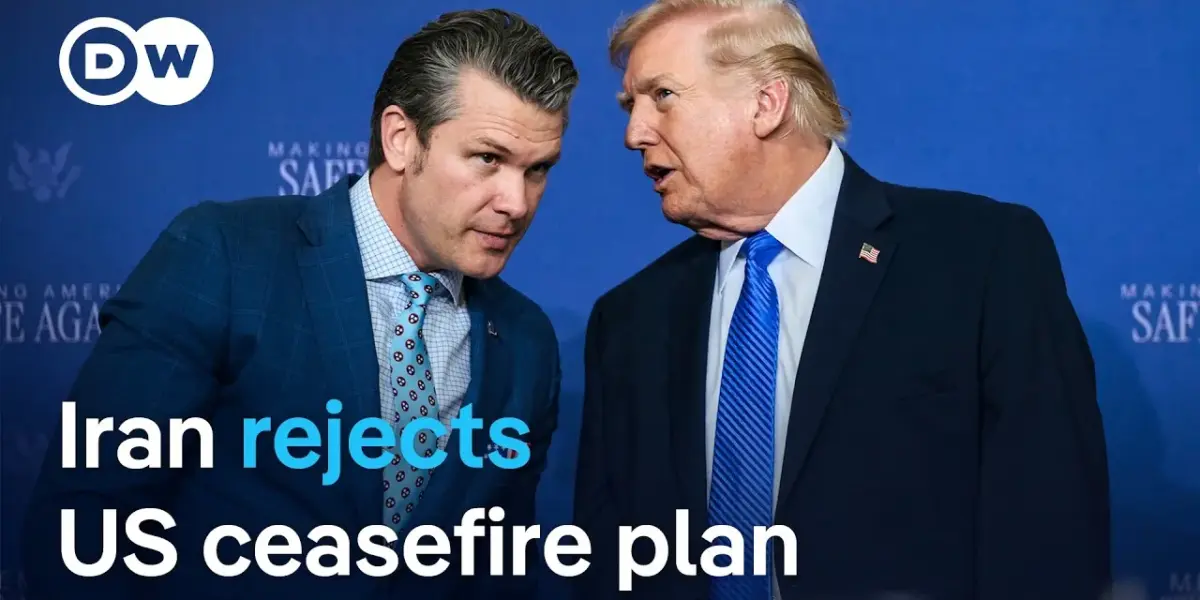
Iran Delivers Counter-Offer Amid Ongoing Conflict
Iran has rejected a United States ceasefire proposal aimed at ending the ongoing war, instead presenting its own counter-offer. The proposal includes demands for an end to the assassination of its leaders, guarantees against future wars, reparations, and recognized control over the Strait of Hormuz. Despite these diplomatic efforts, fighting continues on multiple fronts, with Iran launching new missile and drone attacks against Israel and Gulf states.
US Reinforces Military Presence
In response to the escalating conflict, the United States is increasing its military presence in the region. Thousands of additional troops, including elements of the elite 82nd Airborne Division, are being deployed to supplement the approximately 50,000 troops already stationed in the area. Military experts suggest these airborne troops could be used for offensive operations, such as attacking airfields or islands in the Persian Gulf.
US Goals and Iran’s Stance
Pakistani officials, who delivered the US plan to Iran, outlined Washington’s objectives. These include curbing Iran’s nuclear program, limiting its ballistic missile capabilities, ending its support for regional militias, and stabilizing shipping through the Strait of Hormuz. In return, the US has offered to lift sanctions and cooperate on civilian nuclear power. However, Iran has shown little interest in these negotiations, with officials stating that nothing will return to the way it was until the idea of acting against the Iranian nation is completely removed from perceived adversaries’ minds.
Escalating Attacks and Regional Impact
The conflict has seen direct attacks in the region. In Kuwait City, an Iranian drone reportedly destroyed a fuel tank at the international airport. In Tel Aviv, an Iranian strike penetrated Israel’s Iron Dome missile defense system, causing damage to apartments. These events highlight the widening scope of the conflict and the potential for further escalation.
Historical Mistrust and Diplomatic Hurdles
Historians and analysts point to a deep-seated mistrust between the US and Iran as a major obstacle to peace. Iran has reason to be wary, citing the US withdrawal from the 2015 nuclear deal under the Trump administration and the initiation of bombing campaigns during ongoing negotiations. This history makes Iran question the sincerity of any US proposals.
“The Iranians have good reason to suspect that attempts to negotiate by the Trump administration are a ruse perhaps meant to buy time so that forces can flow into the region in preparation potentially for an action on the ground with US troops.”
– Steven Worerheim, Historian of US Foreign Policy
The Impact of US Domestic Politics
The toxicity of US political discourse surrounding Iran has, in hindsight, made war almost inevitable, according to some analysts. The perception of Iran as a bogeyman in American politics has made it difficult to reach a reasonable deal. The failure of the 2015 nuclear deal, which was effective on its own terms but faltered due to US political opposition, serves as a stark example of how domestic issues can derail diplomatic progress.
Seeking an “Off-Ramp” for Conflict
Finding a path to de-escalation, or an “off-ramp,” remains challenging. Iran’s priority is to re-establish deterrence, ensuring that further attacks will not occur. The US, under the Trump administration, has a history of not concluding lasting deals, despite rhetoric to the contrary. Some experts believe the most likely off-ramp might come if President Trump decides the conflict has reached its limit and seeks to claim victory, urging Israel to cease hostilities.
Israel’s Role and US Leverage
The role of Israel in any potential de-escalation is a critical question. While the US possesses significant leverage over the Israeli government, particularly concerning Prime Minister Netanyahu’s upcoming re-election campaign, there is no guarantee that Israel will adhere to a US decision to halt the war. US support, including aerial refueling and air defense, gives Washington considerable influence, but Israeli actions could still disrupt any progress.
American Public Opinion and Presidential Strategy
Polls suggest a majority of Americans oppose the war, a sentiment that historically would constrain a president with low approval ratings. However, it is unclear if President Trump is responsive to this public opinion, with some suggesting his focus is on historical legacy rather than immediate domestic concerns. Global markets have also behaved as if the war will end soon, potentially influencing the administration’s decisions.
Iran’s Maximalist Demands and Regional Control
Iran’s counter-proposal includes demands for the complete removal of US bases from the region and a system for controlling passage through the Strait of Hormuz, similar to existing arrangements for the Suez Canal. They also seek a security structure involving only Iran and neighboring countries to manage trade. These demands are seen as even more maximalist than those presented during previous nuclear negotiations.
Strategic Objectives and Potential Escalation
Analysts debate the clear strategy behind the US military actions. Some suggest the administration operates more on instinct than careful planning, leading to a strategy being developed as the conflict unfolds. Potential US objectives range from regime change in Iran to a significant degradation of its military capabilities, or pushing Iran back to negotiations. The possibility of a US ground operation, possibly targeting islands critical to Iran’s oil sector, remains a concern, suggesting further escalation is possible.
The Gamble of Containment
If regime change is not achieved, the US and Israel may revert to a strategy of forceful containment. This approach requires a credible ability to deter Iranian retaliation and prevent escalation into full-scale war. However, with regime change on the table and a heavy campaign against Iran, the country may have less to lose, making containment more complicated and the situation a high-risk gamble.
Iran’s Position: Survival vs. Damage
Iran’s stronger position lies in its willingness to endure damage to its country and people to ensure the survival of its regime. In asymmetric warfare, survival is key, and Iran can potentially sustain the conflict for a considerable time due to its lower sensitivity to damage compared to its adversaries. While the damage to Iran’s capacity is enormous, its focus on regime survival could allow it to continue the fight, especially with the disruption of the Strait of Hormuz.
The Path to a Truce
While a diplomatic agreement seems distant, a scenario where Iran opts to limit damage and seek a deal is not impossible. The Iranian regime, potentially fearing further destruction and seeking to cut a deal, might adopt a pragmatic approach seen in the past when faced with the threat of force. However, the influence of hardliners, particularly within the Revolutionary Guard, could also lead to a prolonged conflict, drawing parallels to the Iran-Iraq War. The opacity surrounding the Iranian regime’s decision-making makes predicting the outcome difficult.
Source: US-Iran ceasefire: What's in Iran's counter proposal? | DW News (YouTube)

Related Articles


Iran Targets US With Cyberattacks, Escalating Digital Warfare
Iran is increasingly using cyberattacks to challenge the U.S., as seen in a recent hack of the FBI director's account. Experts say this is a strategic shift due to Iran's limitations in conventional warfare. The U.S. needs to strengthen its digital defenses, focusing on encryption and cloud computing, rather than solely relying on traditional security measures.


Iran Hacks FBI Chief, Exposing U.S. Cyber Vulnerabilities
A recent hack of FBI Director Kash Patel's personal email by an Iran-linked group highlights Iran's growing cyber threat to the U.S. Experts explain how simple security oversights are exploited, emphasizing the need for basic defenses like two-factor authentication to protect against propaganda and potential infrastructure attacks.

Trump Halts Iran Strikes Amid Stalled Diplomacy
President Trump announced a pause on planned strikes against Iran, citing productive talks, though Iran denies negotiations occurred. Reports also suggest a potential U.S. ground operation on Iran's Hark Island. The situation raises concerns about international support for Ukraine and potential shifts in U.S. foreign policy.