Nvidia’s New Chips Fuel AI Agent Boom, Eye $10 Trillion
Nvidia's new Vera Rubin AI platform, featuring specialized chips like the Grok LPU, is poised to revolutionize AI processing for autonomous agents. This innovation is expected to drive massive data center spending and solidify Nvidia's position as a potential $10 trillion company.

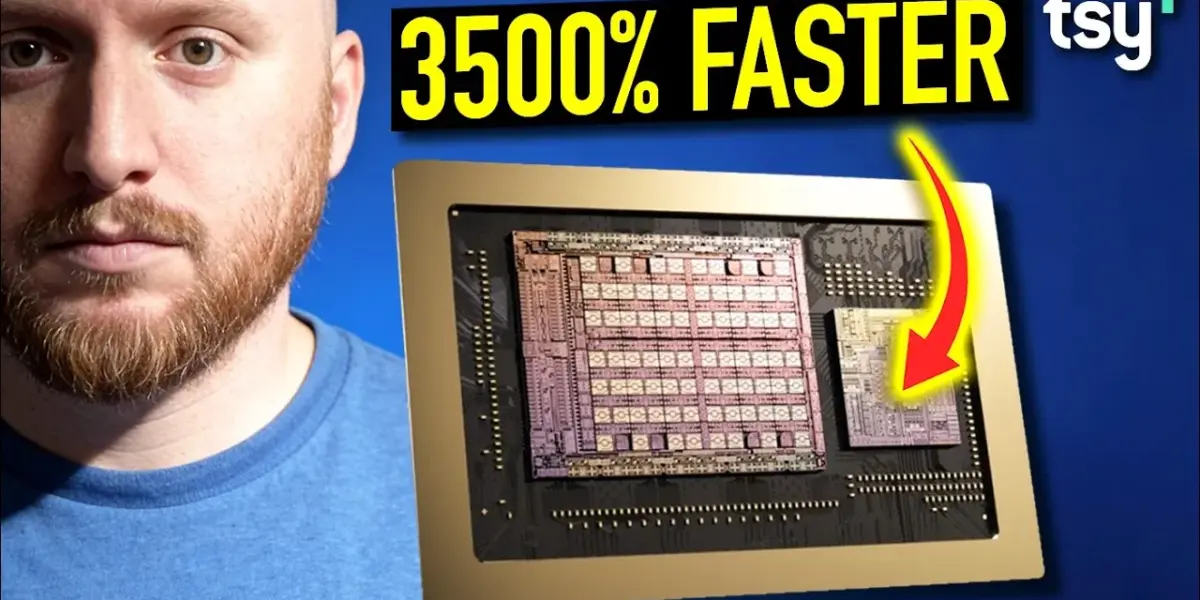
Nvidia’s GTC Unveils New AI Architecture, Fueling Agent Growth
Nvidia may be on the cusp of a major market revaluation, with one analyst predicting it could become the world’s first $10 trillion company. This bold forecast stems not just from Nvidia’s latest hardware, but from a fundamental shift in how artificial intelligence is being used. The company’s recent GTC conference showcased a new platform, codenamed “Vera Rubin,” which is designed to handle the increasing demands of AI agents. These agents are more complex than simple chatbots, performing tasks like browsing the web, writing code, and processing vast amounts of information.
The Vera Rubin platform represents a significant departure from Nvidia’s previous “Blackwell” architecture. It introduces new approaches to networking, memory, and computing power. This innovation is crucial because AI models are no longer trained once and then left alone. They are continuously updated and refined. Furthermore, AI workloads are evolving from short text exchanges to autonomous agents that require much more processing power and speed. These agents can consume thousands of times more data than typical chat prompts.
Vera Rubin: A New Foundation for AI
Nvidia announced seven new chips as part of the Vera Rubin platform. Among these, the Vera Rubin GPU stands out. It features a new “transformer engine” that significantly boosts performance for AI tasks. This GPU offers about five times the performance for generating AI responses, known as inference. It also provides 3.5 times better performance for training AI models. Importantly, it reduces the cost of processing AI data, or tokens, by over 90%.
Complementing the GPU is the Vera Rubin CPU. This processor is built on ARM technology and includes 88 custom cores. Its job is to handle complex tasks that GPUs are not best suited for, such as managing different AI processes, making decisions, and preparing data. The Vera CPU also offers significantly more memory capacity and faster connections to the GPUs compared to previous models. It introduces enhanced security features as well, highlighting the evolving role of CPUs in AI systems.
Grok and Bluefield: Innovations in AI Processing
Perhaps the most surprising innovations lie in the Grok 3 LPU (Language Processing Unit) and the Bluefield 4 DPU (Data Processing Unit). The Grok 3 chip is not a GPU but a specialized unit designed for language processing. Nvidia acquired Grok’s technology and engineering team rapidly, integrating the Grok 3 LPU into its systems in under a year. This LPU utilizes 500 megabytes of SRAM, a type of very fast, on-chip memory. This allows it to process AI language tasks with extremely low delays, a critical factor for AI agents.
This contrasts with the Vera Rubin GPU, which uses High Bandwidth Memory (HBM), a type of DRAM. While HBM offers much larger storage, SRAM provides faster and more predictable access for specific tasks. Nvidia’s strategy appears to be using Grok LPUs for the decode phase of AI inference, while Rubin GPUs handle training and other processing steps. This specialized approach is expected to deliver up to 35 times higher inference performance per watt and significantly increase revenue potential per server rack.
The Bluefield 4 DPU acts as the connective tissue for these new systems. It manages data flow and network traffic within the AI compute trays. DPUs like Bluefield 4 offload these networking and data management tasks from the GPUs and CPUs, allowing them to focus solely on AI computations. This ensures that the entire system runs more efficiently, especially when handling large amounts of data for AI agents with extensive memory needs.
Market Impact and Investor Outlook
The implications for data center spending are substantial. Instead of slowing down as some analysts predict, spending is expected to accelerate. Nvidia’s new architecture is designed to maximize the number of useful data tokens produced per unit of power and cost. This makes deploying advanced AI agents economically viable at a large scale.
Nvidia is not just focusing on chips; it is building a comprehensive AI ecosystem. This includes software like Nemo Claw, which makes open-source AI agents like OpenClaw safer and more manageable for businesses. OpenClaw, capable of running millions of data tokens, represents a massive potential driver for demand. The company is also making significant strides in physical AI, with advancements in robotics and autonomous vehicles.
Humanoid robots are already being deployed in logistics warehouses, trained on Nvidia’s Isaac and Cosmos platforms. Similarly, Nvidia’s AI technology is powering self-driving cars, with partnerships like the one with Uber set to roll out robo-taxis in major cities. These applications, from AI agents to robots and autonomous vehicles, all feed back into Nvidia’s data center infrastructure, creating a powerful, self-reinforcing growth cycle.
For investors, this suggests that Nvidia is strategically positioning itself at the core of the AI revolution. The company is moving beyond selling individual components to offering integrated hardware and software solutions across various AI applications. This broad reach and deep integration into the AI economy are key factors driving the optimistic $10 trillion market cap projection.
What Investors Should Know
- Evolving AI Workloads: AI is shifting from simple tasks to complex, autonomous agents that require specialized hardware for efficient operation.
- Vera Rubin Platform: This new architecture is designed for high-volume, low-latency AI inference, crucial for AI agents and significantly more cost-effective.
- Grok LPU Integration: The rapid incorporation of Grok’s specialized language processing technology provides a substantial boost in AI inference performance and efficiency.
- Bluefield DPU’s Role: Data Processing Units are essential for managing the complex data flow in advanced AI systems, enhancing overall performance.
- Physical AI Expansion: Nvidia’s push into robotics and autonomous vehicles opens up new, large markets for its AI hardware and software.
- Data Center Spending: Contrary to some predictions, demand for AI processing power is expected to surge, driving significant data center investments.
Understanding the technical advancements and their application in real-world scenarios, like AI agents and autonomous systems, is key to appreciating Nvidia’s long-term potential. The company’s strategy of embedding itself deeply within the AI value chain suggests a sustained period of growth and market leadership.
Source: GET IN EARLY! I'm Investing In This Breakthrough AI Chip (YouTube)

Related Articles


US Must Block China’s Tech Access for Security
US national security experts are raising alarms about China's access to advanced AI chips, arguing it threatens strategic advantages. This, coupled with charges against Chinese entities for fentanyl precursor sales and a ban on foreign routers, signals a growing effort to prioritize security over business ties.


AI Giants Eye Farmland, Farmers Stand Firm on Heritage
A Kentucky family rejected a $26 million offer from an AI company for their 1200 acres of generational farmland. The family prioritized their nearly 200-year heritage and commitment to feeding the nation over the lucrative deal. This decision highlights a growing tension between the tech industry's demand for data center space and the preservation of agricultural lands.

Arm Launches First AI Chip, Meta Leads Charge
Arm, known for its chip designs in smartphones, has launched its first in-house AI chip, the Arm AGI, with Meta as its initial customer. This move challenges established chip makers by offering a power-efficient, high-performance solution for the growing AI market. The company aims to provide greater choice and competition in the critical AI hardware sector.