Why Trump’s Iran Peace Plan Sparks Global Doubt
Conflicting statements from the U.S. and Iran regarding a peace plan create global uncertainty. Professor Justin Wolfers discusses the impact of this "Baghdad Bob"-like communication style on markets and America's global standing. He also weighs in on potential insider trading and the real economic consequences of oil price volatility.

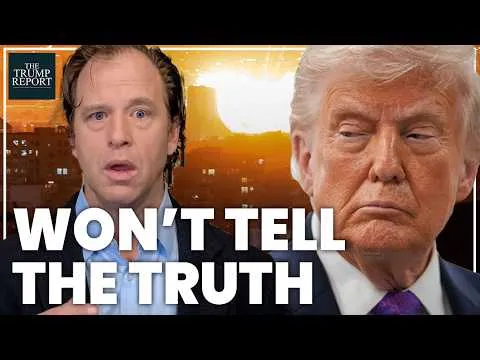
Trump’s Iran Peace Plan: A Fog of Uncertainty
The world is watching closely as former President Donald Trump announced a 15-point peace plan for Iran, claiming the country is eager for a deal. However, Iran has pushed back, stating the U.S. is negotiating with itself and trying to present defeat as an agreement. Pakistani officials, acting as mediators, have confirmed the plan was delivered to Iran, but much remains unclear.
This situation highlights a confusing communication style where both sides seem to be talking to their own supporters rather than engaging in genuine diplomacy. It leaves many, including economists and journalists, struggling to grasp the reality of the situation.
Baghdad Bob and the Blurring of Truth
The uncertainty surrounding the Iran situation brings to mind the figure of “Baghdad Bob,” a former Iraqi information minister known for making pronouncements wildly out of touch with reality during the Iraq War. Professor Justin Wolfers, an economics and public policy expert from the University of Michigan, points out a disturbing parallel.
Wolfers explains that it’s difficult to tell what’s real and what’s not coming out of Washington. He recalls early statements where Trump claimed to be talking with Iranians, only for Iran to deny any contact. This creates a profound question: who should we believe about the U.S. government’s actions – the American president or the Iranian leadership?
“The financial markets are willing to say there’s a substantial chance that the Americans were lying and the Iranians were telling the truth.”
This confusion, Wolfers suggests, is like having “Baghdad Bobs on all sides.” When truth becomes a casualty, it undermines America’s position on the world stage. While the U.S. has greater military power, Iran has the ability to inflict pain, particularly through oil markets, which can force a retreat.
The President’s Temperament: A Wildcard in Geopolitics
Wolfers argues that a president who avoids discussing pain or admitting its existence weakens America’s bargaining power. He notes that when things important to Trump, like the stock market or his popularity, are threatened, he tends to look for an “off-ramp,” a way to de-escalate.
The current high gas prices in the U.S. are a major concern for the public, especially given promises of avoiding unnecessary foreign wars and prioritizing “America First.” This political pressure makes it harder for the president to continue aggressive action, giving Iran leverage.
Market Volatility and Suspicions of Insider Trading
The volatile oil market has also seen unusual activity. Before Trump announced he would postpone strikes on power plants, over half a billion dollars was bet on oil markets, and the S&P 500 also saw a spike. After the announcement, oil prices dropped significantly.
Wolfers, however, views these claims of widespread insider trading as likely overblown. He compares it to a monkey typing Shakespeare – just because a pattern appears doesn’t mean it was intentional or understood. He suggests that with so many markets and possibilities, it’s easy to find statistical noise that looks suspicious.
He points out that if people were selling billions of dollars worth of stock and oil futures, why wouldn’t that also be considered noteworthy? Wolfers believes that serious, rigorous analysis hasn’t been done to prove insider trading in this specific instance. Instead, he suggests these stories are often sensationalized to sell news.
Corruption vs. Insider Trading: A Clearer Picture
While dismissing immediate insider trading claims, Wolfers doesn’t shy away from discussing other potential issues. He raises concerns about conflicts of interest, such as Jared Kushner’s significant investments in the Middle East while also being involved in peace negotiations.
He also questions the immense wealth of 19-year-olds, particularly in areas like cryptocurrency, suggesting that corruption might be more visible and less requiring of statistical analysis than insider trading.
The Long Road to Recovery: Oil Markets and Global Economy
Even if a peace agreement were reached tomorrow, restarting oil production would not be immediate. Iran has been producing oil on the side of the Strait of Hormuz where customers are not located, leading to full storage. Restarting production and then transporting the oil globally could take months.
Beyond the direct oil supply, the geopolitical landscape has shifted. Businesses will likely continue to seek alternatives to fossil fuels, similar to the changes seen after the 1970s oil shocks. The knowledge that countries like Iran can exert leverage in an interconnected world will persist.
Global Recession Fears and Unequal Impacts
The prospect of oil prices reaching $200 a barrel could trigger a significant global recession, as suggested by some financial leaders. The impact would vary worldwide. Asia, heavily reliant on foreign oil, would suffer greatly.
Europe, having already faced energy shocks from Russia, could be pushed into recession. The U.S., being closer to energy independence, would be less affected. Meanwhile, oil-producing nations might see economic booms.
Recessions: Not a Good Thing
The idea that a recession could be a “good thing” for resetting the economy is strongly dismissed by Wolfers. He calls it a foolish notion, arguing that no one who loses their livelihood in a recession would consider it beneficial.
While acknowledging the need to move away from carbon reliance, Wolfers stresses the importance of doing so in an orderly, planned manner with investment in research and development, rather than through the chaos of a recession. He believes a recession is never a good outcome, especially for those who suffer the most.
Why This Matters
The current situation with Iran, marked by conflicting narratives and economic uncertainty, underscores the fragility of global stability. The president’s communication style and the market’s reaction reveal how much world events are influenced by political temperament and perception, not just hard facts.
The potential for significant economic disruption, from oil price shocks to global recession, highlights the interconnectedness of international relations and financial markets. Understanding these dynamics is crucial for navigating an increasingly complex world.
Looking Ahead
The future remains uncertain. While peace overtures are being made, the deployment of U.S. troops suggests continued tension. The economic fallout from potential oil disruptions could have lasting effects, pushing nations toward alternative energy sources and reshaping global alliances and commerce.
The persistent questions about truth, trust, and the influence of individual leaders on global events suggest that the current geopolitical climate will continue to be unpredictable. The lessons learned from this episode, particularly regarding communication and the true cost of conflict, will likely shape international policy for years to come.
Source: Trump or Iran? I don’t know who to believe right now | Justin Wolfers (YouTube)

Related Articles


G7 Allies Clash Over Iran War Strategy, Urge Focus on Russia
G7 foreign ministers met in Paris, revealing deep divisions over the U.S. war with Iran. European allies urged the U.S. to pressure Russia, linking its actions to the conflict and fearing support for Ukraine will wane.

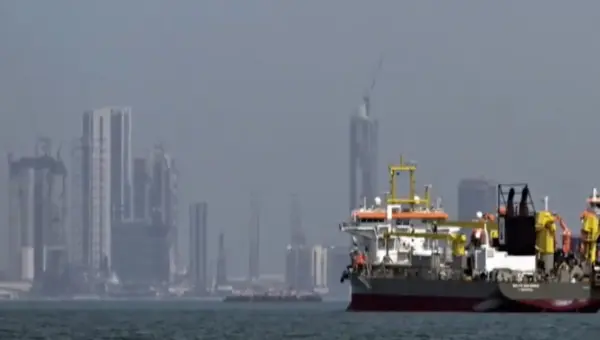
Iran Blocks China Ships, Exposing Beijing’s Weak Grip
Iran's recent decision to block Chinese ships at the Strait of Hormuz is exposing the limits of Beijing's influence in the Middle East. This action is causing delays and cancellations for Chinese manufacturers, turning a perceived geopolitical win into an economic strain.
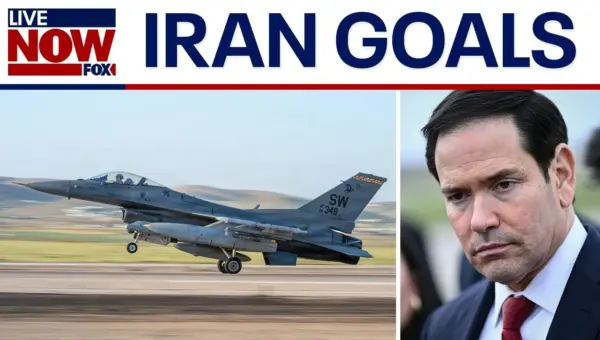
Rubio: US Can Achieve Iran War Goals Without Troops
Senator Marco Rubio outlined a strategy to counter Iran without deploying U.S. ground troops, focusing on weakening the regime and enhancing maritime security. He also criticized Cuba's economic system and expressed concerns about West Bank violence.