Russia’s S-500 Air Defense Fails Stealth Fighter Test
Russia's S-500 air defense system, touted as a threat to F-35 stealth fighters, faces critical limitations. Analysis suggests its detection capabilities do not translate to reliable engagement due to stealth physics and radar design. Production delays and cost overruns, exacerbated by sanctions, further question its strategic value.

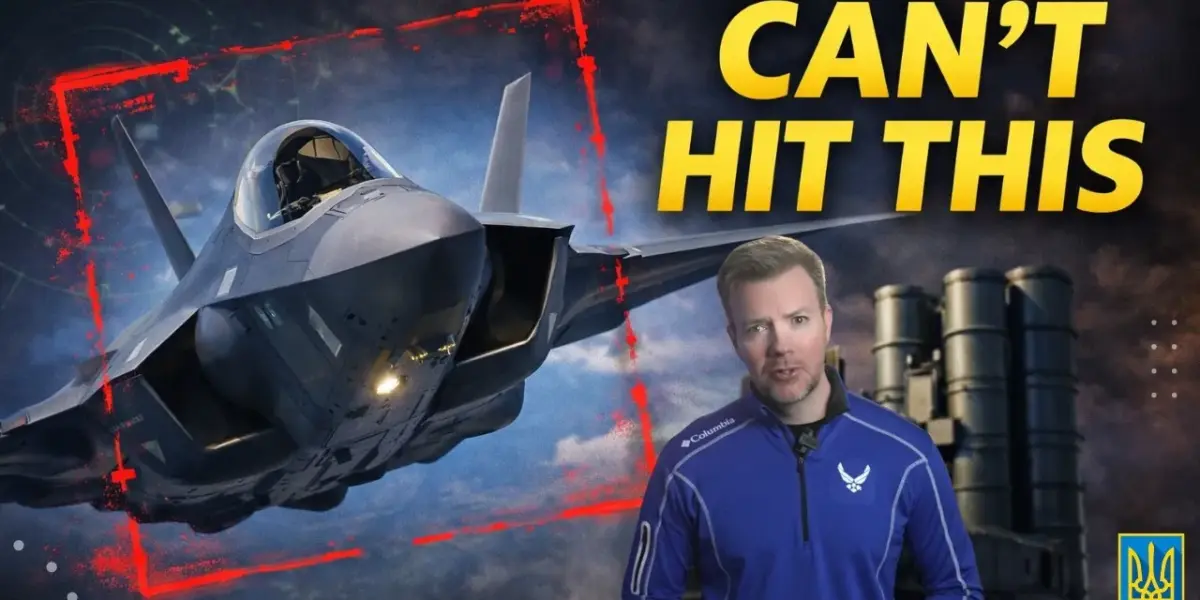
Russia’s S-500 Air Defense Fails Stealth Fighter Test
Russia’s highly touted S-500 air defense system, designed to counter advanced Western aircraft like the F-35, faces significant limitations according to recent analysis. Despite claims of being able to detect and destroy stealth fighters such as the F-22 Raptor and F-35 Lightning II at ranges up to 600 kilometers, the system appears unable to reliably engage these low-observable aircraft. Russia’s own production and sales record, along with fundamental physics, undermine these ambitious claims.
S-500 Development and Deployment Issues
The S-500 Prometheus system has experienced prolonged development delays. Originally slated for readiness in 2014, its deployment timeline slipped multiple times before a single regiment reportedly entered combat duty in late 2025. This unit is tasked with protecting Moscow. The system’s cost has also surged dramatically, increasing by 300% from an estimated $700-$800 million in 2020 to $2.5 billion by 2023. This cost increase is largely attributed to Western sanctions limiting Russia’s access to advanced microelectronics, demonstrating the impact of economic restrictions on Russian military production.
The Stealth Challenge: Detection vs. Engagement
A core issue lies in the distinction between detecting a target and successfully engaging it. Russian state media often conflates these two capabilities. While the S-500 might possess some ability to detect stealth aircraft at long distances, translating that detection into a precise firing solution is extraordinarily difficult. This is due to the concept of Radar Cross-Section (RCS), which measures how visible an object appears on radar, not its physical size. A conventional fighter like the Russian Su-35 has an RCS of about 20 square meters, comparable to a car. In contrast, the F-22 Raptor has an RCS of approximately 0.00001 square meters, like a marble, and the F-35 is comparable to a golf ball. These extremely small RCS values mean that stealth aircraft are vastly harder to track.
The physics of radar engagement further complicate Russia’s claims. Radar energy does not scale linearly; it scales with the fourth power. This means that the S-500’s claimed 600 km range against conventional aircraft drastically shrinks against an F-35. Even if the S-500’s radars, operating in S-band and C-band frequencies, detect a faint return from a stealth fighter, these frequencies are precisely what the F-22 and F-35 are designed to defeat. The shaping and radar-absorbent materials used in these aircraft minimize reflections in these bands. Furthermore, the lower resolution of S-band and C-band radars means any detected signal from a stealth aircraft may not be clear or stable enough for a fire control system to guide a missile accurately.
S-500’s True Capabilities and Limitations
Western analysts generally view the S-500 as an effort to combine long-range air defense with ballistic missile defense in a mobile platform. Its primary strengths lie against non-stealthy targets. These include large, easily detectable aircraft like NATO tankers and airborne early warning systems (e.g., AWACS). The system reportedly uses 40N6M long-range missiles, effective up to about 400 km, and 77N6 series hit-to-kill interceptors, capable of reaching approximately 600 km. These interceptors are designed for ballistic missiles and near-space targets, relying on kinetic impact rather than explosive warheads. This makes the S-500 a potentially serious threat to ballistic missiles, but not to maneuvering stealth fighters.
The S-500’s radar complex comprises four distinct vehicles per battery: an S-band acquisition radar, a C-band acquisition radar, a multi-mode engagement radar, and a dedicated anti-ballistic missile engagement radar. The anti-ballistic missile radar is designed for predictable, high-altitude trajectories of missiles, not the evasive maneuvers of a fighter jet. Moreover, having four separate radar vehicles presents multiple targets, as demonstrated when Ukrainian forces destroyed a key 98L6 radar component of an S-500 battery in Crimea with a drone in August 2025. This strike, carried out by a drone—a weapon category Russia struggles to counter—significantly impacted the system’s high-tech defenses.
Geopolitical and Strategic Implications
The fact that Russia has not sold the S-500 to China, its closest military partner, is a strong indicator of its perceived capabilities. If China believed the S-500 could reliably counter F-35s, it would likely have purchased the system. Russia’s consistent failure to deliver on its advanced military system’s promised capabilities, coupled with significant production constraints due to sanctions, undermines its claims of technological superiority. The S-500’s development trajectory mirrors a pattern of announcing systems years before they are operational and exaggerating their performance for deterrence purposes.
The threat environment is evolving rapidly, with new stealth platforms like the B-21 Raider bomber and future fighters like the F-47 emerging. These aircraft possess even lower observability than current stealth fighters, making the S-500’s claimed detection capabilities even less relevant. While the S-500 may represent an incremental improvement over the older S-400 system, its effectiveness against maneuvering stealth aircraft remains highly questionable. The system’s limited production, with only one regiment operational and slow output due to sanctions, stands in stark contrast to the large numbers of advanced air defense systems, like the hundreds of Patriot batteries operated by the U.S., and ongoing development of next-generation fighters.
In conclusion, the S-500, despite its advanced components and design for specific roles like ballistic missile defense, does not appear to be the F-35 killer that Russian propaganda suggests. The fundamental physics of stealth, the system’s design limitations, its combat record against less advanced threats, and its constrained production capacity all point to a system that underperforms its marketing. Russia’s claims about the S-500 are not supported by performance or independent assessment, highlighting a significant gap between Russian military marketing and battlefield reality.
Source: Russia's S-500 EXPOSED – It Can't Hit Stealth (YouTube)

Related Articles


US Military Pursues Secret Tech, Lunar Base Plans Emerge
Reports indicate the US military and defense contractors are exploring advanced technologies, possibly reverse-engineering unknown craft. Concurrently, NASA plans a lunar base, while millions of UAP-related files are allegedly deleted, raising transparency concerns. These developments could reshape global power dynamics.


Ukraine’s Drones Strike Deep Behind Russian Lines
Ukraine is increasingly using heavy bomber drones like the 'Vampire' to strike Russian positions. In February, these drones supported counterattacks that reclaimed territory. Despite facing electronic warfare and drone losses, Ukraine sees these unmanned systems as vital for survival and pushing back the invasion.


Space Power Beams Aim to Fuel Troops in War Zones
Aetherflux is developing a groundbreaking technology to beam solar energy from space to Earth using lasers. This innovation aims to provide power to military troops in hostile or remote environments, reducing reliance on vulnerable fuel convoys. The company plans to launch its first satellite later this year.