Iran Demands Rejected as US Military Campaign Advances
Iran's demands for sanctions relief and base removal have been rejected as the U.S. military campaign advances ahead of schedule. Analysts express confidence in U.S. and Israeli defensive capabilities against Iranian missile threats, suggesting a strong position for future negotiations.

Iran Demands Rejected as US Military Campaign Advances
The United States is reportedly ahead of schedule in its military campaign against Iran, an operation analysts suggest could conclude within four to six weeks. During this ongoing operation, Iran has put forth a list of demands, including an end to attacks, full sanctions relief, war compensation, a new payment system for the Strait of Hormuz, and the removal of U.S. bases from the region. However, these demands are unlikely to be met, with experts stating Iran is not in a position to make such requests.
Verification Crucial for Nuclear Promises
Despite claims from the Iranian regime that they will not pursue nuclear weapons, this assurance is met with skepticism. Analysts point to past instances where Iran stated the same, yet continued to enrich uranium and misled the United States. President Trump has also expressed distrust, highlighting the need for robust verification systems. Before any verification can occur, enriched uranium currently within Iran must be removed. Some of this material has reportedly been secured due to successful joint U.S. and Israeli operations, codenamed “Midnight Hammer.” However, significant amounts of enriched uranium still remain in Iran and require extraction.
Iran’s Demands Met with Firm Rejection
The list of demands presented by Iran is considered unrealistic by U.S. officials and analysts. “We’re not going to agree to any of that, and the Iran regime is in no position to make demands on the United States,” stated one analyst. The U.S. military campaign is still in its early stages, with targets remaining to be addressed. These targets are aimed at preventing Iran from harming U.S. forces, allies, and disrupting regional stability through terrorism and proxy support. Israel, in particular, is determined to continue its actions until Iran ceases funding proxy groups, suggesting the current conflict may extend for some time.
Missile Defense Shows Promise Amidst Conflict
Recent events have seen Iran launch missiles toward Israel. While concerning, analysts note a significant success rate for Israeli and U.S. missile defense systems. Estimates suggest over 90% of these missiles are intercepted or miss populated areas, even if they were aimed at civilian centers. A key advantage is that Iranian missile launches immediately reveal the location of their launchers, allowing U.S. forces to target and neutralize them. This tactic, described as “launcher hunting,” is actively being employed within Iran. Currently, there is confidence in the defensive capabilities of the U.S. and Israel when compared to Iran’s offensive reach.
Reasons for Optimism in the Current Campaign
There is a strong basis for optimism regarding the current military operations. The United States, working alongside Israel, has not only displayed military strength but also a clear plan that is being executed ahead of schedule. This contrasts with some pessimistic views expressed in other media and expert circles, which question the existence of a post-conflict strategy. However, the current actions have placed Iran on the defensive, effectively neutralizing it as a significant threat. The goal is to achieve a favorable peace settlement. Furthermore, Gulf states and potentially European allies are showing increased willingness to support U.S. efforts, particularly in securing the Strait of Hormuz. Control of this vital waterway by the U.S. and its allies would remove it from the sphere of influence of nations like China, which have historically supported Iran.
Market Impact
The ongoing military actions and the rejection of Iran’s demands suggest a period of heightened geopolitical tension. Investors may monitor developments in the Middle East closely, particularly any impact on oil prices and global shipping through the Strait of Hormuz. The success of U.S. and Israeli military operations could lead to a more stable regional environment in the long term, potentially benefiting global trade. However, any escalation or unforeseen events could introduce volatility.
What Investors Should Know
Investors should understand that the situation in Iran is dynamic. The U.S. appears to be executing its military strategy effectively and ahead of schedule, leading to a position of strength. Iran’s demands are largely being dismissed, indicating a lack of leverage on their part. The focus on missile defense and targeting Iranian launch sites suggests a strategy aimed at degrading Iran’s offensive capabilities. The potential for increased international cooperation, especially in securing critical shipping lanes like the Strait of Hormuz, could have positive implications for global markets, particularly energy. However, the long-term outcome and the specifics of any future peace agreement remain uncertain, warranting cautious observation of geopolitical developments.
Source: Iranian regime is in NO POSITION to make demands on the US, analyst says (YouTube)

Related Articles

Stocks Ignore War Risks, Focus on “Taco Moments”
Stock markets appear to be overlooking the severe supply chain risks stemming from the Iran conflict, focusing instead on potential diplomatic de-escalations. While the S&P 500 shows resilience, bond and commodity markets signal deep concern over disruptions to critical resources like LNG, helium, and fertilizers.

US Strikes Cripple Iran’s Military Might, CENTCOM Reports
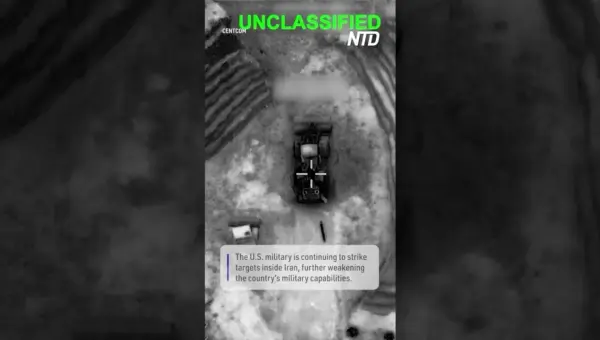
U.S. Central Command reports ongoing strikes inside Iran are significantly weakening its military power. This direct action aims to reshape regional security dynamics, but carries risks of escalation. The long-term impact depends on Iran's response and ability to adapt.

U.S. Iran Tensions Rise Amid Shifting Alliances
Rising tensions between the U.S. and Iran are creating a volatile geopolitical situation. With conflicting signals on de-escalation and potential shifts in alliances like NATO and U.S.-Israel relations, the path forward remains uncertain. The global economy and regional stability hang in the balance.